
Growing up in white suburban America in the 80’s, I thought I knew some things about South Africa. Mostly I was taught that there was something called “apartheid” there and that it was bad (though I was not taught that Ronald Reagan and Margaret Thatcher both did what they could to slow the movement against the apartheid government). But, in keeping with the centrist “things have gotten better” consensus then ascendant, I was taught that South Africa was one of the places where things hadn’t “gotten better yet.” In this version of the world, of course, the United States had “gotten better.” Ever since 1954, or maybe 1964, or 1984… who knew. It was always “getting better.”

- The limitations of this view of the world have become clearer to me since I’ve grown up but there’s still a pretty deep-seated otherness to the idea of “apartheid” in my mind, and I imagine, in the minds of a lot of other white Americans. Over the last couple of years I’ve included a study of Kendrick Lamar’s 2015 To Pimp a Butterfly in my junior English class. Embedded on that album is a repeating, accumulating poem containing this line:
But while my loved ones was fighting a continuous war back in the city
I was entering a new one, A war that was based on apartheid and discrimination

The first many times I listened, I heard this as a metaphor – I thought, Kendrick is making a statement about America by calling its economic and social system “based on apartheid.” I’ve come to understand his statement as much more literal.
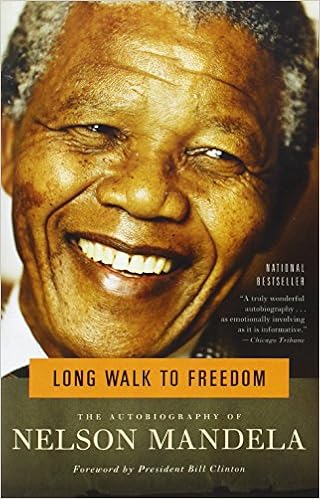
To explain: something else that To Pimp a Butterfly got me to do, eventually, was read Long Walk to Freedom, Nelson Mandela’s massive autobiography. “Mortal Man,” The final track on To Pimp a Butterfly, draws a triple connection between Kendrick Lamar himself, Tupac Shakur and Nelson Mandela. Going back to the raised-in-the-80’s white me, at first, this connection was hazy and almost disappointing. The whitewashed vision of Mandela’s story – a kind little old black man who was eventually let out of prison by F.W. DeKlerk, a kind old balding white moderate – meant I had no actual idea what he stood for, what he had done, or what he had endured. So I thought there was something tepid and moderate about Kendrick invoking his name. I have learned how wrong I was.

“Mortal Man,” which Kendrick tells its story through the lens of how Kendrick fears he will look after the white media takedown engine has inevitably destroyed him, pleads with his audience – “I want you to love me like Nelson.” Now in the grand context of this entire album, I realized I knew enough about Mandela to hear at least part of the reason Kendrick was raising him up: here is a man who was born under apartheid, went to prison for 25 years, essentially outlived the regime that imprisoned him, and then, really against all historical precedent, became the freely elected president of that same country. And a line from “King Kunta” earlier on the album – “from a peasant to a prince to a motherfuckin’ king” – rung in my ears through the hundreds of pages of Long Walk to Freedom. Though Mandela did not begin as a peasant or end as a king, the epic sweep suggested by the line still resonates.
So I came over time to realize Kendrick Lamar was communicating something deeply intimate and political in his pleading to be loved like Nelson. When I took the time to read Mandela’s story, I was amazed and humbled anew by the dozens of micro- and macro-level parallels between Kendrick’s story as he tells it on To Pimp a Butterfly and Mandela’s in Long Walk to Freedom. Kendrick Lamar, in short, really really did his homework when he crafted that album, and it’s homework that rewards re-re-re-listening. Here I’m talking just about one thread, but there are dozens more, about American history, race, the music industry, love, sex, the prison-industrial complex…
But back to the idea that America is “based on apartheid and discrimination.” Early on in Long Walk to Freedom, Mandela describes his reaction to 1947 election of the Afrikaner (white Dutch South African) Nationalist government that led most directly to the codification of Apartheid:
The Nationalists’ victory was the beginning of the end of the domination of the Afrikaner by the Englishman. English would now take second place to Afrikaans as an official language. The Nationalist slogan encapsulated their mission: “Eie volk, eie taal, eie land”–our own people, our own language, our own land. In the distorted cosmology of the Afrikaner, the Nationalist victory was like the Israelites’ journey to the Promised Land. This was the fulfillment of God’s promise, and the justification for their view that South Africa should be a white man’s country forever (111).
There is a lot suggested here about America, especially post-Trump America, but I want to stick to the idea of “the distorted cosmology of the Afrikaner.” A cosmology is a world-view, a universal understanding, a sense of what does and does not exist and have significance. Mandela is describing one group of people – white Afrikaners – who see themselves as revolutionary, see themselves as overcoming oppression from another group of people – white British people. And their existence leans on the narrative of their own alleged anti-oppressive movement against the British as an excuse to re-inscribe a racist colonialist system, to reaffirm their own whiteness by rendering it at least partially invisible.

Not to put too fine a point on it, but this is almost exactly the same narrative I and many other white Americans were taught growing up. You can see its most exaggerated and caricatured form in films like Mel Gibson’s The Patriot (which makes the British redcoats into Nazis), but it occupies a huge position in American life, from our largest founding myths to our most ordinary day-to-day experiences.
Let me explain. I was taught very early on that the American revolution was about “freedom.” Slogans like “live free or die,” “no taxation without representation,” “don’t tread on me” – year after year after year in History class we talked about these. I was taught “The Star Spangled Banner” (a song that still has a emotional pull on me it does not deserve), “Yankee Doodle,” (including at least 6 later verses) and on and on and on. The overarching idea seems to me to have been that in the American revolution, there were the good guys who believed in “Freedom” and then there were these evil British people who didn’t. The constitution was taught to me like this as well – England, I was told, did not respect the rule of law, trial by jury, free speech, privacy in our homes free of soldiers living there — and so the freedom fighters who won the revolutionary war had to enshrine protections for these things into the Bill of Rights, a document I was taught to worship and glorify from early on.
Of course, I’ve learned in retrospect just how much continuity there was and is between the British common law tradition and American constitutional law. But what I had never fully thought through, until I read Mandela’s account of his life, was the extent to which the anti-British mythology does so much to prop up the American system of white supremacy, just like he saw the Afrikaner “cosmology” did in his own situation. White Americans have, for hundreds of years, been able to say “oh no, we’re not the bad guys, we’re not those formal, stiff upper-lip elitist BRITISH PEOPLE, we’re just relaxed, down-to-earth Americans. We don’t name people things like ‘sir,’ we don’t have kings and queens. We don’t have those funny private schools where everyone wears ties all the time. All that stuff is stifling and restrictive. We believe in freedom.”
This is nothing other than one of whiteness’s foremost strategies – distancing. “We’re not ‘those’ white people – British Redcoats, Nazis, Afrikaners whoever… we’re us – the good ones.” Now as much as I learned about the mechanisms of the constitution – separation of powers, checks and balances, the bill of rights, and so on, the real issue that loomed over the constitutional convention – SLAVERY – we barely discussed it. I mean our teachers didn’t lie to us and tell us slavery didn’t happen – at least not most of them – but they were much more interested in parsing what “quartering of soldiers” meant (in great, technocratic detail) than in teaching us anything in any kind of depth about the thousands and thousands of human beings that were being kidnapped, shackled, raped, murdered and forced to work, all the whole time that same constitutional convention was underway. And that’s not even yet to mention the near-genocide against indigenous American that had preceded that convention, and was also still very much an ongoing struggle for the rest of the 18th and 19th centuries.
The obsession with the ways we were told we were different from the British, the ways in which the American revolution established a “city on a hill” – this obsession allows the actual colonialism of the United States ruling power to persist in even more potent form.

Colonialism is actually a very important concept in all of this. We were taught that the thirteen original “colonies” established their “independence,” but we never ever interrogated what it meant for those “colonies” to have become “colonies” in the first place. That George Washington, Thomas Jefferson etc. were not colonial rulers, but some cadre of Enlightenment-educated “new men,” that they are somehow anti-colonial revolutionaries, all that shifts the focus of American historical education in a way that is very, very difficult to push back against. It’s such an overloaded iconography of myths that by the time you’ve tried to clear it out (either as a teacher or a student), the year is over and you or your student in on to the next teacher who’s more than willing to replay the script.

As James Baldwin writes in “A Talk to Teachers,” “all this enters the child’s consciousness much sooner than we as adults would like to think it does.” I might also add, it enters the child’s consciousness in ways it’s very difficult to extract.
Mandela’s depiction of deluded anti-British Afrikaner racism dovetails almost one-to-one with Baldwin’s de-mythologizing account of white American identity:
What passes for identity in America is a series of myths about one’s heroic ancestors. It’s astounding to me, for example, that so many people really appear to believe that the country was founded by a band of heroes who wanted to be free. That happens not to be true. What happened was that some people left Europe because they couldn’t stay there any longer and had to go someplace else to make it. That’s all.
The alleged heroism of our ancestors – the pseudo-debates about their trials and tribulations, about whether there should be a bicameral or a unicameral legislature, about how the electoral college works, and on and on, all blind us to the simple, obvious truth that Baldwin suggests anyone who has been on the receiving end of American racism has known about all along, however fuzzy that knowledge might have been.
But a black child, looking at the world around him, though he cannot know quite what to make of it, is aware that there is a reason: why his mother works so hard, why his father is always on edge. He is aware that there is some reason why, if he sits down in the front of the bus, his father or mother slaps him and drags him to the back of the bus. He is aware that there is some terrible weight on his parents’ shoulders which menaces him. And it isn’t long – in fact it begins when he is in school – before he discovers the shape of his oppression.
Just as Mandela can stand apart from the Afkricaner mythology and declare it a “distorted cosmology,” so Baldwin, having felt its effects, can speak to the “series of myths” which so many of us were taught were simply, “the history of our country.” And Kendrick Lamar puts his finger right on the overlap when he calls it “apartheid.” For me, the difference between the South African version and the American is its subtlety of expression. From our distance, South African apartheid looks as clumsy and awkward as it is – “White,” “Coloured,” “Indian” and “African” all defined in ways very difficult to enforce, not rooted in anything other than some imperialist bureaucratic lingo embarrassing in its stupidity. But what does our system look like to outsiders? What does our system look like to those receiving, rather than dispensing its oppression? This is a question I am still learning to ask.
Baldwin goes on to counter the white American myth with a much more realistic and truthful account of what actually led to American’s founding:
They were hungry, they were poor, they were convicts. Those who were making it in England, for example, did not get on the Mayflower. That’s how the country was settled. Not by Gary Cooper. Yet we have a whole race of people, a whole republic, who believe the myths to the point where even today they select political representatives, as far as I can tell, by how closely they resemble Gary Cooper.

He then finishes his essay with a sweeping warning about where all of this leads, a warning which, like so much else in Baldwin, started to sound so much more prescient to white Americans in 2016, even if many people of color had known it was there all along:
Now this is dangerously infantile, and it shows in every level of national life… What I am trying to suggest here is that in the doing of all this for 100 years or more, it is the American white man who has long since lost his grip on reality. In some peculiar way, having created this myth about Negroes, and the myth about his own history, he created myths about the world… The political level in this country now, on the part of people who should know better, is abysmal. The Bible says somewhere that where there is no vision the people perish. I don’t think anyone can doubt that in this country today we are menaced – intolerably menaced – by a lack of vision.”

And from that perspective, the answer to Hillary Clinton’s question of “what happened” is at once more obvious and terrifying than what she comes up with in those pages. What happened is, as Ta Nehisi Coates has written “a return to form.” This is who we have always been, our distorted cosmology notwithstanding.

 Original Positions