[This is part 3 of a longer series – previous track “For Free?”– next track “Institutionalized”]
If To Pimp a Butterfly were a movie, “King Kunta” would be the close of Act I. Sound-wise, the first three songs share a common up-beat energy: they’re all relatively rhythmic, brash in terms of their use of samples and other effects. Thematically, they all remain in the present tense of Kendrick’s achieved stardom.
“For Free?” ended with the voice of the American system taunting him – “you ain’t no king!” and that taunt anticipates (and preemptively mocks) the posture Kendrick strikes on “King Kunta,” as a conquering hero returning to his home turf, almost like Odysseus returning to find the suitors having overrun his estate:
Kendrick’s walking down the streets of his old neighborhood, pushing people “sittin’ in [his] throne” out of the way. Those same people’s false familiarity (“K-dot back in the hood, n-word”) inspires a track that meditates on the distance Kendrick now feels from his people.
True friends, one question
Bitch, where you when I was walkin’?
Now I run the game, got the whole world talkin’
There is twinge of anger and frustration that these new friends wanted nothing to do with him before he made it, and so now on this track, we read about his swagger, but we also continue to see he recognizes the vulnerability and precariousness of his position. A couplet from the chorus shows us all of this:
King Kunta, everybody wanna cut the legs off him
Kunta, black man taking no losses, oh yeah


The title alludes to Kunta Kinte, the forefather of the generations in Roots, Alex Haley’s 1976 historical epic. Creating the character of “King Kunta,” one part royalty and one part kidnapped African, becomes another version the duality initially presented by “every N-word is a star” on “Wesley’s Theory.” In my mind, the scene that always stands out from that book (and the miniseries) is Kunta Kinte’s refusal to accept his slave-name “Toby,” and his willingness to endure a savage beating before relenting. When Kendrick raps “Everybody wanna cut the legs off him” he is also referencing Kunta Kinte’s escape attempt, which ends in half of his right foot being cut off (he was given the choice between that and castration). Just like on “For Free?” but with a new body part, whiteness continues to make demands on his body, continues to claim ownership over it.
But who is the “Everybody” who wants his legs? On one reading, it’s the neighborhood people who are now claiming him as a friend – an idea that much later (on the album’s last track) gets connected with the album’s title. Kendrick returns to Compton as a “butterfly” though the people he once lived among “shunned” the caterpillar, that same butterfly’s earlier self. “Everybody” also includes the dominant white society, though here, I think, Kendrick sees them acting indirectly through the residents of his neighborhood.
We then get a discussion of “yams”:
When you got the yams—(What’s the yams?)
The yam is the power that be
You can smell it when I’m walkin’ down the street
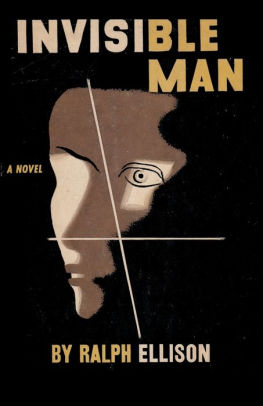
The yam is an overloaded metaphor, signifying several things at once. The yam is native to Africa, through a core part of southern American cuisine. “Yams” here signify power, sexual ability, wisdom, and money. It also reminds me of the sequence in Ralph Ellison’s Invisible Man, where that novel’s protagonist, a child of the great migration, smells yams as he walks down the street in Manhattan, and is reminded of his southern home.
The yams and the reference to Kunta Kinte are the most noticeable of the album’s initial references to Africa, drawing a implied connection between Africa and Compton that becomes more explicit on the album’s later tracks.
Kendrick spends much of the rest of the song rhetorically settling scores with rival performers, feeling his distance from them, almost dwelling on it from the perspective of someone who’s won, escaped, showing his swagger almost unreflectively. I say almost because though he will later see the limitations of this pose, for now, though he sees himself as separate, better than them, he does have some spot-on criticisms of their behavior. What he hasn’t yet reflected on is how much he still shares with them.
A few of the clever turns of phrase here:
The pun on “bars” – bars as rap composition/bars as restraints within a prison suggest that the form of music these lesser rappers are producing (unoriginal, stolen from others) is reaffirming their own subjugation. When he says
I hear him saying, he’d rather be authentic, speak his own truth (“be a bum”), than strike the pose that the white entertainment media complex demands from him (i.e., “brown-nose”). Later on he continues this thread:
I hear the idea that Kendrick thinks their mode of performance is ultimately self-destructive.
The song finishes with a bracing pronouncement of Kendrick’s ambitions, but also remembers more clearly where he’s come from:
I should probably run for mayor when I’m done, to be honest
And I put that on my momma and my baby boo too
20 million walkin’ out the court buildin’, woo-woo!
Aw, yeah, fuck the judge
I made it past 25, and there I was
A little nappy-headed n-word with the world behind him
Life ain’t shit but a fat vagina
Screamin’, “Annie, are you okay? Annie, are you okay?”
Limo tinted with the gold plates
There’s a lot there – “I should probably run for mayor” and “fuck the judge” both picking up on the political declaration from “Wesley’s Theory,” bringing the Compton Swap Meet to the White House. The album cover depicts a white man in a judicial outfit lying on the ground with death-signifying x’s over his eyes. “20 million walkin’ out the court building” suggests an assemblage of black people liberated from a legalized scheme of oppression. That he “made it past 25” alludes to the common saying that black men growing up in low-income environments will end up “dead or in prison” – and 25 is also the age at which Tupac died – Tupac, who speaks from the dead on the album’s last track. “Annie, are you okay…” quotes Michael Jackson, another black man taken down (who also comes up several more times).
does a lot of clever work simultaneously. The triple alliteration – bottom-belly-beast invokes Joseph Campell’s theory of epic heroism, and “bottom” presages “The Blacker the Berry’s” “come from the bottom of mankind.” The next alliteration/assonance combo – “peasant…prince… king” captures the racial system’s roots in feudalism and agriculture, and the huge bounds Kendrick sees himself as having made to get where he is now.
That all seems great, except there’s this nervousness, fear and insecurity looming: that “everybody wanna cut the legs off him” is not a tenable position, and as the initial upbeat section of To Pimp a Butterfly comes to a close, the music fades, and we’re left with just Kendrick, in a new, less rhythmic and filtered voice, reading what sounds like a plaintive statement to a friend:
This begins a deeply vulnerable, introspective narration that spans the rest of the album (especially the next 10 tracks). Kendrick, the album producer who is putting all of this together, now shows us that the Kendrick we hear about in the first three songs, who seems to have claimed riches and fame, is actually “conflicted” and “misusing [his] influence.” We’ll explore more later about the nature of that conflict, but we’ve already seen part of it: yes, he’s got success and money, but on the other hand, he’s still a Black man in America, and has do deal with all that entails. Taken outside of just Kendrick, we can say that material comfort and provision does not overcome the limitations created by racism.
Tracks 1-3, like an epic, begin in medias res. It is not the beginning, but the middle of Kendrick’s story we’ve heard so far. Now as he’s returned to Compton on “King Kunta,” he’ll keep the focus there while he shows us how he got to the point of seeing the limitations of stardom (tracks 4-10); the rest of the album (11-16) will show us Kendrick’s ideas for solutions to the economic and racial disaster “Lucy” and “Uncle Sam” have wrought.
[This is part 3 of a longer series – previous track “For Free?”– next track “Institutionalized”]

 Original Positions
One thought on “To Pimp a Butterfly #3: King Kunta”