[This is part 6 of a longer series – previous track – “Children’s Story” – next track – “B Boys will Be Boys”]
“Brown-Skinned Lady” is both an ordinary love song and also a deeply intellectual engagement with intersectional feminism. And just like with “Re:Definition,” I’m approaching these contexts with humility, as they get to some of the core issues raised by theories that are not primarily about or for me. Even so I think there is such a richness and complexity here, I will do my best.
About a month before Mos Def and Talib Kweli are Black Star was released, another massive entry into 90’s hip-hop dropped, with these devastating opening lines – I don’t know of a more powerful album opener anywhere:
It’s funny how money change a situation
Miscommunication leads to complication
My emancipation don’t fit your equation
I was on the humble, you on every station
Some wan’ play young Lauryn like she dumb
But remember not a game new under the sun
Everything you did has already been done
I know all the tricks from Bricks to Kingston
My ting done made your kingdom wan’ run
Now understand, L-Boogie, non-violent
But if a thing test me, run for mi gun
Can’t take a threat to mi newborn son
L been this way since creation
A groupie call, you fall from temptation
Now you wanna ball over separation
Tarnish my image in the conversation
Who you gon’ scrimmage, like you the champion?
You might win some but you just lost one
This famous first verse of The Miseducation of Lauryn Hill’s side-one-track-one “Lost Ones” throws down a lot of gauntlets at once. Most immediately it interrogates her relationship to then-recently-former Fugees member Wyclef Jean – but I think it also goes after a lot of other aspects of being a Black woman in America, and all the complications that come with navigating racism, misogyny, ageism and capitalism – “my emancipation don’t fit your equation” speaks on all those levels at once.
That’s one way of getting at the challenge “Brown-Skinned Lady” attempts to address. Here’s another, from Frances Beal’s essay “Double Jeopardy: To Be Black and Female“, as quoted in A Black Women’s History of The United States by Daina Ramey Berry and Kali Nicole Gross:


Unfortunately, there seems to be some confusion in the movement today as to who has been oppressing whom. Since the advent of Black power, the black male as exerted a more prominent leadership role in our struggle for justice in the country. He sees the system for what it really is for the most part, but where he rejects its values and mores on many issues, when it comes to women, he seems to take his guidelines from the pages of Ladies’ Home Journal. Certain black men are maintaining that they have been castrated by society but that black women somehow escaped this persecution and even contributed to this emasculation (193-194).
In some ways what Lauryn Hill is calling Wyclef out on feels to me like it’s of a piece with what Francis Beal is naming here: there is a tension between the ideals of Black Power as a movement (a movement that I think it’s clear both Black Star and The Miseducation of Lauryn Hill are very much artistic expressions of) and the role that women play do and should play within that movement or within society as a whole.
A question I want to ask about “Brown-Skinned Lady” – and one I don’t have a full answer to, is this: is this song a meaningful acknowledgement of the critique being offered by these two Black women, or is it just another example of black women being sidelined – this time, by idealized as Queens who should sit alongside their men while they do the “real” leadership work?
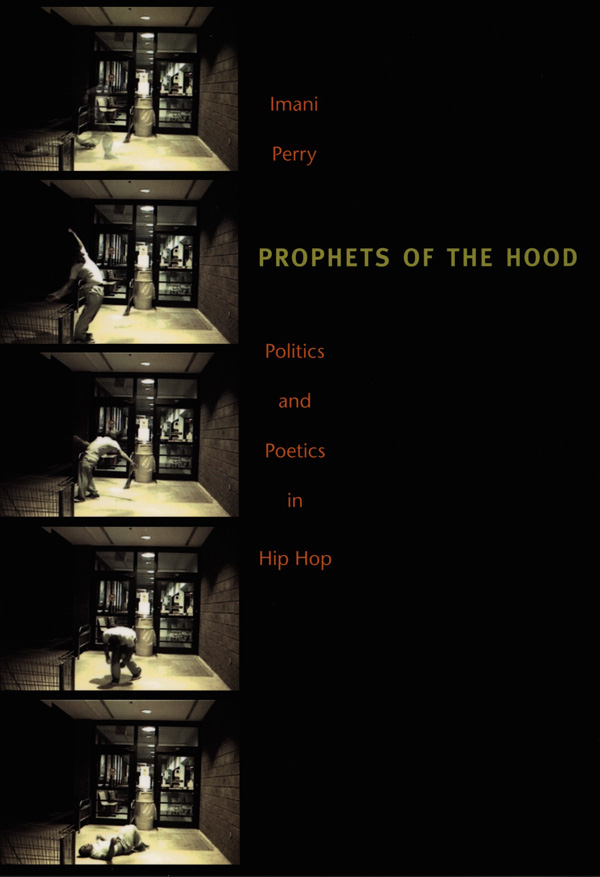
On my first listening I remember some discomfort – which always arises when I feel like I’m in proximity of “misogyny in rap”- the quotes because Imani Perry’s Prophets of the Hood helped me understand the ways that’s a much more complicated issue than white feminists and/or Joe Lieberman-style censors would have it.
Shea Serrano, in his Rap Year Book places “Brown Skinned Lady” as one of the top five hip hop love songs of all time.

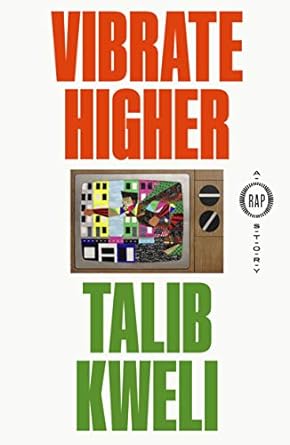
And in his memoir, Talib Kweli himself later describes when he met the woman who he’d go on to have two children with (hard to tell whether this is art imitating life or the opposite) in terms almost identical to the opening lines of the song.
Before I read all that through, I just heard the song, which seems to place itself very deliberately into the context of the above-mentioned debates. Before the song starts, there’s audio from the 1989 film Chameleon Street (which I have not seen):

William: You got that good hair, too
Smooth: You like what?
William: I like girls with that light complexion on ’em
Smooth: You’re a moron
William: I can’t help it
Smooth: What? Being a moron?
William: Yeah, that too.
Smooth: You’re the first one out there with a dashiki talking that crap
William: I’m a victim
Smooth: “Good hair”, n****, you so brainwashed
William: I’m a victim, brother
Smooth: You’re a “victim,” shut up
William: I’m a victim of four hundred years of conditioning
Smooth: Shut up
William: The Man has programmed my conditioning
Smooth: Mhm
William: Even my conditioning has been conditioned
The song interrogates this argument, and feels to me like it sides with Smooth, though in some ways takes William’s position seriously. The song, in a way, holds William (and others who hold that belief) accountable, and implores them to reconsider. But does it actually step outside of the male gaze that this dialogue embodies, or does it just re-position Black women into a different role?
That’s all sort of abstract, but I remember a simple answer from a student’s podcast recording. Addie – who has one East-Asian parent and one white parent, identifies strongly as East Asian. She was pretty honest – she described this song as “sweet.” She felt like it gave her a kind of recognition for who she was and what she looked like, how people saw her – that she didn’t get very often and that she and all the other women of color deserved. I am not sure if this song was written for her, or for Black women, or both – I also recognize I’m not well positioned to make that judgment.
This is also the song that Thomas, a Black male student, picked to analyze. The really awesome thing about Thomas’s recording is, he totally ignored the 5 minute maximum, went on for 25-30 minutes. He unpacked allusion after allusion, starting with the first verse’s first line:
fresher than Tony Rebel’s vegetables at African street festivals.
I mean until that moment I hadn’t stopped to think that Tony Rebel was a real person- truth be told I hadn’t even heard the lyric clearly until Thomas named and spoke on it. Nor did I know he was a Jamaican performer with a song called “Fresh Vegetable.” Which reminded me of something I can forget: I’m really a secondary audience here. Mos Def and Talib Kweli wrote this album much more for Black kids like Thomas than white grown-ups like me. And Thomas spoke a lot further on the joy of being at an African street festival, the feeling of welcome and inclusion. Another thing I didn’t get, but felt like I could appreciate. Thomas then went on to note that in hip hop and in Black culture in general, Black women don’t always get the credit or respect they deserve.
Along the way here we get this great connection that makes a whole bunch of through lines from other songs:
Coppertone owe you for copyright infringement
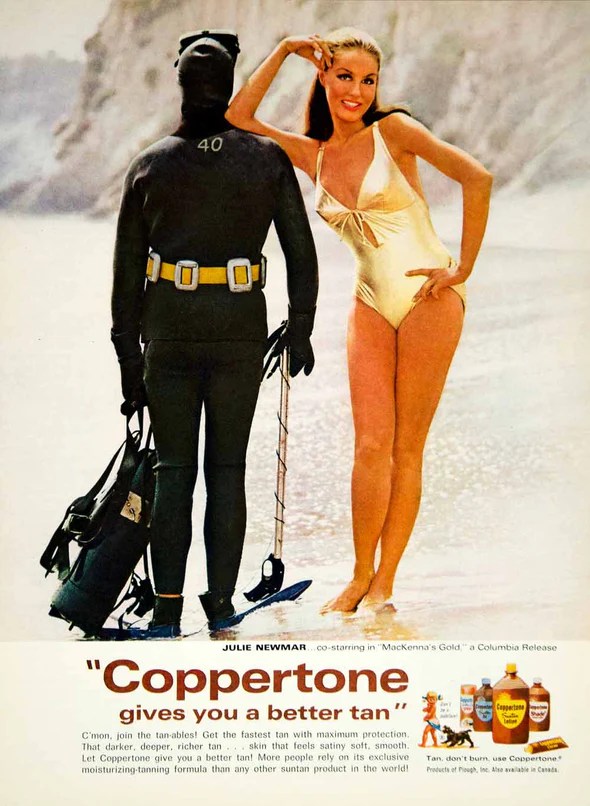
Since slavery, when reproduction, often forced on violent terms, became a economically beneficial to white enslavers, Black women’s bodies have been continually transformed into a corporate product. This may be the original form of anti-Black cultural appropriation. And also in a clever riff on the kind of recitation expected in an r & b love song, in the outro, we get these words:
We’re not dealin’ with the European standard of beauty tonight
So turn off the TV, put the magazine away
In the mirror, tell me what you see
See the evidence of divine presence
So are these lines empowering Black women to put away magazines like the Ladies’ Home Journal that Frances Beal mentioned, or are they just re-positioning those same women, demanding from them a different, idealized version of Afrocentric womanhood that still subordinates them? Again, I am really not sure but I wanted to ask.
The song ends with a epistrophe-driven catalog – exactly the sort of freestyle oral-poetic exposition you can read in book 2 of the Iliad (or also on the very next track, “B Boys Will Be Boys”), but instead of Greek ships sailing for the honor of one woman, here it’s a catalog of women being validated, because they “walk that walk” – but is it respecting them women it names, or just aesthetically idealizing them?
Women in the Caribbean, they got the, golden sun
I know women on the continent got it
Nigeria and Ghana, you know they got it
Tanzania, Zambia and Mozambique
And Botswana, to let it speak
How ’bout Latinas, Colombianas
Cubanas, Dominicanas, Tahinians
Of course, the Brooklyn women walk that walk
And the Bronx women walk that walk
Hunnies from Queens walk that walk
NYC, ATL, LA, Cincinnati, the Bay Area
Got the cocoa butter brown skinned ladies doin’ they thing
In London and Paris, cocoa butter brown sk…
[This is part 6 of a longer series – previous track – “Children’s Story” – next track – “B Boys will Be Boys”]

 Original Positions
3 thoughts on ““Brown-Skinned Lady” (Track 6)”