Recently, I mentioned attempting to integrate video games in my AP class (along with hip-hop, and movies) in an online forum. Someone sarcastically compared this to having students read receipts or other paper they found in the trash. I can’t speak to the intention behind that comparison but I’m pretty sure I get the general idea. I don’t think the charge needs to be taken all that seriously actually. When I asked a more sympathetic question exploring this bias to a presenter at a conference who was really into video games as an academic field of study, his reply was simple: “yeah, there’s a lot of old media bias for sure.”
So partly the “why” question can just be left there: why? Why do we study anything in an English class? How do we decide what to study? “Old media bias” is really efficient as a designator – people tend to think English class or any other class should be like it was when they were in school. They bemoan the loss of “the good old days when kids read full books” (disclaimer – students read books in my class too). But after a while, I think instead of arguing for legitimacy, it’s better just to try to show it in practice.
But I suspect that even people would be open to studying music “as poetry” in their classroom (what’s with that “as” by the way – what exactly is not poetic about music, to where we need to suggest there’s must be a metaphorical equivocation going on before it can make its way into the classroom – but that’s a related argument for another day) – even folks that would be okay with that would draw a different line at video games. Video games “as novels” feels like more of a stretch, and for structural reasons.
I myself don’t think we need to read anything “as” anything else – unless when we say “as literature” we mean “as something that can be studied in this class.” Call it an “institutional” theory of literature – “literature” is whatever is studied in a literature class. A disquotational theory of “literature” even. I’m going to set aside the literature demarcation question though, and try to answer is more straightforward way why I wanted to bring video games into my AP Lit classroom.
Personal Confession – I hated to read when I was younger. I never did it. I mean, not never never, but almost never. My parents nagged and nagged about me reading books. My father recommended so many different titles there was a stack of books at my bedside table for as long as I can remember. He’d come in before I went to sleep and give me a good that he hoped I’d read. I didn’t do it. And I didn’t read books in school very often either. I bombed reading quizzes and faked my way through discussions and papers with the best of them.
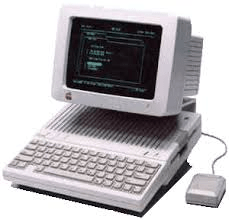
In contrast, I loved video games. When we first got our Apple IIc, probably in 1985 or so, I played Sierra Online’s games like the early entries in the King’s Quest and Space Quest series. When we got our NES (probably in 1988?) I played and loved The Legend of Zelda. Each of these introduced me to fundamentals of narration in an embodied, deep way. They are “adventure games” – you have a main character, that character goes on a quest, gains abilities and items, and eventually conquers a sequence of bosses or solves a set of puzzles. The Sierra games were loaded with things I know now as literary tropes, from nursery rhymes, mythology, sci-fi, and fantasy – Zelda was too, just in a less linguistic and more image-centered way. I didn’t know that then. What I knew then was that these things I’ve come to see as tropes were fascinating, world-building and eerily familiar (likely because they were tropes I was aware of in a background knowledge kind of way).
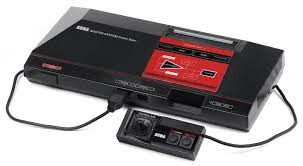
But the game that truly stands out is a game called Phantasy Star, for the Sega Master System. My uncle gave me this game I think for my 11th birthday. I remember going to Toys R Us later and seeing that it cost SEVENTY DOLLARS. Which was high in price for then (it’s probably something like $150 in 2026 dollars). When I first played it, I was underwhelmed. All the action took place through a series of menus – you didn’t fight enemies with your coordination or through timing. You decided what your characters would do and then the game executed for you. I now know this is a fundamental mechanic borrowed from the world of table-top roleplaying. Then it just seemed “low tech.”
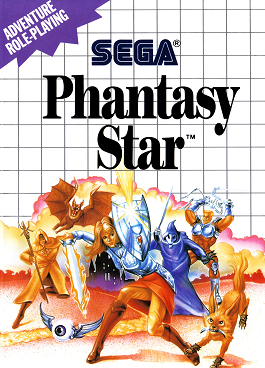
Over time, though, I gave it more of a try. Perhaps urged on by a friend who had heard it was a good game. I played this for hundreds of hours, to the point where even now, all of the music is familiar; there are only a handful of songs in the game but I could sing you all of them. I’m doing so in my head right now. I remember enemies’ names, abilities, locations, everything. I even remember, in some detail, the plot of the game – let me prove that:
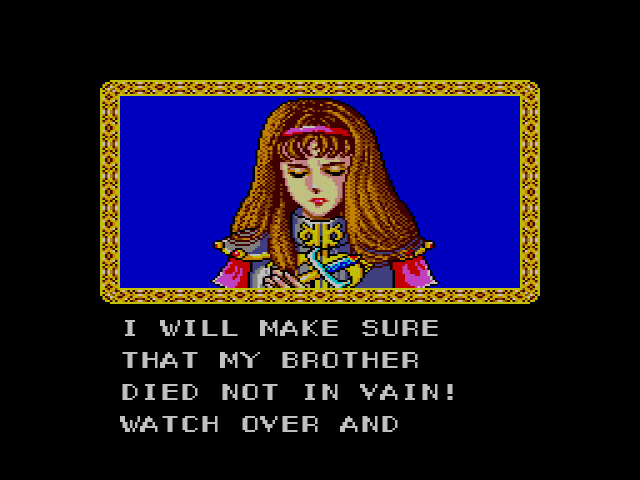
We fade into a cut-scene where Alis, the game’s protagonist, is watching her brother Nero being dragged away by police in riot gear. Nero fights back but is killed in the confrontation. As he is dying, he demands that Alis avenge his treatment and defeat Lassic, the planet’s tyrant, to free her society from this scourge. Alis prays to him – “watch over and protect me, Nero” are her words as she mourns his death, as melancholic music only appearing in this scene plays. Fade out to regular gameplay (overhead, 2D) in what looks like a 1980’s 8-bit version of a mildly futuristic town. This town, I think called Camineet, is Alis’s home. As the world widens, you discover a whole planet – called Palma, the “planet of green.” It’s one of 3 in the solar system, also including Motavia “(the planet of desert”) and Dezoris (the “planet of ice”). As your knowledge expands, you acquire three companions – Myau, a supernaturally powerful cat, Odin, a warrior, and Noah, the wizard (yes, they are like Star Wars in some ways – no, I really didn’t realize that then). Traversing these three planets leads you through a sequence of challenges that allow you to travel between them by spaceship (first commercial, then a private plane you assemble yourself). You collect a set of “Laconic” weapons, the only type of armor that can protect you from Lassic. You visit large cities, meet governors, find small villages that have been destroyed, find other land and sea vehicles, scale pyramids and navigate dungeons. There is even a pair of towns (underground on Dezoris, to protect against the cold) where you have to solve a logic puzzle to figure out which town is full of liars and which full of truth-tellers. At the top of one notorious pyramid – Baya Malay – you fight Lassic after Myau consumes a magical nut and transforms into a giant flying cat who takes the whole party on her back. After Lassic is defeated, you realize that the true enemy of the realm is a more nebulous “Dark Force,” about whom you’ve had dreams through the game, including one that seems real at first – only when you die do you realize it was a dream. Returning to the governor in Paseo (on Motavia), you discover that he’s actually Dark Force in disguise. After an epic battle, he is defeated, Nero is avenged, and the world is at peace. The credits roll.
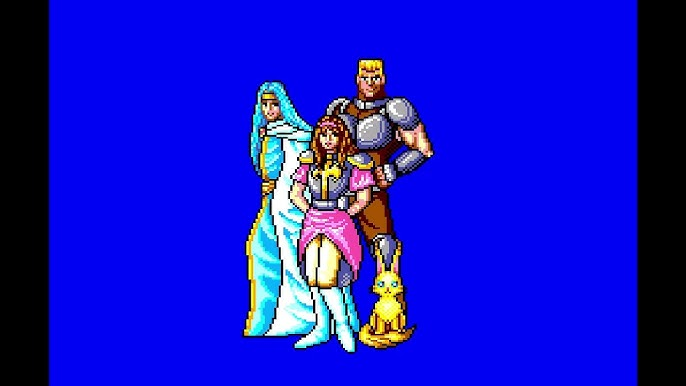
If you knew exactly where to go and what to do, the game would take 20-30 hours. Of course in those days, we did not know where to go and what to do, and there was no internet, or even a published guide that I knew of, beyond the glossy game manual that listed spells and items. I have clear memories of getting stuck over and over again. There was a Sega phone line (900 humber, $2 a minute) you could call and they’d give you hints. Like, a real live person would give you a hint. They may have been the game’s developers or might at least have known them. Large swathes of my 6th, 7th and 8th grade free time were taken up by this game and its sequel, Phantasy Star II, released on the Genesis a couple of years later. My younger brothers would sometimes sit and watch.
Something I think we should admit to ourselves is that type of experience, of course, fast-forwarded 40 years and subject to a bunch of new technology, exists for many of our students. If we want, we can decry this and pathologize them. I choose another path. Anyone who’s ever poured hours upon hours into a video game role-playing game, and gone down the rabbit hole that creates, and found the communities that exist around these games, knows they have “literary merit” (a phrase that the AP exam no longer uses anyway). And the games now have way more of that than those back then. Phantasy Star was unrelentingly linear – there is one thing to do at any one time, and you can’t do the next thing until you do that thing. It’s enjoyable but it’s linear. It also requires hours and hours of what gamers call “grinding,” which is, development of character abilities and accumulation of resources that many modern games fast-forward or scale in the interest of narrative engagement and novelty. Moral ambiguity is something games are more or less expected to have nowadays, as well as replay value that creates vast multi-texts. 2023’s Baldur’s Gate 3 is probably the culmination of all of this.
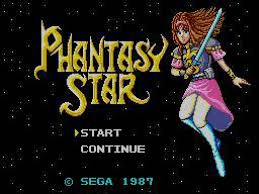
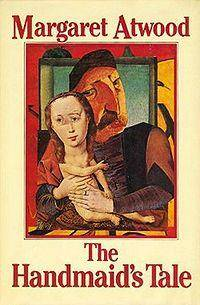
Every question that can be asked or answered of, say, the Handmaid’s Tale (published in 1985), on the AP English Literature and Composition exam’s third question – the so-called “open” or “argument” question, can be asked and answered of Phantasy Star (1987). Hopefully my summary convinces you of that. Life under oppression, rebellion, secrecy, idealism, character foils, moral ambiguity – it’s all there. And since Question 3 question doesn’t really focus on specifically writerly craft, but more storytelling patterns and thematic takeaways, there is really no reason why an essay written about one would not be better or worse than the other. Morally ambiguous characters, foils, rural settings, challenges to society, idealism, memories– these are the themes of the Q3 essay students in my classes write, based on published AP questions. All would work here. And that’s why – I think anyway – it now says “or another work of fiction” when it suggests texts you might write with – to allow for possibilities like this.
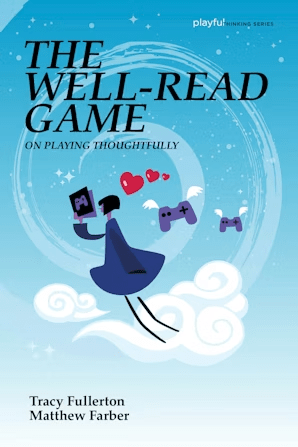
I think we can ask other sorts of AP questions about these games too. I’ll call it “close reading” – AP Lit Question 2. Question 2 generally provides you with a passage from a longer fictional text and asks you to analyze its craft. Yes, this will always be something written, at least for the foreseeable future. So no, Phantasy Star will not appear on Question 2. Nor will a transcript of dialogue from gameplay. That said, though, video games are very complex and emotionally resonant formal systems – “multimodal texts” is what Tracy Fullerton and Matthew Farber call them in The Well-Read Game: On Playing Thoughtfully (2025). Every question you can ask about a page of text from a Faulkner short story, you can ask, mutatis mutandis, of a 5-10 minute clip of a video game. How does it build character? Setting? Contrast? Relationships? Conflict? How does it use dialogue, figurative language, irony, plot to do those things? Students could write those essays – in my class they will this year. I don’t have a ready-to-go explanation for how Q1 – the poetry question – could work here, but that’s okay. Also, Q1 and Q2 are very similar when it comes down to it.
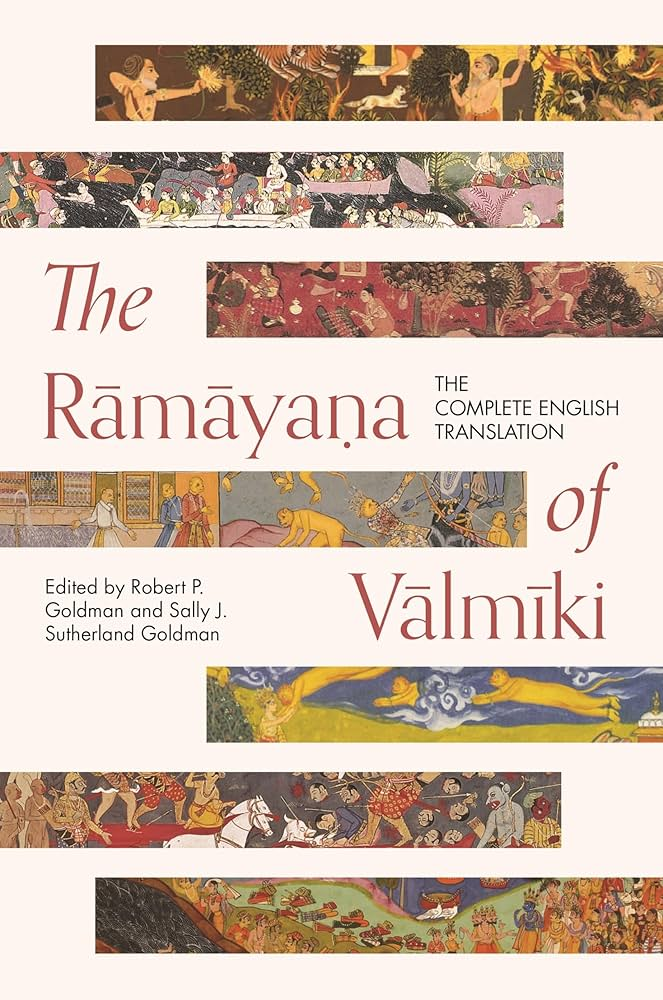
Another evolving thought – I believe that even if kids don’t write about Phantasy Star, or Baldur’s Gate 3, or some other game, on the AP exam, the study of them can form a bridge that allows students to bring those skills into the classroom and then cross-apply them to literary texts. This to me is one of the biggest potentials. I know for me, reading novels, or moreso, reading historical epics, has become easier and more comprehensible because of my video game experience. Last year I read a 800+ page translation of the Ramanaya, which was difficult to process with all the unfamiliar people, places and things. But I was able to hold on to the idea of a quest, or the idea of an enemy boss, and sub-bosses, and weapons development, and all the rest, mostly because I could read the epic as a video game. This is true in a larger sense for lots of media forms. And since kids who are really into video games have that confidence with their analysis, they also can be shown how to take that confidence and apply them onto books. The Handmaid’s Tale for example – the world-building Atwood does especially at the start can be read into “what are the rules of this game?” a mental capacity kids may have in ways we don’t always know.
I think kids feel invested in all of this, and that’s not evidence of how “standards have declined.” It’s just evidence that media is an ever evolving world. Recall that Jane Austen heroines are criticized for reading novels. Bart Simpson gets in trouble for reading comic books. Tipper Gore crusaded against hip-hop and heavy metal. Old media bias is a long term trend. No, the AP Literature and Composition exam has not evolved past this. Yes, I think that’s a problem. But even if it’s not changing, not going anywhere, I think the use of video games of sufficient complexity (just like novels of sufficient complexity) is a fine way to teach the skills the AP Lit exam focuses on. And no, I don’t think that’s surrender. I think it’s evolution.
Don’t get me wrong, I love books. I read dozens of books every year (I usually shoot for 50). I read genre books (especially mystery, spy, and sci-fi), literary fiction, literary criticism, history, critical theory – I have a soft spot in my heart for Latin and Greek culture and its original products – and I want students to love those things too. I do not think this is either/or. Last year, in my class, my students read 5 longer novels or book-length plays/poems, alongside movies, music, table-top roleplaying and finally starting now, a video game. I myself, as what I take to be a pretty well-educated adult, love doing all of these things. I love interacting with all of these text types, and see a lot of unity across genres and media types, not a hierarchy. I believe many people who presume there is a hierarchy have really never dug into these things they think lie lower down on the ladder. There is nothing new under the sun, really, once we get past the surfaces that for whatever reason we become very possessive of as they are used to form “canon” and curriculumIn fact, I think this sort of thing is much more widely accepted at the college level than in high school – I think we sort of embarrass ourselves with our breathless apres moi, le deluge – pop culture has been here. Many, many academics know that. What line are we really holding, and why?
I get that there’s some differences in text type, and differences in how we might apply a concept like, for example, irony, or point of view. I get that the “multimodal” part adds a layer of complexity that can’t be glossed over. BUT ALSO – that multimodal aspect is something many of our students already know both how to navigate and also, in intuitive ways anyway, theorize about. In using literary theoretical language to approach situations they already intuitively grasp, we can build intellectual bridges that will reward their study of and experience around both books and other forms of media. The first day I had my students play Disco Elysium – more on that next time – those intuitions all became crystal clear. And what’s more, they all sat there reading (there’s a TON of text on screen and it’s not all like “go to store” “buy sword” – not at all – it’s laden with figurative language, irony, indirection, satire) without interruption for nearly an hour. The only reason they stopped is I needed them to secure all the devices in our school’s computer lab.
Instead of “why can’t they feel that way about Shakespeare?” Why don’t we instead revel in the possibilities raised by what they DO feel that way about? Literature is, at some level, in the eye of the beholder, and I’m fine with that.

 Original Positions