
[This is part 3 of a longer series – previous track – “Astronomy (8th Light)” – next track – “Re:Definition”]
I think this is the album’s the catchiest track. The lyricism here is joyfully overwhelming- I’ll try my best to exemplify what it feels like to listen to it. It has a ridiculously infectious beat and the “one two three…” chorus but then, you stop to listen at any given line and you just can’t because they come in tidal waves of meaning and reference. And again, just like in Astronomy (8th Light) we get that moment where Talib Kweli messes with you. While you’re processing all the ideas Mos Def just laid down, Kweli goes off the beat, missing it intentionally, accelerating to 1.5x, just to cram in even more lyrics. The video captures that joy pretty well actually:
Somewhere around here I should give a shout-out to another teacher I worked with (who will remain nameless), who spent some time in my classroom a couple of years back. He knows a lot more about the history of hip-hop than I do, but he humored me on several occasions when I tried to explore the meanings of songs like this. He pointed out, among other things, that the “one two three…” hook comes from the 1988 Boogie Down Productions track “Stop The Violence.” When we talked, I’d say things like, how is there so much here? He’d just shake his head back and say, that’s just how it is with hip-hop. But he did concede that even within that norm, Mos Def is on another level in terms of the blended intricacy of the allusion, wordplay, rhyme and rhythm.
A big picture thing my student Leland (who had most definitely had never heard of Boogie Down Productions, and very intentionally delivered his podcast in the most white-bread white voice you can imagine) – showed me that hooks subtly changes between two rhymes – it moves from mentioning the deaths of Tupac and Biggie, decrying “one two three, it’s kinda dangerous to be an MC, they shot Tupac and Biggie, too much violence in hiptop” to the later rhyme “one two three, Mos Def and Talib Kweli… best alliance in hip hop” – the long distance rhymes MC/Kweli, violence/alliance is another deft example of intellectualized but politically-action-oriented oral performance.
There are so many twists and turns in the flow it would be like ruining a series of good jokes to unpack all of them – but here are a few:
Yo, from the first to the last of it, delivery is passionate
The whole and not the half of it, forecast and aftermath of it
Projectile that them blasted with, accurate assassin shit
Me and Kweli close like Bethlehem and Nazareth
After this, you be pressin’ rewind on top your master disk
Shinin’ like an asterisk for all those that be gatherin’
Connectin’ like a roundhouse from the townhouse to the tenements
The duo replaces the real but also stereotype-driven vision of urban rap-industry violence with the metaphorical (and playful, and liberating) violence of their voices – their delivery is so “passionate” that when they confront you with “the whole and not the half of it,” it’s like a force of nature you would first “forecast” and then examine its “aftermath.” Their flow works like a “projectile” that you get “blasted with” – their lyrics are so incisive that they can fairly be called “Accurate assassin shit.”
Raven helped me unpack the second part of this passage. She told me she didn’t know so much about hip-hop but found the playfulness of this song beguiling. She noticed that “me and Kweli close like Bethlehem and Nazareth” not only draws attention to their savior-like qualities and their friendship simultaneously – it also alludes back to the “star” part of “Black Star” – the star of Bethlehem that (the) wise men ought to follow. And therefore highlighting the revolutionary quality of Jesus’s teachings vs. the powers that be. In case you missed the point – which you probably did – they then point out that you’re likely to have missed the point – “after this you’ll be pressin’ rewind on top your master disk” – they know they have said too much for you to follow. But following is exactly what they’re asking you to do, as long as you can see the hidden meanings “shinin’ like an asterisk” (a * - a black star - on the page, indicating exceptions, deeper explanations, or references in a complex text). In fact, when I listed to Raven’s analysis podcast, I had to rewind it too, to process the argument she had made about the lines declaring their own indecipherability, but if you make it to the end of this verse, you hear that it’s “for all those that be gatherin’/Connectin’ like a roundhouse from the townhouse to the tenements.” If you can follow all of this you know this is a call to action, unifying urban neighborhoods and delivering a “roundhouse” blow to the powers that be.
Mos Def and Talib Kweli’s self-consciousness about the complexity of the lyrics is continued one of my favorite rhyming couplets on the whole album, a kind of embedded key to understanding the whole project that is Black Star:
A cipher will complete us if we come through your receivers
You can play us and repeat us and then take us home and read us
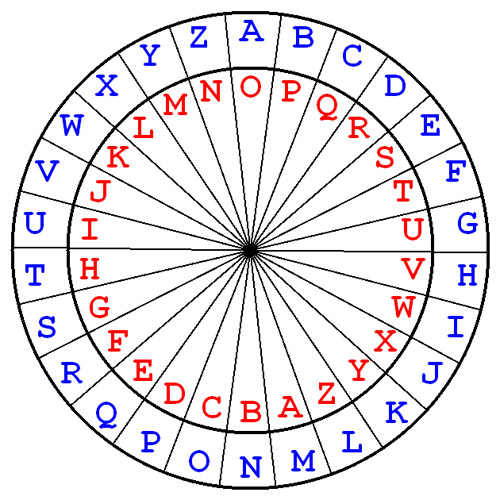
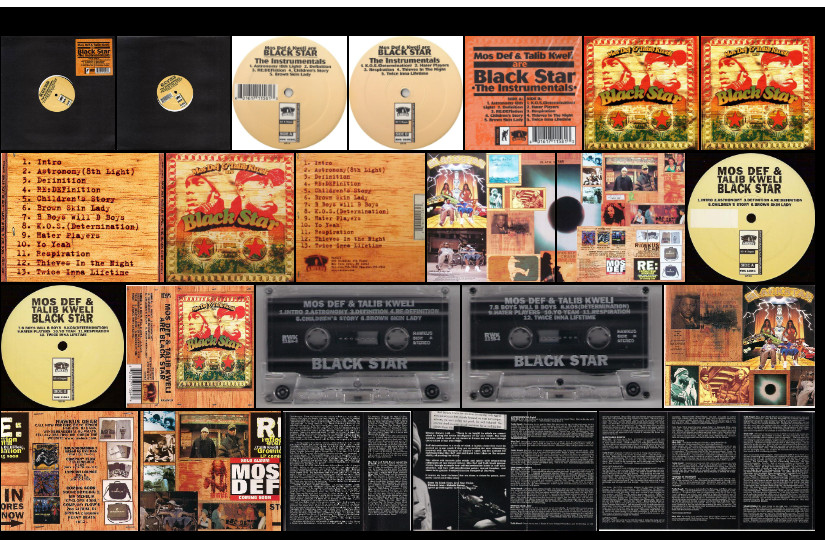
Like I’ve already tried to explain, full appreciation of this album calls on us to form a cipher (metaphorical circular freestyle hip hop gathering) and also requires the deploying of a cipher (a decoder ring), that is, if you play the album on your stereo (“if we come through your receivers”), and also, if you truly use your ears (“your receivers”). And all of that will require both repeated listening and active reading (reading as in, reading the liner notes, but also reading as an act of interpretation of the things you hear or read).


Taken in a political sense, “take us home” also works with the later refrain – “we take the black star line, right on home,” which to mean means that listening to the album can help listeners reach some sort of sonic and political state of self-determination that reaches all the way back to Marcus Garvey.
Closer to the present, but still reaching into the past, “Standing on the rooftop with the Zulu Gastapo” gives props to the roots of hip-hop culture that existed before Mos Def and Kweli had come of age. “Living my life expressing my liberty my name is in the middle of equality” slyly alludes to the declaration of independence, the French revolution (but subtly interjects “equality” – by playing on E-Kweli-ty’s name).
Somehow the lyrics themselves, the joy, intricacy, allusiveness, and rhythm function as a kind of energizing antidote to the violence the song describes fearfully. Or at least, begin to outline the strategies that might ultimately prevail. But when you hear “Hold your head when the beat drop, Y-O!” the script flips and you’re pulled along into the next track, “Re-Definition,” itself a remix of a remix of Boogie Down Production’s original.
[This is part 3 of a longer series – previous track – “Astronomy (8th Light)” – next track – “Re:Definition”]


5 thoughts on “Definition (Track 3)”