[This is part 12 of a longer series – previous track – “Respiration” – next track – “Twice Inna Lifetime”]
In his memoir, Talib Kweli reports that Mos Def was not a fan of this one at first – he thought it was too slow and too many words. But for me, this was, on the first listening, I don’t know, this is where I first felt the intellectual and emotional fusion of this album in a stunningly deep way. I remember Daniel1 (whose parents had immigrated from Nigeria) saying toward the end of his podcast how much this song had really made him realize about life ‘Screaming “brand new’, when they just sanitized the old shit” especially stood out to him. He confessed “to be honest this is actually going to go on my playlist.” Which felt like quite the compliment coming from a teenager.
For me it was the chorus:
Not strong (only aggressive)
Not free (we only licensed)
Not compassionate, only polite (now who the nicest?)
Not good but well behaved
(Chasing after death, so we can call ourselves brave?)
Still living like mental slaves
Hiding like thieves in the night from life
Illusions of oasis making you look twice
Hiding like thieves in the night from life
Illusions of oasis making you look twice
I was just absolutely entranced – mesmerized really – by the feeling of hearing these words for the first time. To me it felt like I was in church – in a good way – like I was hearing a psalm being performed, like a biblical verse was being intoned. Somehow both new and old (“same song, different arrangement”, but again, in a good way). But feeling also like something that was the end result of thousands of years of transmitted humanity.
And this leads into really one of the most rewarding moments I’ve ever had as a teacher. I don’t know if it will translate (so much of teaching doesn’t):
Lisa (Latina and white) – who struggled a lot with getting beyond the literal, getting beyond just following instructions but developing her own ideas. So she’s working on her podcast of this song, and she walked up to me with the lyrics packet folded open with this look on her face like,
“Mr. B you have to see this.”
She’s like “I’m not sure but, you remember when we read The Bluest Eye? This is from that book, look?” And she opens up one of the final chapters of that book, and sure enough, there is the whole passage, word for word. And this explains my sense of the profundity of these words – because I had felt them before. The Bluest Eye being just an emotionally devastating experience to read, every time, and here Talib Kweli has picked out one of its most poignant passages to – well – to set a psalm to. And Lisa, who I think really did struggle with insights, here she is blowing my mind with just the most literal observation you can make about words – essentially “this is a quote from that.” And it might sound trite and obviously I could have googled this (and when I later bought the LP I it literally says so in the liner notes) but Lisa and I shared a learning moment right there. She learned what can be going on beneath the obvious – what a wide canvas a song, or a poem, or a novel, can paint on, when it draws on those that came before it. I learned that my emotions can guide me to something like the same.
I’ve listened to Mos Def and Talib Kweli are Black Star dozens of times since I first heard it through my headphones while I was outside running, early on a cold, dark fall morning during pandemic-shutdown 2020. I will never forget where and when I was exactly as I reached the end of that run, and listened to the chorus of “Thieves in the Night,” the second to last track on the album: it really did transfix me with awe. Since then I’ve listened to it and read the lyrics enough times to come to what I hope is a meaningful conclusion to honor the emotional reality of that moment.
This is what I came up with – I actually wrote what follows here on the basis of a brainstorming session I had with one of my classes. We listened to the song together, they annotated, explored its structure – I told them if we made the outline together I would write the essay while they wrote one of their own, an AP Lit prompt about a poem. So here goes – my in-class essay, warts and all:
“Thieves in the Night” poeticizes a complex consideration of the system of racialized power inequality that exists in the United States by exploring the psychological impact of the tensions and relationships between its abstract and concrete aspects. It begins in the first verse (1) by highlighting the ambiguities of the root causes of racism, then (2) moving on to universalize its abstract psychological impact in the chorus, drawing most crucially on an extended quotation from The Bluest Eye by Toni Morrison, 3) then demonstrating the present-day political and social impacts of the abstract truths expressed in that chorus, 4) then, in the most stunning moment of the song, revisits the abstractions of that chorus but makes them concrete by synthesizing the core ideas raised in the other verses, and finally 5) offers an outro, which suggests a means of escape and resistance. All in all, it produces a very intuitive, emotionally charged but also intellectually profound effect that always leaves me marveling at its critical stance.
(1) As deep as the song gets, it starts off with a very conversational sort of vibe. The sense I get is late-night conversation between two close friends – as it jumps in with Kweli’s friend, “my man Louis.” It feels like the sort of conversation these two have had before, but maybe it took a deeper turn on this night. The first verse, overall, ends up highlighting the ambiguities of the root causes of racism.
The basic question of the song – “why we follow the law of the bluest eye” introduces this topic.
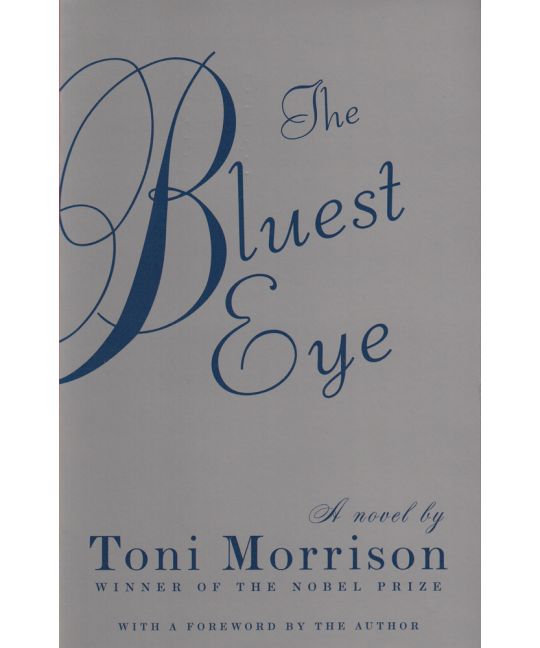
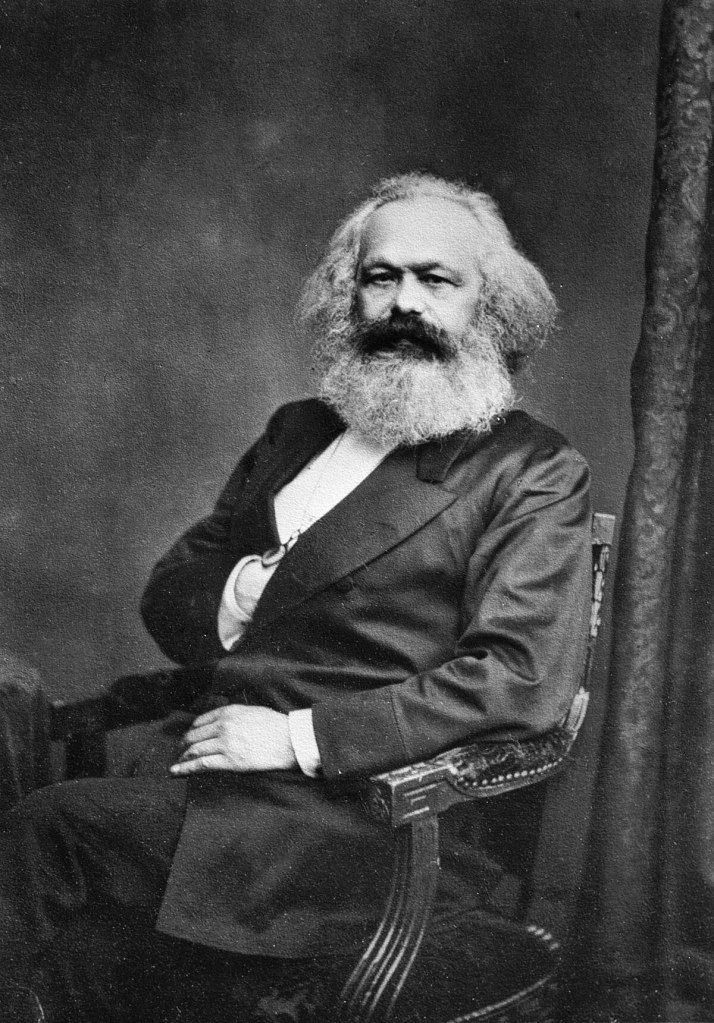
In alluding to Toni Morrison’s novel, itself a pretty heavy book that explores the way that Pecola Breedlove, a young black girl, comes to hate herself, and desire blue eyes, the cultural context of this question is deepened in a way that foreshadows many of the answers the song itself will offer. To continue the conversational vibe, the song’s rhymes echo the back and forth of conversation. In response to the question about “the bluest eye” comes the rhyming dialogical echo: “I’m clueless, why?” And here an important duality is provided in answer, in the first of many biblical allusions (here, to 1st Timothy) that fill this song. “They say money’s the root of all evil but I can’t tell…” Kweli demures from a popular claim – that racism is rooted in capitalism, what we could call a Marxist answer to the root cause question, as perhaps too surface-level. He interjects another possibility –
“or is it the mindset that’s ill?”
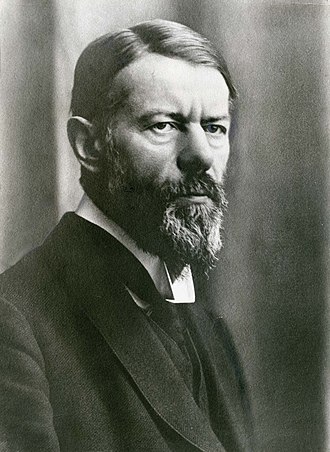
which gestures maybe to a different sort of explanation, one rooted in psychology and human nature – an answer I associate with Marx’s sort of foil, the German social critic, Max Weber.
After setting forth those competing root-cause ideas, the song foreshadows its more extended consideration of the impacts of this racial structure – “the wounds of slaves in cotton fields never heal what’s the deal,” using an internal rhyme that highlights an abrupt rhetorical question, intensifying the sting of the moment. Beyond that, the first verse also lets the listener know that a solution will be offered here too, one that transcends the specifics of 20th century America: “but my language universal…” In gesturing towards when “R&B Singers hit bad notes…” (itself a cool way of highlighting the backing instrumental track, which feels very much like R&B bad notes, or the idea that they “rock the boat” (referring both to the “slave ship” mentioned later on, and also Marcus Garvey’s Black Star Line) Kweli highlights a more positive alternative: “raise my son, no vindication of manhood necessary” – and now the flow is smoother, and less staccato. Overall, a whole bunch of tension is laid in this first verse that is resolved later.
(2)
Not strong (only aggressive)
Not free (we only licensed)
Not compassionate, only polite (now who the nicest?)
Not good but well behaved
(Chasing after death, so we can call ourselves brave?)
Still living like mental slaves
Hiding like thieves in the night from life
Illusions of oasis making you look twice
Hiding like thieves in the night from life
Illusions of oasis making you look twice
This chorus, again, quotes heavily from is the passage Lisa found in the Bluest Eye – here it is in prose:
And fantasy it was, for we were not strong, only aggressive; we were not free, merely licensed; we were not compassionate, we were polite; not good, but well behaved. We courted death in order to call ourselves brave, and hid like thieves from life. We substituted good grammar for intellect; we switched habits to simulate maturity; we rearranged lies and called it truth, seeing in the new pattern of an old idea the Revelation and the Word.
The song slyly shifts from an allusion to the title, to a block quotation of the same, setting a crucial passage as its chorus. This setting effectively universalizes the issue: this isn’t only about race in the US, this is about human beings and power differentials, about the impact that otherizing has both on the other-ized and the other-izer. The chorus unfurls a cluster of simple contrasts each with deep connotations (“strong/aggressive,” “free/licensed”, “compassionate/polite”), the similarly simple word “only” makes it clear that in each case, what racism, and all power-structure-domination does, is replace those first qualities – strength, freedom, compassion – with the second set: aggression, license, politeness. It goes on to suggest that all these qualities lead to actions that are both self-destructive – “chasin’ after death…” but also connected crucially to the unresolved past – “still livin’ like mental slaves.” The final moments extend the sense of universal applicability here with another Biblical allusion – “hiding like thieves in the night from life,” quoting a parable from Matthew, about the way that God and/or death will come to all of us: “But know this, that if the master of the house had known in what part of the night the thief was coming, he would have stayed awake and would not have let his house be broken into.”
Less universally, but also relevant for the racial context of the song, I also think of a passage from Frederick Douglass’s autobiography, where he’s describing his overseer Covey, whose services Douglass’s master has retained to “break” him:
“His comings were like a thief in the night. He appeared to us as being ever at hand. He was under every tree, behind every stump, in every bush, and at every window, on the plantation.”
I don’t have any clear evidence that Douglass is who Kweli has in mind here, but the contexts of their situations seem crucially intertwined. As the chorus ends, we hear repeated twice “Illusions of oasis makin’ you look twice,” emphasizing how difficult it can be to discern the truth from reality under such an oppressive social structure, wherein overseers act as Gods.
(3) As the song moves into the second verse, we move from the past to the present, now considering effects more than causes. The fundamental claim sounds simple: “everything you see ain’t really how it be” – but this speaks to the range of the “illusions of oasis” that the chorus mentions. It begins by critiquing people, rehashing what’s come up in Kweli’s verses both on “Re:Definition” and “Respiration“:
“most cats in the area be lovin’ the hysteria”
but quickly broadens the canvas again with a nice half-rhyme, generalizing about how
“synthesized surface conceals the interior.”
This calls to mind the insane lie that is the social construction of race – and that it is a social construction – a “synthesized surface” creating illusions of group membership that “conceals the interior” existence individuals lead. And quickly, we’re not just talking about those friends but also
“America… land of opportunity, mirages and camouflages.”
It’s the entire reality of the country that takes on this menacing, disguised quality. We hear echoes of the initial verse’s musings about money, as America and whiteness become personified an exploitative lender that needs accomplices-
“your game is twisted, want me enlisted in your usury,”
which feels to me like it’s obliquely referencing Leviticus:
“Take thou no usury of him, or increase: but fear thy God; that thy brother may live with thee.”
Kweli laments that resistance is generally the exception, not the rule – “most men join the ranks cluelessly” and “bafoonishly accept the deception.” It’s right around here that a crucial assertion about history is made:
Same song, just remixed, different arrangement
Put you on a yacht but they won’t call it a slave ship
Strangeness, you don’t control this, you barely hold this
Screaming “brand new”, when they just sanitized the old shit
Music itself now provides the metaphor for the cycles of history that exist within racist oppression – “same song- just remixed, different arrangement” references both the maddening way history seems to repeat itself, and also the literal theft of Black music through remixes and arrangements. When we encounter
“Put you on a yacht, but they won’t call it the slave ship”
we’re now talking about the way that illusive offers of riches (“a yacht”) allow the wealth differential begun by “slave ships” to remain in place.
Screamin’ ‘Brand new!’, when they just sanitized the old shit”
speaks to the way American culture obsessively sells new versions of old ideas, always struck by the novelty that comes only from historical ignorance or even denial. The decision to call it “shit” highlights the system’s inanity and the frustration it creates in the Kweli’s experience. The song, at this point, begins tying things into to album-long theme created by the overall title Black Star – the Star Wars “Jedi mind trick” places all of this in that mythical, sci-fi context. Another biblical allusion that comes up for me (though it’s actually not alluded to directly) is Ecclesiastes’s most quoted line:
“There is nothing new under the sun.”
The end of the verse goes on to consider the impact this has on people living within it, especially Black people. Kweli considers the impact on his psychological self-image and physical reality using charged derogatory terms contrasted with exoticized compliments – “we either n-words or Kings, we either b-words or queens…” Either way, he’s noting, he’s not seen as a human equal to other humans – the social structure insists on putting him at an exotic fake top, or a harshly racialized bottom. The impact of all of this is the brutal truth about the racial gap of life expectancy in the US: “the length of black life is treated with short worth.” But the verse pivots from here towards, again, a solution the song will offer at the end: “This life is temporary, but the soul is eternal/Separate the real from the lie — let me learn you”, and from there, we flip into the breathtaking intellectual synthesis this song pulls off.
(4) Earlier on the album, Mos Def uses the phrase “intelligent embellishment.” This is one of those neat meta moments where the album seems to be describing itself. I’ve taken it as a cue to the method of the lyricism this album achieves. In the grand tradition of freestyling, it works with oral-poetic tropes, and embellishes upon them intelligently. Here, Morrison’s passage is itself embellished upon, and what was a chorus becomes situated within the verse, just like a Psalm setting in church, where the refrain becomes embedded in the passage itself. The abstract and the concrete, the psychological and the political all come together in a magical few lines.
Not strong, only aggressive cause the power ain’t directed
That’s why we are subjected to the will of the oppressive
Not free, we only licensed, not live, we just exciting
Cause the captors own the masters to what we writing
Not compassionate, only polite, we well trained
Our sincerity’s rehearsed in stage, it’s just a game
Not good, but well behaved cause the camera survey
Most of the things that we think, do or say
Above, I’ve bolded when Kweli embellishes upon the earlier chorus. It begins with “Not strong, only aggressive” but now, in this new setting, the second half of a line is added: “’cause the power ain’t directed.” The first half of line echoes the earlier quotation, but the 2nd half adds a diagnosis of that abstraction that is rooted in the political experience of the world Mos Def has earlier described as one where “‘How to Make a Slave by Willy Lynch is still applyin.” Each quoted line offers a new diagnosis that complicates it: “Not good, but well behaved,” echoes the first chorus – “ ’cause the cameras survey/ Most of the things that we think, do or say” – adds in a causal explanation that speaks to the material reality of anti-Black police surveillance. “Not free — we only licensed,” again echoing, “not live — we just excitin’” embellished, and “’Cause the captors own the masters to what we writin’” – analogizes music industry “masters” with “masters” from slavery – which ties in with the “same song-just remixed, different arrangement” idea. Colonizing the musical culture (a theme the album also considers on “Children’s Story,” itself a cover/”remix” of Slick Rick’s song of the same name) becomes a way that the underlying structures perpetuate their dominance under new cover. The depth of these intertwining notions is maddening in its complexity – I’m reminded of Victor, from the Color of Fear, when is brought to righteous anger about how people “mystify” the structure to wreak havoc on the minds of each party – white and Black – just in different ways.
(5) After all that complexity is thrown out there, the song gives you a minute. The chorus repeats again, but now in its original chorus-ness, slower, without the new interpolations. As a listener, you get a chance to reformulate all of these ideas, to let them settle, to adjust and reflect on all of them. And now we hear one line “illusions of oasis makin’ you look twice” repeated several times – since the 2nd verse has just offered so many examples of those illusions, it pays to take the time to feel them. From here, the outro is pretty subtle, advancing a very gentle solution to everything:
“stop hidin’ stop hidin’ stop hidin’ your face… stop hidin’ stop hidin’ ‘cuz there ain’t no hiding place”
– the implication here being, I think anyway, that none of these “illusions of oasis” will work, that none of them will provide sufficient cover. So instead, Kweli vulnerably advises – you should stop hiding your face. This effectively draws on the force of the rest of the album when, a few moments later, after strains of the chorus creep back in, we here “Black Star keep shinin’”, suggesting there’s something out there to see if you step out of those hiding places. And then also “We take the Black star Line, right on home…” – which moment metamorphoses Marcus Garvey’s ship into a vision for mental, spiritual and political freedom, and ties in with broader trends of “knowledge of self (determination)” and organizing raised throughout the album.
All of this tumbles you into the album’s final track, “Twice Inna Lifetime,” a fitting mic-drop of a posse track that celebrates the joy of the completed cypher – metaphorically and literally. In fact it was there, in its opening moments, with a guitar riff that sounds like nothing more than “Let my people go!” that I might have first sensed the true depth of this album. If this album is, like my student said, 13 “essays crammed into a song and placed on top of chill beats,” even so, my own essay here feels far less efficient than the song itself. When the album ends “we the five on the fist fortified organized like this!” somehow just that “this” meaningfully encapsulates all of the previous 50 minutes into one emotionally and conceptual big bang in reverse, as the universe evacuates itself into a black star.
- all names are changed ↩︎
[This is part 12 of a longer series – previous track – “Respiration” – next track – “Twice Inna Lifetime”]

 Original Positions
2 thoughts on “Thieves in the Night (Track 12)”