
[This post is part 1 of a series – click here for part 2 – Teaching the Kendrick/Drake Beef – Prequel #1 – “Ab Soul’s Outro” – Purpose in a Larger Context]
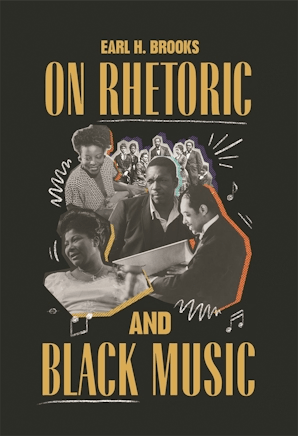
This last year I developed a unit that presented students with one of the most genuinely difficult challenges I’ve ever presented in 17 years of teaching AP Lang: we studied the ten songs that Kendrick Lamar and Drake wrote in a furious and fast-paced public battle in 2023-2024. I began the unit with some background in the history of Black music as a forum for activism and debate, including passages from 2025’s featured speaker at the AP reading Earl Brooks’ On Rhetoric and Black Music.
We listened to and discussed all ten songs in order. As two summative assessments, I first asked them to rhetorically analyze a single song in a small group podcast, and then later to write a solo synthesis essay reviewing the entire cultural moment (citing all 10 songs) and declaring a winner. Along the way they read and explored “Euthyphro,” Plato’s Socratic dialogue about piety, and I helped my students see that Socrates and Euthyphro were engaged in almost the same debate as Kendrick and Drake. In my honest opinion the Kendrick/Drake feud is one of the most complicated and developed contemporary rhetorical situations available to us as teachers. Because of that, the unit hit the “big three” AP Lang writing modes (hat-tip to J Cole there), and required some very challenging analytical and argumentative reading along the way. In the end, really, the rap proved much more difficult for them than the Plato. But in the best possible way. The whole thing took almost a full quarter and I still think we barely scratched the surface in some ways.
I’m going to write a series of posts about my experiences in the hope of continuing a broader dialogue about the role hip-hop can and should play in the AP English classroom (both Lit and Lang). In my opinion, this is not just “culturally relevant pedagogy” (though it is also that) – it is also essential engagement with one of our shared culture’s vital modes of political, ethical and philosophical discourse.
But for now, let me get into one line from the second song of the beef, “Like That.” Consider this proof of concept.
DOT, the money power respect – the last one is better
— Kendrick Lamar, “Like That” (2024)
I’ve taught AP Lang now for 17 years, worked as a reader for 10, a table leader for 4. I’ve spent the last 10 years listening pretty closely to nearly everything Kendrick Lamar has produced, and I want to make the claim that a huge amount of it is very effectively compressed into this one line. It’s in the second verse of “Like That,” on which Kendrick features. Yes – the first verse has some potential appropriateness issues in a classroom (much more on that later). For now try just to hear Kendrick’s verse for what it is.
THESIS STATEMENT FOR RHETORICAL ANALYSIS ESSAY: This line encapsulates a career spanning ethical commitment on Kendrick’s part. It’s Kendrick’s assertion of what values ought to underpin hip-hop, and also, simultaneously, a demonstration of that ethic, in highly compressed form – an attempt to change his audience’s views on ethical commitments they should hold, by modelling the ones he does, and the opening salvo in an attempt to rebut Drake’s claim of GOAT status and claim the mantle for himself.
Word by Word Breakdown
Let me just nerd out as an English teacher on this line for a bit.
“DOT” – “K-Dot” is one name Kendrick likes to use for himself, and when I first heard this line, that’s where my mind went – Kendrick gets us there by ellipsis. In fact, he used K-Dot a lot more earlier in his career. The rhetorical/poetic use of nicknames, by the way, is called antonomasia. It’s really common for rappers to play with their own names, and Kendrick is no exception. He’s also “Kung-Fu Kenny” on DAMN. (2017) and “OKLama” on Mr Morale and the Big Steppers (2022). You can hear Compton’s own Dr. Dre (himself a huge influence on Kendrick) call Kendrick “K-Dot” in the intro to “Hood Politics” on his 2015 magnum opus To Pimp a Butterfly:
Dre’s voice begins the track:
K-Dot, pick up the phone, n****
Every time I call, it’s going to voicemail
Don’t tell me they got you on some weirdo rap shit, n****
No socks and skinny jeans and shit, ha
Call me on Shaniqua’s phone
A student of mine memorably pointed out how this intro is Dre subtly calling out Kendrick for having become something he isn’t – a “backpacker” I think is the term from back then – and he does so by beginning with K-Dot, his old name, creating tension between his authentic self and the self who Dre is worried he may have become. “Hood Politics” itself is Kendrick wrestling with the same thing, what he calls “survivor’s guilt,” coming back to Compton and struggling with the meritocratic “fantasies of who [he is]” as named on the album’s previous track, “Momma,” by an anonymous boy who “resembled [Kendrick’s] features,” a kid that he meets on his (until then) triumphant return to the hood.
So Kendrick’s DOT on “Like That” is calling back to K-Dot, that earlier, authentic self, which is especially important in the context of the song – “Like That,” a track that seems to be questioning Drake’s own credentials pretty forcefully (more on that in its own post).
But “DOT” here also does something else, and to understand that, we can also see another key of Kendrick’s art – compressed allusion. The next few words – “DOT, the money power respect” – using the time-honored rhetorical device called the tricolon (triple list) – pretty cleverly reach back into hip-hop history for the 1998 track “Money, Power and Respect” by The LOX (featuring DMX and Lil Kim). The title or near-title of the song itself is obviously signalling a large part of that, but so is “DOT” – because one of the producers of that track is Derrick “D-Dot” Angelettie. This doesn’t mean Kendrick’s nickname necessarily derives from Angelettie’s, but I do think it’s fair to say here, he’s using DOT to invoke D-Dot, and pay respect to him. “Respect.” Yes- see – form and function align over and over in hip-hop and especially in Kendrick’s densest lines.
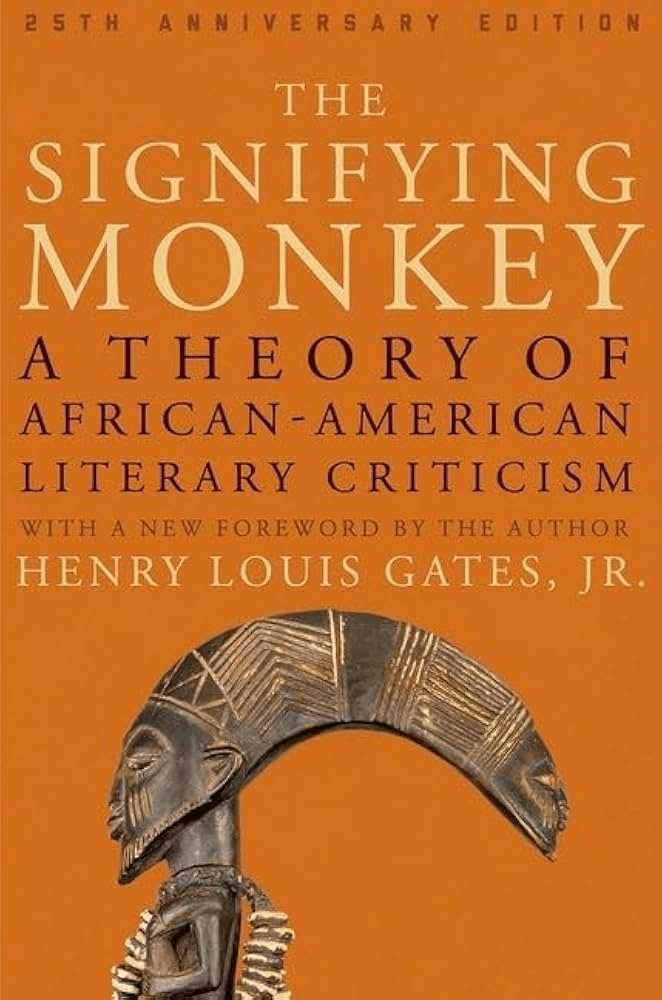
Henry Louis Gates’ book the Signifying Monkey (to which I will now pay respect myself) is not really “about” hip-hop except for a few pages in the intro to the 25th anniversary edition (xxix-xxxiii) but it’s taught me a lot about how to process hip-hop lyrics. One key claim is that “repetition with a difference” is the essence of what Gates called “signifying,” in brief (and way oversimplified) the fundamental tool Gates says the African American tradition uses to talk to itself and about itself while also generating art and literature. Here we see Kendrick repeating D-Dot but with a difference, and that brings together two streams of tradition – D-Dot the east coast pedigree of DMX, Lil Kim and D-Dot, along with K-Dot establishing his west coast bona fides – note we’ve already talked about Dre, just to explain the nickname. The similarity and the difference both do very efficient work – one single missing letter with two possibilities is just about the most efficient you could be in transmitting allusive energy.
Another very small but consequential repetition-with-a-difference – “money power ___ respect” rather than “Money, Power & Respect,” the LOX’s song’s original published title.
That song begins with Lil Kim’s introductory thesis statement:
See, I believe in money, power and respect
First you get the money, then you get the motherfuckin’ power
After you get the fuckin’ power, motherfuckers will respect you (What’s the key to life?)
Note that in Lil Kim’s telling, it’s a simple sequence – money leads to power leads to respect. A consequentialist ethics of achievements – the ends seemingly justifying the means. It’s more complicated than itself really – the verses of the LOX’s song internally signify even on that idea, and do so with an all-star cast – the writers, producers and performances including DMX, Lil Kim, Jadakiss, among others. In fact, Kendrick shouting out that song also shouts out his own collaborators (Metro and Future) by placing “Like That” into dialogue with that tradition of collaborative tracks.
But for now let’s hold on to what Kendrick himself does with it when he removes the “&”. This is the rhetorical device I first learned about in high school Latin when studying the Aeneid – asyndeton. The removal of conjunctions like “and” or “or” where they would otherwise have been expected.
Kendrick removing the “&” also removes Kim’s simple linear trajectory of the expected assertion – get money, then you’ll have power, and then someone will respect you. Kendrick’s quotation of this song is more ambiguous – “money power respect” – these all become free-floating concepts Kendrick then invites you to reflect on (it’s also the form of the phrase that’s most centered in the LOX’s chorus). He’s critiquing Lil Kim’s formula, thereby asking Socratic questions about these three terms – how do they relate? What are they in the first place? He’s wondering where that consequentialist framing is as obvious as Lil Kim makes it sound. The central question Socrates as Euthyphro in “Euthyphro” being – “And what is piety, and what is impiety?” “What is…” in Greek is “ti esti…” – many Socratic dialogues have a central “ti esti” moment. This line is, in a sense, Kendrick’s – all asked just by this elided quotation of the LOX
“Money Power Respect” also shouts out an earlier entry in Kendrick’s own catalog, where he makes a similar critique of money-first ethic. Look back to Good Kid mAAD City, Kendrick’s acclaimed and still best selling 2012 major-label debut, and its excellent track “Backseat Freestyle”:
Again yes, this song is full of “mature content” that needs to be unpacked. Also, it starts with these lines:
Martin had a dream
Martin had a dream
Kendrick have a dream
All my life I want money and power
Respect my mind or die from lead shower
Let’s look at what Kendrick’s doing there. He’s arguably referring to the same LOX track (they’re in the backseat freestyling after all – riffing on something else), but here added and “and” back in with “money and power”- which Latin also taught me can be called polysyndeton – the insertion of conjunctions where they are unexpected. This formation creates a hierarchy – “money and power” are things Kendrick “wants,” but “respect” now appears as a verb in the imperative (“respect my mind”) – which is called anthimeria by the way – shifting of parts of speech from the noun to the verb here. The listener processes the allusion to “Money Power & Respect,” but with a striking difference. The hierarchy is roughly this – he wants “money and power,” but he would threaten someone’s life (and thereby risk his own) – they’ll “Die from lead shower” – for “respect.” And in case you think that’s hyperbole, look at the lines before – “Martin had a dream… Kendrick have a dream.” Martin Luther King Jr had something was willing to die for, and in fact did die for. One step further and we could go to Nelson Mandela and his “An Ideal For Which I Am Prepared To Die” speech. Kendrick more or less devotes To Pimp a Butterfly’s final track “Mortal Man” to Mandela, a song in which Kendrick raises the possibility of his own death very sincerely.
Recall that Socrates, also is a person who was willing to die to maintain his own self-respect. And Kendrick, even in his earlier “K-Dot” part of his career, the Kendrick of good kid, m.A.A.d city – here continues to play a very serious Socratic game with these concepts. “Kendrick have a dream” being another repetition with a difference – he’s not dead, like MLK, who “had” a dream, and he’s also not modulating for respectability like MLK – he could have said “has” but he goes for the AAVE conjugation “have” – Martin had a dream, Kendrick have a dream. Actually it’s precisely not a difference – “I have a dream” becomes “Kendrick have a dream,” and the third-person play – illeism from Latin “ille” – puts Kendrick Lamar in dialogue with Martin Luther King, often styled “Martin” in school-age history lessons.
But Back to 2024 and “Like That.” We have one more clause to consider – the line ends “the last one is better.” This serves at least two functions. But before that I want to call attention to another important rhetorical technique Kendrikck uses all the time – understatement or if we want a Greek word, meiosis. If you listen to the recording, you will almost miss the words “the last one is better.” It’s like Kendrick has intentionally undervoiced them, quieting the beat behind them, leaving it up to you to actually discern his reasoning. This is something Kendrick does all the time in other songs – his softest lines, the ones he almost swallows, are often the most important.
Here, “the last one,” spoken as softly as it is, seems to be flagging the most important word in the line – “respect.” Put simply, respect is better than money or power. Just like what he had said in “Backseat Freestyle.” This is pretty clearly Kendrick responding to Lil Kim’s consequentialism with his own unambiguous deontological ethic: it’s not about what happens because of your actions, it’s about whether the actions are, in and of themselves, respectful. And it’s a move that also parallels Socrates’ preferred definition of piety in “Euthyphro” – not consequentialistically pleasing the gods as Euthyphro puts it (“Piety, then, is that which is dear to the gods, and impiety is that which is not dear to them”) , but what happens after Euthyphro gives up his original argument – Socrates proposes “a sort of science of praying and sacrificing” – of giving respect. As with Kendrick’s line, in Socrates’ dialogue, the last one is better, even if Euthyphro, like Drake (as we will see) does not understand the argument.
Digression/Preview of the Kendrick/Drake Battle
The next line of “Like That” goes on to explain why respect is better than money/power – “say, it’s a lot of goofies with a check.” One of the particular “goofies with a check” Kendrick is pretty clearly calling out is DRAKE. Drake’s got a check – a lot of checks in fact – but, Kendrick will argue, he’s also goofy – maybe even because of how much time he spends collecting checks. So Kendrick is not only telling us respect is better for determining GOAT status, but one reason why: it’s relatively easy to get money, and by contrast, relatively hard to get respect. Somewhere in the background is Aretha Franklin’s demand – R-E-S-P-E-C-T – find out what it means to me” – whom Drake ironically tries to deploy in “The Heart Part 6,” the beef’s sad anti-climax and his futile final attempt to win the battle.
So rhetorically, Kendrick has set up criteria for his coming debate with Drake, before that debate has even started, establishing a deontological framework he believes Drake does not -cannot- conform to – and rejecting the consequentialist ethos he has good reason to believe Drake will insist upon – to a fault (see “Taylor-Made Freestyle,” on which more in a future post). Kendrick knows what he’s doing – as he puts it much later on in “They Not Like Us,” ‘sometimes you gotta step out and show n****’s.” The whole time he was picking a fight, and he made sure his first punch landed, perhaps landed in ways Drake never fully even realized. This is a also a career-long strategy on Kendrick’s part. As he put it also in “Hood Politics,” referring to the range of battles (including a skirmish with Drake) he began in 2014 with a feature on Big Sean’s song “Control,” “it’s funny how one verse can f*** up the game.”
One more thing here though. This one I got straight from genius.com but it’s beautiful in light of its potential implications. “DOT” itself has a third meaning here beyond referencing K-Dot or D-Dot. DOT is also arguably an acronym we can only appreciate once we’ve heard “the last one is better.” Follow me here: J Cole’s label is “Dreamville.” Drake’s label is “October’s Very Own” (OVO). Kendrick’s label is “Top Dawg Entertainment” (TDE). So, “DOT… the last one is better” is also Kendrick saying, TDE > OVO and Dreamville. The last one (the T) is better than the earlier ones (the D and the O). There’s a pretty cool analogy he’s built then:
TDE/Kendrick : OVO/Drake and Dreamville/JCole :: Respect : Money and Power.
Now, some people have marked that as a “reach” on genius.com, but honestly, it squares with the rest of the density you can find on nearly every track Kendrick has ever rapped on. The punchline is this: you should want respect, so go with TDE, which means Kendrick – Dreamville and OVO (so, J Cole and Drake) will only get you money and power, which is worse.
But Did He Really Mean All That?
Something that I think a lot of folks miss when exploring art like this: they ask a seemingly compelling question: “did the artist mean all that or are you over-analyzing?” And in AP Lang and Comp, where no less a figure than David Joliffe once told me, we need to commit the intentional fallacy in spades, this is even more important. ButI think rap works in a way that means this question doesn’t quite apply, and it’s something Gates’ book taught me about rhetoric as it exists within the Black tradition. It’s not only about Kendrick Lamar the individual person or his private intentions.
In oral traditions like hip-hop, meaning accrues across a community, not just (or even necessarily at all) in one rapper’s mind. One of the things I’ve learned about hip-hop, like other orally and communally composed poetry before it (like the bards who created the Iliad and the Odyssey, the Ramayana and the Mahabharata), is the immense degree of compression that it generates – Gregory Nagy’s work, most centrally his Homeric Questions helped me understand this. In oral traditions, compression is a transmission mechanism. Many linguists think this is how figurative language and allusions came to exist in the first place – to efficiently and memorably encode and distribute information through challenging surroundings, to ensure successive repeat performances by other artists. It’s like DNA in that way – the process of mental and oral duplication builds over generations, evolving and mutating, developing tropes, formulas and all sorts of conventions that render that process more efficient and simultaneously aesthetically satisfying – aesthetic satisfaction being one of the most successful strategies for distribution: people like what they hear. and so they repeat it.
And this isn’t just from some books I read in graduate school (though there are some good ones I’m drawing on). Consider this excerpt, again from “Mortal Man” (now the outro) where Kendrick splices his own voice together with a 1993 Tupac Shakur interview:
Kendrick: Sometimes I can like, get behind a mic and I don’t know what type of energy I’ma push out or where it comes from. Trip me out sometimes
Tupac: Because it’s spirits, we ain’t even really rappin. We just letting our dead homies tell stories for us
Kendrick: (damn)
Here, with more characteristic meiosis (you almost can’t hear that final “damn,” but he’s affirming the whole thing) Kendrick explicitly says he doesn’t always know where the words come from, and then Tupac suggests why: because he’s channeling “dead homies,” ie, the tradition. Note how Kendrick is both making an assertion about the tradition and demonstrating it with the very method he’s asserting (ie, a dead homie- Tupac – is literally making the point for him about the role of dead homies). Within this tradition, Kendrick has learned how to rhyme, how to layer meaning, how to allude—- his rapping technique as a whole. So it’s not a question of “did Kendrick mean it?” Or “is it a reach?” It’s a question of what the tradition, speaking through Kendrick, has generated- something that is always rich, complex and dynamic.
Kendrick puts the same point very similarly in “Euphoria” (2024), later in the dispute with Drake:
And notice, I said “we, ” it’s not just me, I’m what the culture feelin’
It’s easy to overlook the significance of this line. He’s not just saying he’s speaking for the culture – he’s saying that his existence is the culture’s. He’s positing himself as a conduit for the thoughts and values of a broader group, not an ambassador for that group. At the very least, he’s giving us permission to think more broadly than just the boundaries of his discernable individual intentions.
And when we see how much that culture and history contains, it’s all way way less of a reach than it might seem at first. Once we’re willing to believe in the richness of the history of Black music and culture – once we respect it – which is Kendrick’s central argument in the line form “Like That.” So the richness of interpretation actually becomes an invitation into a much broader lineage, one that Kendrick is a living descendent of, rather than the exceptional “talent.” At first I saw him that way – “he’s better than other rappers,” and I’m not saying he’s not good, but I am saying Kendrick’s argument here, in fact, is that if we really want to understand what he means, we need to understand the culture, and that is a lifelong pursuit. Socrates says the same thing about knowing yourself – the daimon that speaks to him that he mentions briefly in “Euthyphro” but more extensively in “the Apology” – is like Tupac’s spirits – they pushes things out he doesn’t fully comprehend.
Conclusion
In ten simple words – one rapped line – Kendrick has alluded to DMX, Lil Kim, Jadakiss, D-Dot, his earlier self and his earlier own tracks “Backseat Freestyle” and “Hood Politics,” and thereby Martin Luther King (and less directly Nelson Mandela), and also Dreamville Records, OVO and TDE. He has embedded himself within an ethical discourse and critiqued its findings. He has positioned himself for an upcoming beef with Drake by establishing comparative criteria for debate, taking one big step ahead of his opponent. Ultimately, what Kendrick has done works both at the level of content and form. Content-wise, like Socrates before him, he has argued in favor of respect as the driving aesthetic determinant of what determines “who the GOAT” (in Drake’s words). But formally, also like Socrates before him, who preferred spoken dialogue to written essay, he has also demonstrated that respect – not the respect he receives, which is what I thought at first, but the respect he gives – to 90’s hiphop, to the east coast tradition, to the west coast tradition, to Martin Luther King and the civil rights movement, to his own record label and its other artists. He has both performed about respect and performed respect. In one line – ten words. These are ten words that provide a very clear key to understanding who Kendrick Lamar is as an artist and as a person – they help us understand all of the music he’s produced to date, and why he’s produced it, as well as how he works with the tradition he respects.
[This post is part 1 of a series – click here for part 2 – Teaching the Kendrick/Drake Beef – Prequel #1 – “Ab Soul’s Outro” – Purpose in a Larger Context]


