
Kendrick you do know my language, you just forgot ‘cuz of what public schools had painted”
—Kendrick Lamar, “Momma” (2015)
A year before COVID, I had a student named D. He was enrolled in my school’s on-level junior English class, which was generally a decently racially diverse class – D was one of like 7-8 Black students in the class; the class was relatively equal portions Black, Latinx and white, which was fairly normal for our that class at our school. This class I think skewed male a bit – which is also pretty common for my experience of that class. At our school, AP Lit is generally not like that – it’s disproportionately white and female vis-a-vis the overall school demographic. In my class, D often had a lot to say, but was relatively quiet about saying it. He sort of developed a knack for getting my attention through asides that were really interesting, but I learned quickly he really didn’t want to speak them out loud in the class setting (at least not initially).
In an early unit that had centered around music, I asked students to pick one song to lead a brief (5 minute) discussion about. The goal was to scaffold discussion skills by using an approachable text and a manageable timeframe. The song he picked was “Power” by Kanye West (I acknowledge there is a lot that is problematic about Kanye that has happened in the years since, but I don’t think that’s important to this post).
One almost-rhyming-couplet that came up during that discussion:
I just needed time alone with my own thoughts
Got treasures in my mind but couldn’t open up my own vault
It was one of those meta- moments in teaching where I’m like, these lines are about this kid and he’s played it for us and I wonder if he knows that. These lines are not only Kanye’s reflections about himself, but also an embedded commentary about his artistic process and in a deeper sense, about the work of thinking.
Over the course of the year D did very well in the class; he enjoyed reading and discussing not only music, but also novels like The Bluest Eye and The Great Gatsby. I recommended that he consider taking AP Lit the next year, and he ended up taking the class. He and I ended up having some conversations through the next year while he was taking Lit, just him stopping by and that kind of thing. That year my school had convened a special panel that involved students and teachers from a couple of other schools, with a focus on the experiences of students of color who were first-timers in AP classes. He sat on the panel. Something he said that sticks with me all these years later – another teacher from another school asked him about his experience in AP Lit. He described it as “whitewashed.” She asked him what he meant and he said that it was something about the way people talked, read and wrote in the class, and how the teacher framed all of that. He made it clear it wasn’t really about the books he was reading – they read things like Their Eyes Were Watching God, Beloved and other books written by Black authors that we commonly read in AP Lit, and it wasn’t really about the teacher either. It was about what he called “the space.”
D didn’t put it like this but, what was “whitewashed” was not the curriculum, it was the pedagogy. What D experienced was an environment in which texts written by diverse authors were being read and studied, but the manner of study was what he experienced as limiting and inconsistent with his own developed modes of discourse. A different way we could describe that is to say that the reading was diverse but not truly inclusive and therefore not equitable, and did not foster a sense of belonging. One more detail I’ll share about D right now – that was the COVID year (the first one). In the spring of 2020, as he was nearing graduation, he shared a screenplay he was working on (it was like 10 pages long when I saw it), and asked me for suggestions. Point being, this was not a kid who didn’t like to read or write. This was a kid with a high level of engagement – and – his experience in AP Lit was not positive.
Signifyin(g) is Already a Critical Language
Some years after knowing D, I read Henry Louis Gates’ The Signifying Monkey. It’s a tough book that taught me a lot of things that I think have a lot to do with D’s experience and a lot of other students over the years who have expressed similar sentiments. It’s helped me formalize some of those intuitions, and build them into my own pedagogy. One of the core insights Gates offers in its introduction is based on his father’s experience – he acknowledges that his father entirely lacks formal literary-critical training and never much approved of Gates’ decision to become an academic. He wanted him to go to med school. What he says about his father in those opening pages is that in addition to being a wonderful talker, his father is also a great talker-about-talking. He also says that his father “is not alone in this.” He notes with great pride what he takes to be Black culture’s persistent and widespread penchant for spoken discourse, and also spoken discourse about the dynamics of spoken discourse. One of his core claims in the book is that the Black oral and literary tradition is not only a great tradition of storytelling, poetry and drama, but also- and this is crucial – at the same time – it is a grand interpretive tradition. Gates’ argument is that any given text in his tradition (oral or written or anywhere in between) contains both a literary component and a critical vocabulary to help its listeners/readers analyze it and to understand the texts that have come before it. He calls this phenomenon “signifyin(g)” – the “(g)” to remind us of the code-switching that happens between “vernacular” and formal traditions within and across these texts, and to remind us that vernacular criticism exists as a district form separate from academic literature exploring dollar purposes.
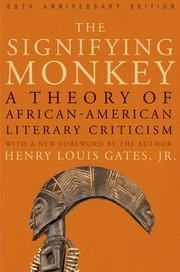
To formulate this idea philosophically, Gates’ argument is that his tradition contains both a language of expression and a meta-language of criticism intertwined in the tradition’s texts. They are tied together like the strands of the double helix. And when they are transmitted through the culture and through history, that analogy holds as well – both the language and the meta-language are transmitted whole within the creative text. They evolve and develop over generations but they do so together. And in a way that people within the tradition can understand, appreciate, and participate in regardless of their level of formal education or their ability to formalize it like Gates is doing or as I’m doing now. The Kanye lyrics from earlier demonstrate this double-ness – they’re both autobiographical statements about Kanye’s experience and also a micro-theory of composition.
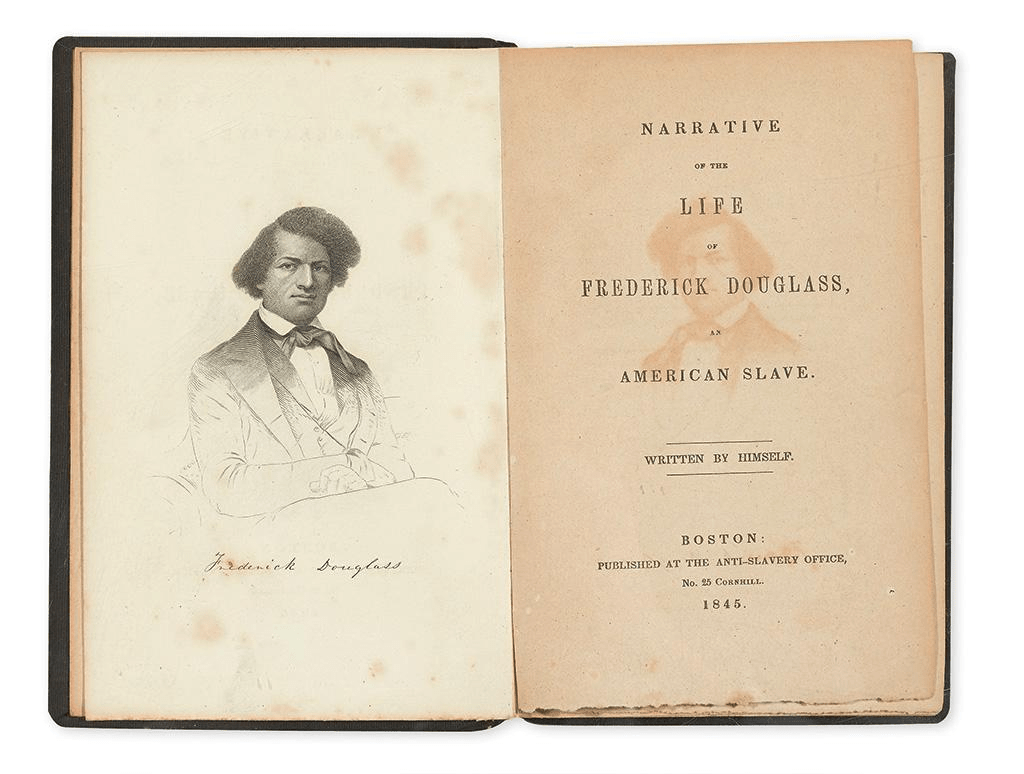
According to Gates, outsiders often miss this dual aspect. Sometimes that’s just purely for racist reasons – from people who don’t see the value in the tradition at all. But he’s less interested in engaging with people who see Black culture like that. They’re probably not reading his book. He’s more interested in a second kind of reader – someone who sees the creativity, the wordplay, the allusion, and appreciates it, but who does not see the meta-language, or does not see it as a meta-language. He spends a long time on Chapter 2 of Frederick Douglass’s Narrative of the Life of Frederick Douglass, about the “apparently rude and incoherent songs” (my emphasis) Douglass remembers hearing on the plantation. Those people singing were not only expressing their feelings, according to Gates, they were distributing a language of criticism – signifyin(g) upon the situation of going to the Great House Farm, and analyzing the way they themselves were singing about it, and sharing a language of criticism to be used for other contexts as well. This goes beyond the common point that the songs of the enslaved often contained “hidden messages” about escape, rebellion etc, though it’s a related point. One of his best readings in the book is about Zora Neale Hurston’s signification upon 1920’s “high modernism” and 19th century omniscience, as well as the tradition of slave-narratives and folklore she had studied as an anthropologist. In presenting Janie’s narrative as bifurcated – the omniscient narrator speaking “standard American English” and the book’s dialogue being written in Black dialect, Hurston not only tells Janie’s story faithfully but in so doing, criticizes both literary traditions immanently, expanding and altering them in the telling, exposing their limitations, playfully or hostility disagreeing with them, and so on.
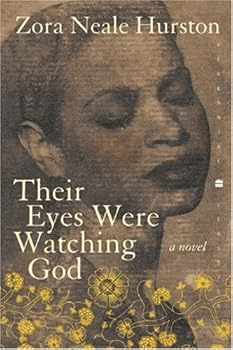
Signifyin(g) is a performative and creative form of literary criticism. It thrives precisely by not using the seeming neutral vocabulary of “literary terms.” Zora Nele Hurston, Instead of writing an essay involving abstract reasoning about characterization, theme, figurative language etc. about, say, Middlemarch or Mrs. Dalloway, in writing Their Eyes Were Watching God as a novel, takes both of their styles (and those of the slave-narratives and folklore) and signifies upon them. It interprets them by telling a new story in a way that imitates them and moves beyond them. Gates’ claim is that Black readers and speakers steeped in that tradition know that, experience that, and learn from that, without needing to learn a metalanguage. They learn that, perhaps, because that an explicitly abstract meta-language isn’t there. Putting that meta-language into the discussion can flatten the experiential quality of Hurston’s performative argument by sending readers on a search for certain abstract aspects of the book. Gates talks a lot about the three-dimensionality of signifying vs. the two-dimentionality of abstract criticism.
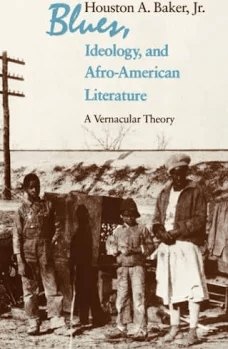
Houston Baker Jr. makes a similar point in his Blues Ideology and Afro-American Tradition, by comparing blues improvisation to quantum mechanics – a blues text exists, for example, as live indeterminate and interpretative matrix and gets it vitality from that indeterminacy – but when we describe it in literary terms, we collapse the wave function and reduce the underlying performance to something fixed, abstract and less creative.
How does this relate to How To Read Literature Like a Professor?
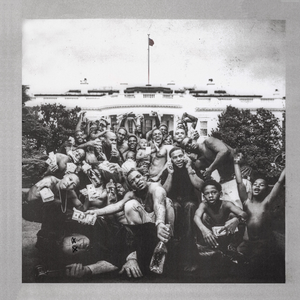
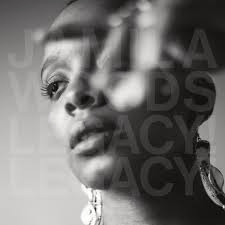
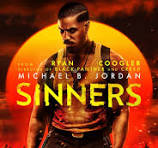
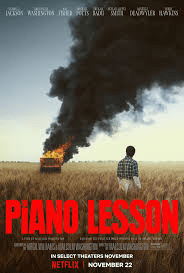
If students read Foster’s book as a starting-point, that’s a problem. It is precisely a problem because of its alleged “starting point” status. The argument Gates makes about the Black tradition, I believe, applies in other ways to all of our students. I don’t mean that in an “all lives matter” kind of way – I believe that the Black literary tradition actually has critical resources that are fascinating, deep and unique and worthy of study in an extended way and that’s a big part of my class – beyond Frederick Douglass and Zora Neale Hurston, I’ve also worked with musical texts like Kendrick Lamar’s To Pimp a Butterfly or Jamila Woods’ Legacy! Legacy!, and films like Sinners or the 2024 The Piano Lesson film accompanied by the play text. I’m not doing that for “inclusion” or for “equity” (though I will admit that’s how my interest in those texts started) but because I believe it’s a vital way for students to learn how interpretation can work – immanently, not as something imposed from the outside by an academic schema. All of these texts contain embedded instructions about how to read them ,and how to read the tradition they’ve emerged out of.
It’s a cliche I’ve heard before that every great book teaches you how to read it. But I think that cliche is relevant here. According to Gates, every great text in the African-American tradition (book, movie, album, poem), in some way, “signifies” upon its predecessors, and contains an embedded meta-language – its own metalanguage that students can learn from. And other traditions work similarly. If we send them to a book looking for “theme” etc., we actively deny them the opportunity to experience that text, not “as a professor” but as a reader embedded in their own meaningful and interpretive traditions of signification, reading a text by accessing its own internal critical grammar. Beyond books, I believe each of our students is familiar with traditions that embed metalanguages into creative expression – I believe the separation of “criticism” from “reading” done too quickly flattens and reduces all of that, turns it into – and I think our phrasing is very suggestive here – “a merely academic exercise.” Sort of like what people sometimes say about the distinction between calculus and physics – they weren’t invited separately (that’s a rough analogy – there are a lot of differences too). And though I’m describing this process very abstractly and academically, I believe this is a very intuitive form of knowledge many students have in many ways, and we need to explore those ways in their plurality, not move to the kind of facile, at some level pseudo-academic universality that Foster traffics in.
But – it will be argued – that’s what AP Literature is – that academic exercise. Or at any rate, that’s what the AP Exam is.
I am more than willing to acquaint students with Foster’s or anyone else’s schema for engaging in what is ridiculously still called “the new criticism” (Richards and Empson published their book 100 years ago!) – BUT – and this is really crucial to what I’m saying, that CAN’T be as a “first step” – I believe it needs to be as a last step. I believe if it’s test prep we’re after, the best way we can prepare students is to develop their capacity for immanent, culturally situated criticism of any given work for most of the year, and then, when the time is right, step back and say “look, this thing you’re really good at and that we’ve been building through the year – here are some vocabulary words and argumentative patterns this guy named Foster has described as academic. A lot of the people who grade this exam think this guy’s onto something. Maybe he is – and maybe this will help you. Or maybe you don’t care because you’re not taking the exam. Or maybe you’re more proud of your own immiaent and culturally situated modes of criticism and want to roll with those on the exam or in your life or when you go be an English major or whatever your future holds. The choice is yours.”
This Also Isn’t Contemporary Academic Practice (in my experience anyway)
When I completed my MA at DePaul 10 years ago – and DePaul’s department is hardly a bastion of literary radicalism – we spent about one half of one three hour class period studying “the new criticism.” It was in a course called “Introduction to Literary Theory” that the professor freely acknowledged was sort of an antiquated construct. In her mind, the age of “high theory” wherein you select a “theoretical approach” with certain abstract vocabulary and read a text deliberately in that way, had ended in the mid 90s, a full 20 years before the class she was teaching (and this was otherwise a very curmudgeonly professor who insisted on, for example, perfect MLA form). She said she wanted us to learn about theory because she thought it was an interesting moment in the history of the discipline and would inform our work in other ways, and I did learn a lot from the class, I’m not going to lie about that – but the point is, the 14 other classes I took, we just didn’t talk about the new criticism or really use it to complete our work.
The critical approach we were generally encouraged to pursue with our interpretations was a more “eclectic” one – which I believe is analogous to the kind of immanent criticism informed by students’ cultural contexts and the books themselves that we read. And that goes for any number of the other literature classes I’ve taken over the years earning different degrees, at Wesleyan (maybe more “radical” arguably) and at the University of Chicago (definitely not radical, probably leaning conservative). Simply put, Foster’s’ title is a misnomer. l have a friend who works at a small Christian university (again, not some sort of Frankfurt School bastion of postmodern resistance), and he’s said to me any number of times “why is this new-criticism stuff so central to what you all teach high school students?” My reply to him is always that I really don’t know. It’s doubtless how some professors read literature, but it’s just not some sort of disciplinary norm, at least not in my experience. We’re upholding a standard that is not academically or socially relevant to our students’ future lives, whether or not they choose to major in English (which, if data is any indication, less than 1% of them will do). It’s far more popular at the high school level I think, in this AP class, than anywhere else – it feels like the tail wagging the dog. It’s my perception that in continuing to insist on its centrality as anything other than a form of test prep, we’re fighting the last war.
There is Assimilationist Racism Involved Too
Foster’s argument reads to me more like a warmed over version of the old “cultural literacy” argument than anything else, preserving a kind of culture that frankly, feels dead to me now (if it was ever alive beyond a sort of nostalgic fantasy of 1950’s upper-middle-class normality). In Ibram Kendi’s sense of the terms, this is assimiliationist racism. What Kendi means by thsi is not that anyone holds hate in their heart, or any ill intention – but that the impact it has is to lift up one group at the expense of another. It’s what he calls a “racist idea.” It suggests that certain archetypes and tropes are what define “literature” or “literary criticism,” and that students who adopt this stance will be improved vis-a-vis their initial beliefs and practices simply by adopting that language. It centers one set of cultural practices as Cultural Practices writ-large. And I do not think it’s a coincidence that it marginalizes readings like the ones Gates does.
A great illustration of the problem comes on page one of the book – this is literally its opening paragraph:
Introduction: How’d He Do That?
MR. LINDNER? THAT MILQUETOAST?
Right. Mr. Lindner the milquetoast. So what did you think the devil would look like? If he were red with a tail, horns, and cloven hooves, any fool could say no. The class and I are discussing Lorraine Hansberry’s A Raisin in the Sun (1959), one of the great plays of the American theater. The incredulous questions have come, as they often do, in response to my innocent suggestion that Mr. Lindner is the devil. The Youngers, an African American family in Chicago, have made a down payment on a house in an all-white neighborhood. Mr. Lindner, a meekly apologetic little man, has been dispatched from the neighborhood association, check in hand, to buy out the family’s claim on the house. At first, Walter Lee Younger, the protagonist, confidently turns down the offer, believing that the family’s money (in the form of a life insurance payment after his father’s recent death) is secure. Shortly afterward, however, he discovers that two-thirds of that money has been stolen. All of a sudden the previously insulting offer comes to look like his financial salvation.
Bargains with the devil go back a long way in Western culture. In all the versions of the Faust legend, which is the dominant form of this type of story, the hero is offered something he desperately wants – power or knowledge or a fastball that will beat the Yankees – and all he has to give up is his soul. This pattern holds from the Elizabethan Christopher Marlowe’s Dr. Faustus through the nineteenth-century Johann Wolfgang von Goethe’s Faust to the twentieth century’s Stephen Vincent Benét’s “The Devil and Daniel Webster” and Damn Yankees. In Hansberry’s version, when Mr. Lindner makes his offer, he doesn’t demand Walter Lee’s soul; in fact, he doesn’t even know that he’s demanding it. He is, though. Walter Lee can be rescued from the monetary crisis he has brought upon the family; all he has to do is admit that he’s not the equal of the white residents who don’t want him moving in, that his pride and self-respect, his identity, can be bought. If that’s not selling your soul, then what is it?
Foster is using an example he probably thinks of as inclusive – A Raisin the Sun. But, to me anyway, Foster’s “well actually” energy jumps off the page in a way that undercuts that inclusive intention – and I’m pretty sure what D meant by calling his experience “whitewashed.” He explores the subtext of “milquetoast” as tracing backwards into European literary history. This seems to me like exactly the wrong place to start in an understanding of this play. Instead, Gates might suggest – let’s trace the immanent tradition its title references – the Langston Hughes poem upon which the play can be read as signification upon. And while no, not every Black student knows the reference, the odds of its being a way into this text, in my opinion, is far more likely to resonate than Foster’s reading, and in my opinion far more likely to yield the kind of discourse about the play that Lorraine Hansberry was writing herself into. I think the impact of Foster’s reading “as a starting point”, to be honest, is one that would quite possibly actively exclude a Black student’s own internal perceptions of this book before they’d even had a chance to voice them. And that’s what they’d literally see on page one of the book, about a play they likely studied when they were a freshman (at our school anyway). Now I am not denying that understanding Hansberry’s participation in a European dialogue about the devil is important, or that it’s an either-or between Hughes or Goethe. I think a rich reading of this text requires multiple angles, of course. But what we center or treat by dubbing “professional” is important.
It may be suggested reading How to Read Literature Like a Professor will help to maintain high standards.
And that if that standard is set aside we will be “lowering” something. I do not think immanent or socially embedded criticism that draws on the metalanguages present in other cultures, African American vernacular or others, is “lower” or less complex, it’s just not culturally positioned in the same way so it’s often not seen as complex, and also relatedly because it’s not posited as an abstract metalanguage. If our concern is maintaining high standards, why not give students a range of criticism they could select from once they’ve joined our class? If we center one way of doing criticism, if we use it as “first step” we flatten Gates’ three dimensions into two, we collapse Baker’s wave function, and we disregard students’ experience and skills by seeing them as less abstract, academic or serious. We implicitly ask a student to set aside accumulated cultural tradition by reducing it to one particular set of vocabulary words and structure before we have even met them.
I think these words of James Baldiwn’s apply here – yes, to our Black students, first and foremost, but in other ways they apply to all of our students in all of their embedded traditions and contexts:
A child cannot be taught by anyone whose demand, essentially, is that the child repudiate his experience, and all that gives him sustenance, and enter a limbo in which he will no longer be black, and in which he knows that he can never become white. Black people have lost too many black children that way (“If Black English Isn’t a Language, Then Tell Me, What Is?”)
There is a kind of forced assimilation implied in “reading literature like a professor,” especially in an anonymous and potentially intimidating setting like a summer reading assignment that really does a kind of rhetorical violence to our students. And I really do believe this is the sort of thing Toni Morrison was talking about when she said:
The systematic looting of language can be recognized by the tendency of its users to forgo its nuanced, complex, mid-wifery properties for menace and subjugation. Oppressive language does more than represent violence; it is violence; does more than represent the limits of knowledge; it limits knowledge. Whether it is obscuring state language or the faux-language of mindless media; whether it is the proud but calcified language of the academy or the commodity driven language of science; whether it is the malign language of law-without-ethics, or language designed for the estrangement of minorities, hiding its racist plunder in its literary cheek – it must be rejected, altered and exposed. It is the language that drinks blood, laps vulnerabilities, tucks its fascist boots under crinolines of respectability and patriotism as it moves relentlessly toward the bottom line and the bottomed-out mind (emphasis added)
I think books like How to Read Literature Like a Professor are exactly what Morrison is referring to in this passage. And I think “its nuanced complex mid-wifery properties” are what the kind of immanent and culturally embedded form of reading and analysis I’m talking about are. If this feels quotation of Morrison over the top I get that – I’m not saying anyone’s a war-criminal but I am saying I think one of her central points here is that things like this happen in big and small ways. This is a small way. Maybe even a seemingly insignificantly small way. But I look at these words and I can’t deny the sense that they apply.
D didn’t want to or need to know “how to read literature like a professor,” but he did want to read it, write about it, talk about it, talk about talking about it, and also wanted to write it. I do not think we do anyone any favors (especially not kids like D) when we conflate “AP” with “reading like a professor” especially when it’s not even actually true as an empirical claim about how actual practicting professors read. There are many ways to read literature, many rigorous ways, and many ways that teachers of AP Literature can and should use. I think that’s a good thing, not a problem to be solved.
We should not frame our course in a way that forecloses possibilities. Instead, we should trust that our students ahve developed critical sensibilities within their own upbringings – their own family, religious, ethnic and racial cultures – sensibilities that can act – in Morriron’s words, as nuanced, complex midwives as their own ideas emerge.


One thought on “Why We Shouldn’t Teach Students How to Read Literature Like a Professor”