
[This post is part 3 of a series on teaching the Kendrick/Drake Beef – click here for part 2 – “Ab Soul’s Outro” – Purpose in a Larger Context]
Here’s a question – a literal AP Lang question – that Kendrick Lamar’s 2012 song “Hiiipower” could have been answering, from the 2010 exam:
In his 2004 book, Status Anxiety, Alain de Botton argues that the chief aim of humorists is not merely to entertain but “to convey with impunity messages that might be dangerous or impossible to state directly.” Think about the implications of de Botton’s view of the role of humorists (cartoonists, stand-up comics, satirical writers, hosts of television programs, etc.). Then write an essay that defends, challenges, or qualifies de Botton’s claim.”
“Hiiipower” responds directly to this prompt, as do so many of the rest of the songs in the Kendrick/Drake beef. I wanted students to be able to appreciate this, so they themselves could see how texts like this work like that – to help them understand, also, some ways that what we call “argument” and what we call “rhetorical analysis” actually overlap in real-world texts.
Since my students were later going to focus intensely on the ten 2024 beef songs, I wanted to give them some more theoretical tools to do that. First with “Ab-Soul’s Outro” I wanted to develop a sense of purpose in hip-hop that goes beyond what many of them might think it is – basically, album sales and PR. With this song – ”Hiiipower,” which I believe is a kind of musical critique of Kanye West’s song “So Appalled,” I wanted to give students practice with the way one song might talk to another, in a really complex way, one that speaks to multiple audiences simultaneously and develops different purposes along the way.
Henry Louis Gates and Signifyin(g)
The core theoretical tool I wanted to introduce my students to in more depth – and which I want now to summarize here – is Henry Louis Gates’s concept of “signifyin(g)” in his 1988 book The Signifying Monkey. Gates argues that Black poetic performance engages in what he calls “signifyin(g)” which is, among other things, a form of trope-laden discourse that embeds ethical critique, instruction and argument within rhetorical performance, especially rhetorical performances that are poetic or narrative. Gates places the (g) in parentheses to remind us of the duality between the verb “signifying” in Standard American English, and the near-homophonic “signfiyin’” that is more at one with African American Vernacular English. [As a super-quick minder – AAVE and SAE are interrelated but distinct dialects – and as a small example, the g isn’t “missing” from signfiyin’, it’s just a different word, related to but also distinct from “signifying”]
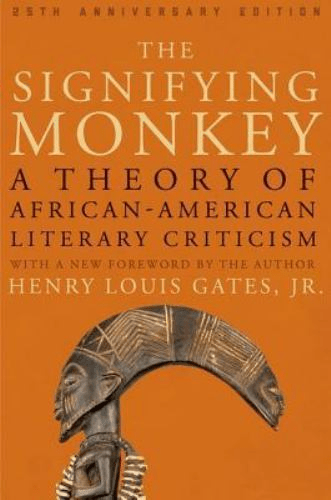
Gates uses this duality to explore the way a signifier within the African American tradition can be dual-voiced, making two (or more) points at once, often using that ambiguity to transmit messages into hostile cultural terrain. At the start of the book’s 3rd edition, he suggested some ways he thought this model could work for hip-hop – he describes hip-hop as “signifyin(g) on steroids” (that’s meant as a compliment). He says that hip-hop does so much rhetorical stuff that also happens in the works of Fredrick Douglass, Zora Neale Hurston and others. Hip-hop, he notes, does this using a much greater degree of compression, especially when we start to account for both the language and the musical elements, sampling being the foremost among those.
What My Class Had Leaned about Rhetorical Analysis
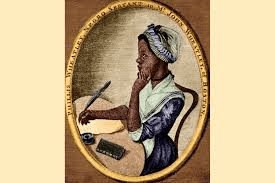
I was teaching this unit in February, and students had already had several goes at rhetorical analysis in a more straightforward kind. First, we read and analyzed a cluster of 19th century letters written to powerful political leaders from less “powerful” people, to explore the way they developed logos, ethos and pathos, and used the structure of their letters to achieve persuasive purposes. One of those was Phillis Wheatley’s letter/poem to Geroge Washington, which would appear to both explicitly flatter and implicitly critique Washington simultaneously. Next, when we read Frederick Douglass’s Narrative, we spent some more time with specific rhetorical strategies like figurative language, deliberate use of allusion, diction and syntax – but more important, I asked students to reflect on the ways Douglass navigated multiple audiences who themselves had multiple perceptions of who he was, what he could (or could not) say or know. Both Wheatley and Douglass are authors Gates writes about in The Signifying Monkey and elsewhere.

Signifyin(g) in More Depth
I wanted to complicate the ideas of rhetorical analysis they had learned earlier in the year. I did this by exploring something Gates centers early in his book. He begins with a scholarly introduction to Nigerian religion. Gates is careful to root his theory in pre-American-slavery west African culture. His argument is that signifyin(g) found a lot of purchase as an anti-slavery and anti-racist discourse, but that it didn’t start as that. He begins with Esu/Elegbara, who he identifies as the god of communication and interpretation, maybe analogous to Hermes/Mercury (from whom we get the word “hermeneutics,” the study of interpretation). He builds a lot of meaning out of the way the tradition works with both the spoken and the written, a duality he notes that is persistent in African American culture in a serious way.
He also builds on a folktale about the monkey, the lion and the elephant – the monkey is the “signifying monkey” from which Gates’ book takes his title. This is a story Gates traces to the Carribean, but claims ultimately descends from West Africa. The story has many forms but here’s one: one day the monkey (a traditional trickster) wants to cause some trouble for the elephant and the lion. The monkey approaches the lion (physically stronger than him) and says something like “did you hear what the elephant said about your mother?” The lion takes umbrage and goes after the elephant (much bigger than both the lion and the monkey). A fight ensures and the elephant and the lion both come out the worse for wear. In some versions that duo ends up coming back to beat up the monkey; in other versions the monkey escapes.
The core point of the story Gates sees is the monkey’s use of dual-voiced discourse. He is speaking figuratively – with a goal in mind that the lion cannot see (to start the fight), but the lion takes the monkey literally, believing that the elephant has offended his mother. He acts on this misunderstanding. The monkey, who does not have the power to confront either the lion or the elephant directly, succeeds through dual-voiced trickery in accomplishing his goal indirectly. Gates argues that this dynamic plays out over and over in American American rhetoric, in different and abstract ways.
Gates repeatedly emphasizes that this is different from the simple truism that “slaves sometimes used language their master didn’t understand.” That’s a story about duality – master vs. slave. But Gates points out that monkey/lion/elephant is ternary, and that it’s that third element that brings the true power to the discursive tradition: the ability to use a conflict with someone present to develop a deeper and asymmetrical attack on a target not present, and/or too large to confront on one’s own.
I did my best to explain this argument to students in simple terms. I think they got it, though I did feel self-conscious speaking about cultural knowledge that wasn’t my own. I did feel affirmed though, that in four of my five classes, students with recent Caribbean and/or Nigerian ancestry affirmed that I wasn’t totally off. I was actually surprised by the openness – I didn’t get “why are you trying to speak on something you don’t know” – I got more “yeah, see, the monkey is clever, but the lion is proud, that’s what’s important.” Like, they invited me and the rest of the class into the story; they didn’t gatekeep it.
My goal with sharing this with students was to give them some new resources to think about “SOAPS” in a more complex fashion. The Monkey is actually working with two audiences – directly the lion and indirectly the elephant, and he’s manipulating one to get to the other. Once I started looking for it, I noticed this happening over and over again in hip-hop.
How Kendrick Signifies on Kanye and Answers that AP Prompt
I built a lesson around what I think is a beautiful example of signifyin(g) – Kendrick Lamar’s 2011 song “Hiiipower” (on his album Section.80) signifies on Kanye’s 2010 song “So Appalled” (on his album My Beautiful Dark Twisted Fantasy). Kendrick positions himself as the monkey. Kanye is the lion. Kendrick appears to be attacking Kanye for being shallow and superficial, but what he’s really doing with that attack is focusing energy on another absent term – what I’ll call the white supremacist recording industry and its attendant powers that be. Kendrick (at least 2011 Kendrick) could not go after them directly – they were too big and he was too small. But what he could do is appear to attack Kanye, and in seeing to attack, actually lang a blow somewhere else. And in so doing, what he’s also doing is making an argument about the role that performers like him and Kanye should play as cultural critics: he’s critiquing Kanye’s failure to take those stances, and modelling how he things they should be done instead. He’s not doing this, though, to denigrate Kanye, but only appearing to do so to actually target something bigger: the culture that creates the conditions that tempts Kanye to act this way. If Kendrick is the monkey and Kanye is the lion, what’s the elephant? That bigger cultural force.
Analyzing Kanye’s “So Appalled” on its Own Terms
To help students understand this claim I was making, which was essentially me modelling the kind of processes I wanted them to find for themselves in their analysis of the Kendrick/Drake beef songs, I first had them listen to the Kanye song and explore what they made of it rhetorically – by analyzing the speaker, occasion, audience, purpose, strategies, as they had done with texts several times earlier in the year.
Students found Kanye decrying the decadence of the music business, but from the inside of that decadence. He’s tired, it’s late at night, there’s champagne flying all around, a whole entourage enjoying the afterparty, attractive women throwing themselves at him, but there’s a also a sense of dissatisfaction. I had them track allusions and references especially – leading them to all of these proper names: Donald Trump, Cheerios, MTV, Allah, Prada, Ferrari, MC Hammer, CNN, Range Rover, Bobby Brown, Ralph David Abernathy, Rosa Parks, Pathfinder, Matt Leinart, and Noah’s Ark. My question was just, what is Kanye doing with all of that? We noticed actually there’s a tension not immediately obvious – even in the names: the tension between decadent rap culture, on the one hand, and a more demanding agenda involving civil rights and media representation. But truth be told, it seems like more the former than the latter.
How Kendrick Helps us Read Kanye
Students talked through all of this, and then I had them listen to “Hiipower” by Kendrick Lamar – I told them to look for proper names and allusions again, but then also places where Kendrick seemed to quote Kanye. One of Gates’ core arguments is that signifyin(g) is a way the tradition talks to itself, building bridges to the past that allow contemporary readers to see deeper and the different meanings in texts that ad come before. Kanye’s song is from 2010 and Kendrick’s is from 2011. The latter quotes the former – I asked students to listen and notice those quotations, and also notice allusions and references again.
Here’s what they found: Martin Luther, Malcolm X, the Serengeti, Charlotte’s Web, pyramids, hieroglyphs as allusions to ancient Egypt, Haitians, Huey Newton, Bobby Seale, Marcus Garvey, Africa, Audis, Lauryn Hill, Kurt Cobain, Molotov (cocktail), Fred Hampton, Thug Life as an allusion to Tupac Shakur.
Quotations of Kanye from the chorus: “I mean this shit is…” “five star dishes,” “b****s…”
After we had all this on the table, I did my best to lay out my argument – my goal was to model something I think is pretty subtle actually, rather than something I could really hope that, just a few days into the unit, they could intuit without a lot of preparation.
My rhetorical analysis thesis is this: “Hiiipower” makes an argument about the relationship between entertainment and disguised social commentary, essentially claiming that the former is a vehicle for the latter, under certain circumstances: entertainment becomes a tool for social commentary so long as its connection to the tradition of ethical critique embedded in Black literary history is appropriately honored. To do this, in Gates’ vocabulary, Kendrick signifies upon Kanye West and his song “So Appalled.” And the signiyin(g) is essential to the argument – it is not merely ornamental, but instead, constitutive of its argumentative status.
Kendrick is the monkey, Kanye is the lion, and the unseen third powerful entity is the racist capitalist musical culture of the United States. By attacking Kanye superficially, Kendrick lands a blow more broadly against that culture, and in so doing, critiques that culture in a way that, in de Botton’s words, “would have been more dangerous to do directly.” How does Kendrick do that? The rhetorical aspect of this cannot be overlooked. Kendrick’s criticism would not be the criticism it is if it were expressed argumentatively. It is in the performance that it’s found in its three-dimensional complexity. Gates describes the signifying monkey as a meta-trope – a trope that generates other tropes. Which is to say, Kendrick does not re-tell the story of the monkey, he occupies its role, and in so doing, makes an argument.
The semantic core of Kendrick’s argument, flattened into prose, is this: Kanye, exemplary of any number of other A-list musical performers of his generation, has accepted a form of decadent stardom that reinforces rather than confronts the system of capitalist white supremacy they allege to oppose, and that decadence needs to be interrupted and replaced with a radical politics of solidarity and confrontation. Signfyin’ upon Kanye’s song allows Kendrick to seemingly criticize Kanye, but in fact honor and celebrate the possibilities of the tradition Kanye himself signifies upon. This double movement – criticize and honor- allows Kendrick to encode his argument it for distribution into a wider, hostile cultural environment, protecting its truths within its familiar hip-hop production exterior and providing his own audience with an analysis of Kanye’s song and the tradition that produced it – as Gates explains that last part specifically in the context of hip-hop, it creates “a bridge to the past.”
Gates emphasizes that signifyin’ relies heavily on repetition with a difference. It takes received tropes, repeats and often simultaneously inverts them.
Here is a line from the chorus of Kanye’s song, itself a sort of metanym for the song as a whole, and in some ways Kanye’s whole album:
Champagne wishes, 30 white b****s
I mean this shit is, fucking ridiculous
“So Appalled” is the seventh track on his massive and masterful My Beautiful Dark Twisted Fantasy. Coming as the central track (7 out of 13), “So Appalled” is arguably MBDTF’s “to be or not be” moment – he asks himself how he’s gotten where he’s gotten, and what it means, and whether he should continue. The song comes after the album’s first few tracks, where Kanye’s album initially positions himself in a traditional hip-hop posture – he’s a successful Black man in America who’s achieved stardom, recognizing both his success and the extremely precarious nature of that success. This is introduced most forcefully on the album’s second track “Gorgeous.” Consider its opening moments:
Ain’t no question if I want it, I need it
I can feel it slowly drifting away from me
What’s “it”? Stardom, recognition, respect, wealth, equality? All of the above. The song goes on to enumerate Kanye’s struggles and successes in myriad creative, clever and ironic ways, maybe most cleverly with this verse ending punch line:
Cause the same people that tried to black ball me
Forgot about two things, my black balls
After this opening declaration, though, the album slips out of a kind of expected pop-empowerment posture into the decline-and-fall into decadent self-absorption. That motion crests on “So Appalled,” which narrates the atmosphere of an over-the-top after party featuring drugs, alcohol and yes, “30 white b****s” (one of whose naked images is pixelated on the album’s cover, leading me to believe that image is, in itself, the “beautiful dark twisted fantasy” the album title mentions).
As the album continues after “So Appalled,” Kanye seems to fall in love with a porn star, wittily noting an analogy and interconnectedness between oppression of enslaved Black men and white women working as porn stars along the way in “Hell of a Life” (warning – very vulgar lyrics incoming):
Said her price go down, she ever fuck a black guy
Or do anal, or do a gangbang
It’s kinda crazy that’s all considered the same thing
Well, I guess a lotta n****s do gangbang
And if we run trains, we all in the same gang
Runaway slaves all on a chain gang
Bang, bang, bang, bang
The final track seems of the album seeks to right itself, and return to the note of tradition of empowerment and social critique with which the album began – “Who Will Survive in America”, itself an abridged recording of a Gil Scott Heron performance metaphorically comparing the United States to one of those women.
Let’s get deeper into the chorus of “So Appalled”:
Champagne wishes, 30 white b****s
I mean this shit is, fucking ridiculous
Fucking ridiculous
I mean this shit is, fucking ridiculous
Five star dishes, different exotic fishes
Man this shit is, fucking ridiculous
Fucking ridiculous
Listen especially to that second comma, that natural pause. It’s already a dense line, with the double rhyming/half-rhyming – wishes/b****s, shit is/ridiculous. . It anticipates the play on racial commodification and misogyny quoted above – “30 white b****s” placed in parallel to “different exotic fishes.” All in all, it’s a moment of excess, decadence, pleasure yes but also exhaustion, and a sense that it will all end, that it’s not sustainable, that it’s just a moment that will be taken away, so-we-might-as-well-enjoy-it feeling.
Turning to Kendrick, how does he signify upon this chorus? Hiiipower’s chorus, also repeated three times, centers on this couplet (which itself changes over the course of the song – more on that later):
Five-star dishes, food for thought, b****es
I mean this shit is – Huey Newton going stupid
Gates is careful to emphasize that it’s never what your argument signifies (which is the more “standard Academic English” way of using that word) but upon what (or whom) you are signifyin’, and how you are doing that. Signifying move from a linking verb (“this anthem signifies America’s view of itself”) to a compound verb with almost-direct-object (“this song signifies upon the national anthem”). Put another way, Kanye seems to be Kendrick’s target, but Kanye’s song actually becomes his occasion. He’s not attacking Kanye, he’s signifying upon Kanye’s song to attack a different target. And in that indirective move, he takes a shot that, in 2011, it was relatively easy to take. This is the Kanye who had recently interrupted Taylor Swift at that awards show (arguably, rude), and had somehow offended common decency (I never got this) by telling the world that George Bush didn’t care about Black people (did anyone actually think he did?). Kendrick seems to be swinging at Kanye, but he’s taking a much bigger swing at a much worthier adversary, under the guise of dissing another rapper. Let’s look at how he does that in “Hiiipower,” and what it lets him accomplish.
Something else Gates says Signifyin’’ does is it returns us to earlier texts, makes us re-read them, pulls us back into the tradition, re-reads that tradition and most crucially, instructs us how to read it. But does that through rhetorical activity, not academic analysis. Kendrick’s move transforms Kanye’s original, and so joins a tradition, even as he seems to offer a criticism. As a strictly first person experience, let me tell you this: as I was writing this essay, I listened to MBDTF for the first time in a couple of years – in 2026 Kanye is pretty seriously cancelled, and for probably good reason – but still, I heard it with new joy and urgency. Kendrick shows me the opposite of what I thought he had quoted it to do – I now heard Kendrick’s textured criticism and embedded allusions with more caring intentionality and less ‘I”m better” hostility.
Here’s Kendrick’s central moment again:
Five-star dishes, food for thought, b****s
I mean this shit is – Huey Newton going stupid
Go back and listen to it – this time here that DASH. This is Kendrick’s central “repetition with a difference.” Rhetorically, Bernie Phalen and David Jolliff taught me, that’s a “scheme involving interruption,” layered over an allusion which works by quotation, followed by a reference.
KANYE
Chorus
Five star dishes, different exotic fishes
Man this shit is, fucking ridiculous
Champagne wishes, 30 white b****s
Man this shit is, fucking ridiculous
KENDRICK
Chorus 1
Five star dishes, food for thought, b****s
I mean this shit is – Huey Newton goin stupid
Chorus 2
Five star dishes, food for thought, b****s
I mean this shit is – Bobby Seale makin’ meals
Chorus 3
Five star dishes, food for thought, b****s
I mean this shit is – Fred Hampton on your campus
In each of Kendrick’s repetitions, metric equivalence is nearly maintained (until the final, key moment), while the words’ functions are nearly all transformed – “five star dishes” moves from the literal vision of Kanye’s excess to the metaphorical excess of Kendrick’s teaching. Kendrick integrates “different exotic fishes” and “30 white b****s” into “food for thought b****s,” transforming the expensive seafood into “food for thought” (again, literal to metaphorical) and the “b****s” go from an object (grammatical and semantically) to direct address that emphasize Kendrick’s authenticity vis-a-vis his audience. “Man this shit is” more or less stays on as “I mean this shit is”, though Kendrick subtly disrupts the expected rhythm by adding an extra syllable (‘man this shit is..” → “I mean this shit is.”). But the real change comes when instead of finding a predicate-adjective -”this shit is… fucking ridiculous” we get an interruption – disrupting the sentence structure and the meter to get the seemingly unexpected new content – “Huey Newton going stupid.” In that last, we move from a rhyming, predictable predicate adjective to predicate noun referencing successfully Huey Newton, Bobby Seale and Fred Hampton. The Black Panthers’ most famous leaders emerge unexpectedly from a scene of messy afterparty bloat.
But let’s double back – in 2010, Kanye interrupted Taylor Swift’s VMA’s award speech. Let’s remember what he said:
Taylor Swift: I’m really happy to accept—
Kanye West: Yo, Taylor, I’m really happy for you, I’ma let you finish, but Beyoncé had one of the best videos of all time!
Whatever you think about the “etiquette” of what Kanye did, what he was doing was literally interrupting a racist music industry star machine personified by Swift, in order not to represent himself but Beyonce. He’s also interrupting Taylor Swift’s familiar cadence with the name of a person he wants to foreground and a claim about their importance. He was, before it became a 2020 trend, “standing up for Black women.” [Side note – It’s sort of crazy sitting here in 2025 looking at all the things that elected officials and their senior appointees are willing to say in Congress or in the Oval Office, but in 2009 (before whoever yelled “You lie!” at Barack Obama at the State of the Union Address), Kanye got dragged over the coals for doing this on the Video Music Awards. He went on Jimmy Kimmel, who had the audacity to ask him what his dead mother would have made of his behavior.]
Kanye got processed by pop culture as alternatively either as “uppity N-word” or “star who struggles with mental illness.” Kanye (monkey) seemed to be attacking Taylor Swift (lion), and was criticized for such; but what he really did was attack the industry behind the awards (elephant). He wasn’t attacking Taylor, he was signifying upon her, upon the occasion of her receiving the award. At least – that’s how I can now see it – because Kendrick’s act of signifying followed the pattern in a similar direction, defining that trope that lets me retroactively apply it to Kanye’s song. We get a new, more intentional version of Kanye from a later re-reading by Kendrick.
Now go back to Kendrick’s signifying on Kanye: he’s reversing the reversal. He takes Kanye’s self-pity “30 white b****s… this shit is fucking ridiculous” and turns it back to “food for thought b****s, this shit is – Huey Newton gone stupid.” He interrupts Kanye’s flow to return to the Black radicalism it now allows us to see more clearly on Kanye’s album, and in his VMA moment. He’s not calling Kanye out, he’s calling him in – and let’s not ignore the fact that he does so by literally removing the words “thirty white b****s” – presumably one of whom, Taylor Swift, has sent Kanye down into the spiral the rest of MBDTF represents. Kanye literally interrupted a white woman; Kendrick figuratively interrupts the culture she represents through linguistic omission and transformation. Kendrick is not scornfully criticizing Kanye, he’s lovingly critiquing him- he’s signifying on his song, and recentering that larger audience onto the system of white supremacy that brought this about in the first place. Kendrick’s showing us how to read Kanye and his album – he’s giving us the language to re-read it – he’s making a way out of no way.
Here’s how Gates describes a similar “signifying chain” from the 18th century, here John Marrant, author of a slave narrative, signifying upon James Gronniosaw’s earlier narrative:
My idea of tradition, in part, turns upon this definition of texts read by an author and then signified upon in some formal way, as an implicit commentary on grounding and on satisfactory modes of representation…. Marrant’s revision is an excellent example of “capping,” which is the black vernacular equivalent of metalepsis. Marrant is capping upon Gronniosaw’s trope because his revision seeks to reverse the received trope by displacement and substitution. All the key terms … are present … , but the “original”pattern has been rearranged significantly (157-158)
Kendrick reads – that is, hears and quotes – Kanye’s original, rearranges its key terms, and so reverses the trope by displacement (away from Taylor Swift, to “thirty white b****s,” to “food for thought, b****s” and substitution “fucking ridiculous” to “Huey Newton Goin Stupid.” Capping -/metalpesis – the use of figurative language in a new unexpected context – provides the energy that allows Kendrick to make those moves, and build a bridge to the past tradition Kanye was the second-to-last entry in, laying a groundwork for his own arguments.
With this key moment of the chorus in mind, step back and look at Kendrick’s argument overall, as performed on “Hiiipower.” It actually begins by laying other connections to the past, first through a droning, eerie and wavering spiritual-suggesting pair of descending minor scales (first on the tonic and then a third higher – -repetition with a difference), and then the first words he raps:
Visions of Martin Luther staring at me
Malcolm X put a hex on my future someone catch me
I’m falling victim to a revolutionary song
The Serengeti’s clone
Unlike the approximately 20,000 students every year who write body paragraphs about Martin Luther King and/or Malcolm X, look what he’s done to establish context in just 4 lines – raised a very salient question: who should I be? Martin Luther King or Malcolm X? As an entertainer, how should I engage with my world? A little later:
I got my finger on the motherfucking pistol
Aiming it at a pig, Charlotte’s Web is gonna miss you
My issue isn’t televised and you ain’t gotta tell the wise
How to stay on beat, because our life’s an instrumental
This is physical and mental, I won’t sugar coat it
You’d die from diabetes if these other n****s wrote it
Further exploring the idea that this is not an academic question, blending the literal and metaphorical to announce the stakes- that sense that he actually needs to resolve the question posed initially. He is very directly raising the question, what is the relationship between entertainment and social criticism – MLK, Malcolm X, Charlotte’s Web, television and music all providing background imagery – “How to stay on beat, because our life’s an instrumental” suggesting the tightrope he’s walking, the double-bind the MLK/Malcolm X binary presents.
His answer to the question comes in the chorus:
And everything on TV just a figment of imagination
I don’t want no plastic nation, dread that like a Haitian
While you motherfuckers waiting
I be off the slave ship, building pyramids, writing my own hieroglyphs
Just call this shit HiiiPoWeR
N****, nothing less than HiiiPoWeR
Five-star dishes, food for thought, b****s
I mean this shit is Huey Newton going stupid
You can’t resist his HiiiPoWeR
Throw your hands up for HiiiPoWeR
Now we meet the central moment in its full context, and so we can understand that thesis statement as a kind of answer to the “Malcolm or Martin” question: which comes to something like, “Kanye almost got there.” The central concept of “hiiipower” ends up holding the energy of that tradition, Egyptian old-testament and 19th century American slavery inverted into Afrocentric community through “I be off the slave ship building pyramids writing my own hieroglyphs” (which last invokes Gates’ “trope of the speaking book,” I think, since Kendrick’s “hieroglyphs” are his rapped lyrics).
After this chorus, when Kendrick revisits his initial Martin/Malcolm tension, it comes out more personally:
Visions of Martin Luther staring at me
If I see it how he seen it
That would make my parents happy
Sorry mama, I can’t turn the other cheek
They wanna knock me off the edge
Like a fucking widow’s peak, uh
And she always told me pray for the weak, uh
Them demons got me, I ain’t prayed in some weeks, uh
Dear Lord, come and save me, the devil’s working hard
He probably clocking double shifts on all of his jobs
He’s exploring a tension with the past – I would not say he’s signifying upon his parents, as this feels more literally contemplative, justifying his skepticism about nonviolence, but also, demons and devils multiply, as we hear Kanye’s temptation almost surface.
Chorus 2:
Five-star dishes, food for thought, b****s
I mean this shit is Bobby Seale making meals
A new interruption repeats the familiar pattern but introduces a new name and action – Bobby Seale and the black panther school lunch program.
Then a deeper worry, again about stardom and celebrity:
No conspiracy my fate is inevitable
They play musical chairs, once I’m on that pedestal
Frightening, so fucking frightening
Enough to drive a man insane, a woman insane
The reason Lauryn Hill don’t sing or Kurt Cobain
Loaded that clip and then said bang
The drama it bring is crazy
The Lauryn Hill and Kurt Cobain references also drawing us into a kind of generational anxiety- Kendrick doesn’t want to end up like any of these gen-x’ers (Kanye being an unnamed third cautionary tale here- Hill having fallen into disrepute through permanent writers’ block, Cobain’s notorious suicide or Kanye’s soon to be MAGA adjacency.
Five-star dishes, food for thought, b****s
I mean this shit is Fred Hampton on your campus
Is how the song ends. We’ve come from Martin or Martin, through Hill, Cobain (by reference) and Kanye (by allusive quotation) and back again to the past of Huey Newton, Bobby Seale and Fred Hampton. Kendrick performatively exhorting us to build our own pyramids and get off the slave ships. But summarized as propositional content, this is lost- it’s in the performance that the ethical content, well, sings. Kendrick’s song works like Gates’ central trope – the talking book.
All of these moves are things that Drake does to Kendrick and (in my opinion anyway) Kendrick much more forcefully does to Drake. The rap beef isn’t “just a rap beef,” it’s something much deeper, signifying upon a cultural form that allows deep argument to take place in apparently shallow circumstances. In fact – the apparent shallowness, I think, becomes a kind of armor that allows deep content to be distributed – which is a big part of what signifyin(g) is.


