
“You come from a long line of great poets, some of the greatest poets since Homer.” –James Baldwin, “A Letter to My Nephew”
“Literacy is a process of moments. It isn’t a set of skills to be acquired or un-acquired. When students sit down to read or write a text, they are involved in a literacy event.” Brian Mooney, Breakbeat Pedagogy
I’ve argued before that we shouldn’t teach students to read literature like a professor. But a pretty natural question and one a few commenters asked was basically – okay, then what should we do with our classes, especially our AP classes? What follows is a sort of scale model – it’s about two students, not a whole class, and they’re not reading a book, they’re listening to a song, and they’re not writing a paper, they’re creating a podcast.
How will this help them do better on the AP Lit exam, which is largely about books, non-musical poetry and fictional prose? That argument has to wait for future posts and to be honest it’s very much a work in progress for me. This post is a necessary first step though – it’s an illustration of what specific, embedded cultural literacy may look like in our classrooms, something that our AP instruction can build on, without “rebuilding” but honoring and expanding. I think this is fundamentally more respectful towards students and also, because of that, likely to help them improve more than the “like a professor”-type alternatives. Foster’s book is a sort of cartoonish version of a larger category of top-down approaches to literacy. What I’m describing here is more “bottom-up,” or probably better, inside-out. Embedded.
Introduction – An Example of Embedded Cultural Literacy
Students bring culturally embedded canons of literacy and criticism into our classrooms. I don’t just mean they have previous knowledge about texts or cultural awareness – but they have those too. I mean they have previous knowledge of and practice with critical analysis that did not come from school. The distinction is really important. They know how to think about texts, and interpret them, and they possess this knowledge sometimes in spite of school’s efforts to teach them, not because of it. This is part of what I think Baldwin is suggesting by referencing Homer – “Homer” is the work of a culture, not a single person, and it’s the work of composition in performance, not primarily “memorized” poetry. It’s I guess commonplace for English teachers to say yeah they know how to read but I’ll teach them how to analyze. I am arguing that they often know how to analyze (even when they have trouble reading), though that knowledge doesn’t always look like we expect it to.
Especially students who are members of marginalized groups in the United States. One of the ironies here is that a lot of the energy we spend with “but these kids don’t know what they need to know to interpret these books” is actually most true, in my opinion, of upper-middle-class white students, even though that’s not usually who it’s often said about. I do think many of my upper-middle class white students have internalized language like Foster’s (or similar language from their junior high or 9th grade English classes), but, I think they’ve largely done that at school, and in a way that doesn’t feel all that authentic to most of them. They know how you talk and write in an English class to get an A – but do they actually value that intrinsically? In my experience, very much not. It often feels like a game they’re good at playing, but a game they play for other reasons having much more to do with status and achievement than love or respect for narrative.
I actually think it’s these upper-middle class white students, and not our lower-income and/or students of color, who tend not to value literacy in a deeper way (again, I have heard too many teachers assert the opposite, whether out loud or implicitly). Of course this is a generalization but, I have really sincerely noticed this over 22 years of teaching. I am not saying this is true of every white student or white person. I teach some white students, just like students of other races, who love to read and write. I’d like to think I am such a person, at least now (if I wasn’t when I was in high school). But the idea of the actual lived moral importance of that, beyond just the acquisition of a skill, is something I have often found lacking among white students. I’m not talking about individuals, at all, I’m talking about cultural histories really. Black students, for example, much more commonly enter my classroom with the belief that there is something important they might learn there (as opposed to something valuable they might achieve there). I think this is really important (again, even if it’s a generalization that may feel unearned right now). Of course, I have Black students too, who, just as another other group, do not necessarily like or value English class.
What follows here is a case study of two Black students engaged in what Mooney calls “a literacy event” in my classroom a few years ago. They knew a lot about interpretation, and it wasn’t something I had necessarily taught them. They have since graduated and I wish I had sat down to interview them about this work. I did receive their permission to play their podcast in my future classes, but I don’t want to share the recording here.
I believe that S and T had a very deep sense of how and why it was important to interpret the text they were interpreting. They also had a very clear sense of how to proceed – not just informal “intuitions” about what the song meant (though they had that), but a deeply felt sense of how to engage in the interpretive act in a social setting, how to learn from each other, and how to figure something out that they didn’t already know, and in real time. They knew how to listen to each other, how to question, how to quote the text, how to quote each other, how to push back, and how to keep things timely, lively and humorous. They learned this over the course of their life before entering my class – I am speculating but I think they learned in spaces like church services, barbershops, holiday family gatherings, and other communal spaces where music and lively discussion are present.
I do believe in the cliche that we need to “meet them where they’re at.” But I’m not saying that in an empty way – I’m meaning, many of our students really do have “cultural literacy” just in a different way than that term is usually used. And I think in fact the group that most needs “cultural literacy” is the upper middle-class white student who really does feel adrift when I ask them about culture, beyond a desire for academic achievement.
Though S and T’s podcast is just one example, I think it’s an example of something that has big implications for how to teach critical analysis in English classrooms: rather than treating our students as the blank slates we so often do, insisting on “scaffolded” approaches to literary and rhetorical analysis that prioritize small abstract building blocks built around literary vocabulary words, we should begin by honoring our students’ abilities to engage in culturally significant acts of meaning production independent of that scaffolding. The case study here is about Black students and Black traditions, but I believe it shows something deeper about many traditions: people learn a lot about interpretation in culturally contextual ways, ways we would do well to work with rather than against.
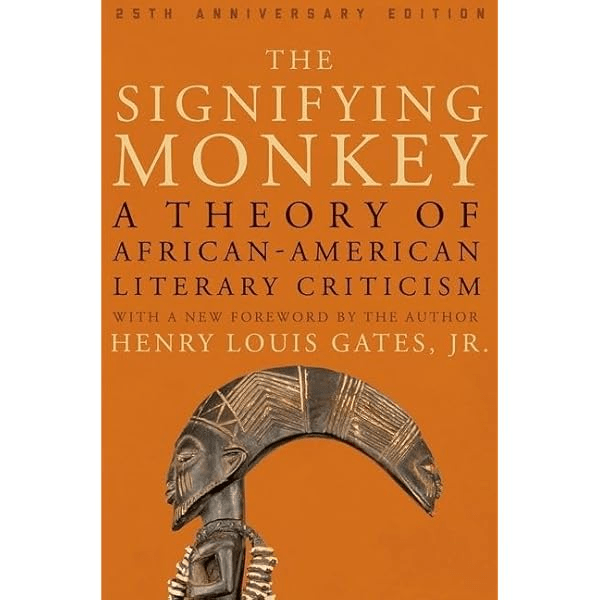
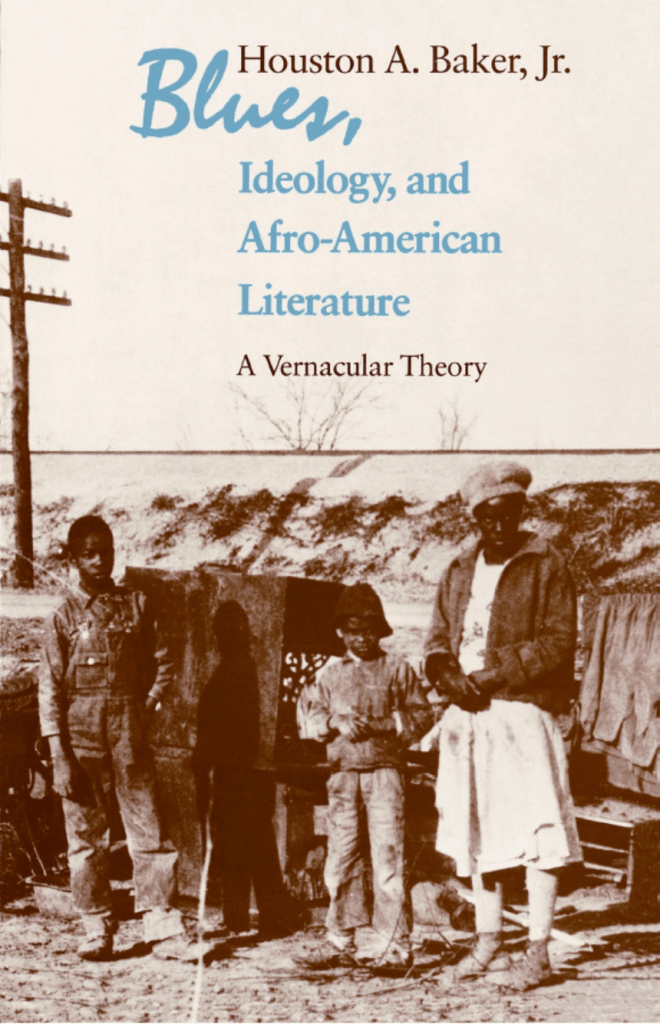
S and T created a 15-minute podcast that analyzed “Poetic Justice” by Kendrick Lamar featuring Drake (2012). I’ve created a transcription of the podcast. These students were able to deploy their own critical analytical method, consistently applying it to make interesting analytical conclusions, and provide a very specific kind of qualitative validation of the use of Gates’s argument in The Signifying Monkey and Houston Baker’s in Blues, Ideology and Afro-American Literature: A Vernacular Theory to construct a framework for student-centered literary criticism.
A Bit about the Class and the Unit
For different reasons, S and T were two pretty average or below-average-achieving students (grades-wise anyway) in my on-level/regular Junior English class. It was composed of roughly equal numbers of white, Black and Latinx students, probably ⅔ boys – typical for the on-level junior class at our school. S and T are both Black and tend to sit with the other Black students when given the choice (which is also true of the white students and Latinx students in th class). The course is a more or less chronological study of American Literature, after the first quarter, which began as an examination of language and identity largely inspired by April Baker-Bell’s’ Linguistic Justice. That quarter involved students interviewing a friend or family member about their language and their racial, ethnic and national identity and then writing a reflective essay about what they learned from the experience – about themselves, their friend/family member, language, race and identity. During the 2nd quarter, students studied The Narrative of the Life of Frederick Douglass, as well as episodes of the 2020’s television show Atlanta and wrote essays analyzing both. During the 3rd quarter, students read The Great Gatsby and did some pretty conventional work around that book, as well as The Bluest Eye, which involved discussions and graphic design based interpretive work.
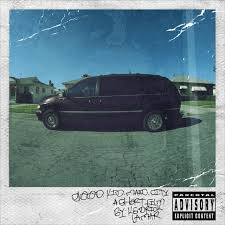
Now it was 4th quarter, and as an experiment, an attempt to expand what felt normal in an English class, students were listening to and analyzing Kendrick Lamar’s 2012 album Good Kid mAAd City. They had listened to the songs and annotated lyrics packets, and had now divided up into groups of 2-3, each assigned a different song to analyze my making a podcast recording.
The Podcast Assignment
S and T worked together to analyze “Poetic Justice,” a track on Lamar’s album that features Drake, the superstar that Kendrick ended feuding with very publicly in 2024. That soon to be epic dispute was just beginning at the time of this recording. Both students, T especially, seemed generally aware of both artists’ careers and values. S didn’t express strong opinions; T was very clearly on “team Kendrick” once the beef started in earnest. T later persuaded me to let the class study the Drake/Kendrick feud as it developed, just a few weeks after they did this work.
I did not heavily scaffold the unit. Students listened to each song in succession over the course of two 85-minute periods. After each song, we paused and had a brief discussion, generally organized by students speaking at tables in small groups, and then sharing out later. While listening, students had a photocopied lyrics packet extracted from genius.com, with lots of white space for them to write notes. I encouraged them to annotate by some basic categories – mostly figurative language, allusions, references and any patterns they might recognize. At the end of each song’s lyrics in the packets was a little rectangle where I asked them “what do you think this song is about? What are some thesis ideas if you had to write an essay about this song?” By and large, kids did not annotate a lot during the songs, but they did listen. The brief discussions were casual but generative. The box tended to lead to either summaries of the song’s main action, or its place in the story of the album (this album has a very distinctive and time-disjointed story), or some major themes they thought the song was about.
Once we had gone through that, I let students form groups of 2-3, and then pick a song to analyze. I formed 12 groups because the album has 12 songs. I had a vision of them all sharing so that they could integrate their analyzes into one collective analysis, or one “podcast season.” When they had been assigned their song, they had some time to work, to re-annotate and develop a deeper argument. I gave them a worksheet to complete that they’d be allowed to use when making their podcast recordings on a future day.
Some students studiously populated this worksheet with ideas and quotations just as I had requested. S and T did not complete this work. I think on that prep day T may have been absent, and
S was distracted by math homework on his Chromebook. I did my best to redirect him, but he very reasonably said that since his partner wasn’t there he didn’t know what to do.
The next day when the podcasts were actually being recorded – and this almost always happens – it was hard to get kids to start. There’s this apprehension about being wrong, about not knowing what to say, about their voices sounding funny, and so on. And sometimes when students have been absent, that becomes an excuse they may ride for days or even weeks at a time. On the recording day, though, T and S were both present. I expected perhaps that they’d want to do it at a different time. They had not really prepared anything in writing. But when I went around, they seemed resigned to their fate. This work was going to happen on this day, and as a teacher, I could sense that energy, and didn’t want to disrupt it.
Stand-Out Qualities of the Recording – An Interpretive Performance
Overall, what S and T did is not only an act of interpretation in the English class sense, where they explored the meaning abstractly, of a song that had been performed concretely. They actually also engaged in their own act of performance. The difference between “Poetic Justice” and S and T’s analysis of it is a difference in degree – yes, they talk more and perform less, compared with Drake and Kendrick, but they’re actually playing the same game. In the analytical recording we see S and T using figurative language and allusions that are not drastically different from the ones Kendrick and Drake use – the performance in a way extends through the recording – as interpretive performance.
This is something Gates emphasizes over and over in The Signifying Monkey – the African American tradition is always performative and interpretive – it’s always talking and talking-about-talking. It’s also creative and critical. The one needs the other, and they have developed together.
As I created a transcript of the recording and in reading over it, I noticed eight major trends and one absence (trends that hold for the rest of the recording, though I didn’t continue the highlighting). I would love to share the recording but I feel like it reveals too much about the students’ real identities and I don’t have their consent.
- (the absence of traditional literary vocabulary)
- Use of direct audio sampling from “Poetic Justice”
- Quotation of lyrics by S and T themselves (as opposed to playing a recording)
- Analysis of lyrics/songs’ meanings
- Posing of Questions to each other
- Affirmations through single words or vocalizations
- Exploratory Push-Back
- Use of African-American Vernacular English dialect choices
- Humor/laughter
My argument is that these students had learned how to do all of this from inherited cultural traditions, and they knew that doing this would lead to a rich interpretation of the text in front of them. Though I had supplied them with packets for annotations to use, neither S nor T used the annotation packet they had while they were making this recording. In fact I think they had lost their packets. They created the recording using a youtube video of the song’s lyrics with the music playing. Whenever they paused, they stopped to talk about the words they saw on the chromebook in front of them. They recorded their audio using Screencastify and a built-in Chromebook microphone. They did the recording in one take and did not edit it before turning it in.
Let me speak a piece about each of 1-10 above.
1. (the absence of traditional literary vocabulary)
This is the most important fact about this recording/transcript for my claim, and it’s a fact about what’s not there. The words “plot,” “theme,” “simile,” “metaphor,” “tone,” “stanza,” “allusion,” and so on simply are not spoken by either S or T at any time. That is easy to miss, in fact having listened to this recording several times, this is actually the very first time I’m noticing that lack. But it explains so much.
This recording earned an A on the rubric with which S and T were presented, – a combination of the old ACT writing rubric and the new AP English Lit and Comp rubric. I also think the fact that what they’ve achieved here can be achieved without using any of the supposedly important terms of our discipline means something. Specifically, I think it means that people can engage in acts of interpretation that are very effective even if they’re not rooted in those structures. In fact I will argue more that it’s because they’re not rooted in those structures that they’re able to succeed. The final section of this post articulates why, with reference to Baker and Gates’s theories of Black traditional interpretation. Again it’s worth emphasizing – I”m just saying these students have interpretive intuitions (though they have those) I’m saying, they have been educated in a system of interpretation in other contexts that is rich and generative.
2. Use of direct audio sampling from “Poetic Justice”
I did instruct them to do some of this directly – mostly that they needed to use the audio from the song, and that they needed to analyze its meaning in a sequential way. It was one of the terms of the assignment. You can hear the podcast alternate between song audio and T+S’s conversation. This might seem like a small point but S, who was managing the pausing of the audio, to make room for conversation, developed a very clear rhythm of when and why he wanted to pause. On the audio you can hear him thumbing the space bar very intentionally. He seemed to pause it when he had the sense either that T had something or say, or that he did, and he also resumed the audio playing in a very intentional way – there are several effective cadences he creates through that timing. Knowing when they need to talk, and when they are done, seemed to be a big skill S possessed. I believe if I had a video I’d see them communicating nonverbally about this. As an example, after a brief intro at the start of the recording, S. begins the audio and then plays the music:
Every second, every minute, man, I swear that she can get it. Say, if you’re a bad b****, put your hands up high, hands up high, hands up high. Tell them, dim the lights down right now. Put me in the mood. I’m talking about dark room perfume. [audible pause from thumb striking the space-bar]
That sense of timing is something that is a verbal equivalent of quotation integration in essay writing: you need to know how something will flow to make an argument. But it’s more complicated here, because it’s not only S’s desire to speak, but T’s that’s being integrated. S demonstrated that ability very consistently through the recording.
3. Quotation of lyrics by S and T themselves (as opposed to playing a recording)
Both S and T very self-consciously and intentionally repeat Kendrick Lamar and Drake’s words, consistently and seamlessly integrating them into their own statements. “Do we need quotes” was not something they asked me at all at any time. As you listen to the recording you can tell that their familiarity with the words is very developed – even if they do not have annotations in front of them, they are very clear about what’s been said, and when, and by whom.
S: This a podcast. Shut up. Just this a podcast about – what we doing. This a podcast about “Poetic Justice” by Kendrick Lamar. [presses play on music]
Music: Every second, every minute, man, I swear that she can get it. Say, if you’re a bad b****, put your hands up high, hands up high, hands up high. Tell them, build the lights down right now. Put me in the mood. I’m talking about dark room perfume. [pauses music]
S: He’s talking about dimming the lights down, open your hands up high. No dark room perfume. What do we think that means T?
T: dim the lights down right now. Put me in the mood. I’m talking about dark room perfume, and he want a dark room while she’s wearing perfume,
S okay,
S :okay, simple as that, simple as that. Kendrick a nasty boy! [presses play on music again]
S and T are bringing the words Kendrick’s intro into the conversation by re-speaking them. Notice that they’re making adjustments like “Dimming” instead of “dim.” It’s’ a kind of free quotation that’s almost a paraphrase. This re-speaking carries weight. In some ways #3 and #4 (up next) are not fully separable. His repetition of the lyrics is a kind of proto-interpretation. He’s modulating his voice in meaning-bearing ways, and selecting which words to repeat. He’s setting up the moment for T to speak on things by repeating them, and suggesting how she might reply with the way he’s voicing them.
4. Analysis of Lyrics/song’s meanings
This gets deeper as the recording goes along but we can see the initial act of interpretation when T responds to S above:
S :okay, simple as that, simple as that. Kendrick a nasty boy!
Not the deepest example to start with, but the pattern repeats itself over and over on the recording (and in deeper ways). Music plays, S or T repeat some lyrics (usually S), and then S or T (usually T) explains what she thinks the lines mean. None of the meanings conveyed here were pre-written, so far as I can tell. I do believe both S and T had thought about what they wanted to say, don’t get me wrong, but – I don’t even think they discussed this together prior to the recording.
The analysis offered is cumulative – nothing like a “thesis statement” is offered at the beginning of the recording. I’m not even sure they had an end-point in mind at the outset. But they did get to one by the time they were finished. By the end of the recording, S and T have built on the duality between Kendrick’s verses and Drake’s to consider the mental and physical aspects of love, and mapped that onto the pre-song skit where we hear Kendrick’s parents arguing while his voicemail is recording. The final thought of the recording is a very efficient wrap-up of the ground they’ve coveted together.
T: he’s he’s [the dad’s] about the physical,
S physical, physical,
T: and the mom’s more about the mental,
S: like Kendrick and Drake, yeah.
Note that the two of them converge on an interpretation that has been brewing the whole time, about the structure of the song, the role of its four different voices, the relationship between the skit and the song proper, and the themes all of that explore.
5. Posing of Questions to each other
One of S’s early patterns as the sort of DJ/MC in this recording is to ask “What do we think that means T?” – that’s my emphasis on “means” because S almost always stresses it within the sentence. He’s signalling something about meaning that goes beyond the literal – he’s reminding T that they’re supposed to be getting deep, and she’s obliging. For the most part, S asks and T answers, but there are moments where it flips around too:
S: Alright T. So this part, right? He mentions empathy, he mentions the flower in the dark room, he mentions blood in his pen. What do we think those things mean T?
T: Honestly, I’m gonna ask you about the dark flower blooming in the dark room. What do you think?
S: Okay, see, in my opinion, the flower represents Kendrick, right? And everybody that’s made it out the hood in their career. See, the dark room has a bad environment, especially for a flower, a flower like Kendrick, right? The man needs sunlight, he needs grass, he needs water, but instead of that, he got a dark room, a bad environment, right? But he still bloomed into beautiful flowers that he is today.
What’s amazing about a moment like this is that T seemed to intuit that S had something to say – maybe from how he asked the question. Or maybe she felt like she’d done enough of the work and it was time to turn it around. And when she does flip it around, what comes out? S delivers this extended metaphor that serves as an interpretation. And it just flows right out. Throughout the recording, both students consistently figured out when the other person had something to say, and made space for each other to say it. And they used that awareness to sustain a line of reasoning.
6. Affirmations through single words or sub-word vocalizations
I think this is one of the most significant aspects of the recording. S. is regularly affirming of T’s arguments. There are so many “uh-huh” and “mmm” and “right” and “yeah” and “okay” and those do real work. They encourage T to go on, to deepen her thought, to let her know that he doesn’t think she’s done. T does that too – and she also modulates it into skepticism sometimes too – where “okay” becomes “okay?” in a way that cues S into realizing that he needs to explain himself more clearly, provide more evidence, or rephrase.
7. Exploratory Push-Back
Some of the recording’s best moments come from T telling S he’s wrong.
S: He mentions, living life in the margins, right? And so you and me, we thought this was more about living in, like, the 99th percentile before he blew up big, like, but Mr. B, Mr. B, he came in, and he had this, this idea that this is all about writing the song, he’s talking about the process of writing the song, almost, living in between the margins of the paper and the pen, the blood in the pen, and the paper, that is life.
T: boy, you jumbling up everything you shouldn’t be jumbling.
S: Okay, okay.
T: So, when he’s talking about living your life in a margin, doesn’t that mean like there are set, there are a set amount of rules that you should follow when it comes down to being a human being? Like, everybody knows, like, oh, you’re not supposed to kill a human being…
And notice here T has very deftly pushed back against something S is saying and giving their teacher credit for. She says so forcefully and humorously, defusing the moment without backing down, and getting herself an entry point to offer an alternative perspective.
8. Use of African-American Vernacular English Dialect Choices
Both S and T are Black, and they’re also both very adept code-switchers – I say this from having taught them for a whole year. Depending on who they’re talking to, about what, whether they’re writing or reading, they’re making those pivots all the time. On the podcast, though, it’s basically all AAVE all the time. They didn’t ask “is it okay if we like, use slang?” (And this is not “slang” – this is a historically constructed dialect, as Baldwin and many others have argued). They didn’t seek permission for their approach. They used a language/dialect that is theirs, and used it adeptly. And I think we should not underrate the importance of that: their abilities to draw on AAVE phrasing, syntax and diction is what lends so much of the strength to their analysis. They are communicating in a language they are very good at using, and crucially, in a language that Kendrick Lamar and Drake are performing with. It’s almost reductive to say this is about vocabulary choices they’re making at particular moments. The use of the dialect allows them access to critical categories and canons of argumentation that have grown up simultaneously with the source they are analyzing. Think about what T accomplishes when she says “T: boy, you jumblin up everything you shouldn’t be jumblin.” – and think about how much less effective that is if she says “S, you’ve misunderstood what Mr. B said.”
9. Humor/Laughter
Dostoevsky said that you can really know a person by their laughter. So in some ways even though I’ve left this until last, it’s sort of the whole thing! These students are approaching this work with joy, and that joy is emerging through laughter, humor, ribbing each other, etc. It’s the driving force of the organic evolution of their argument. It continues to the point where they knock the Chromebook on the floor and have trouble getting back down to business. They use it to discuss topics that are perhaps taboo/uncomfortable in school (like sex), they use it to raise and respond to counter-arguments, to establish rhythm and cadence, and so much more.
This is a 1-4-1 (if AP had a way to listen)
Part of what let them put this argument together is the very lack of a “thesis statement,” or the need to use proscribed literary terms. They went looking for meaning, together, and found it together creating a triple analogy that explains the skit and the song:
Kendrick : his mother : mental :: Drake : Kendrick’s dad : physical.
This is absolutely a thesis in the AP Lit sense – a defensible interpretation of the passage. It is very clearly the culmination of a line of reasoning that has consistently attached evidence to argument (i.e., 4/4 on evidence and commentary)., Along the way they have consistently identified and explored complexities and tensions, meaning they arguably earn the sophistication point as well. I realize the rubric was designed for written essays by a single student, but if we set that aside and apply the rubric as written to this audio recording/transcript. That means something.
In future posts I will argue the task we often face is more about teaching students like S and T how to transfer what they do in speech onto the paper – or, not even teaching them “how” to transfer, but giving them permission to do so in the context of standardized test environment that does not feel at all welcoming to this sort of thing. I have worked with students in this position a lot and something that often comes up is “oh, I can do that? That’s what you want?” “Writing” has become a very contrived and artificial construct in their minds often, one that they’ve experienced a lot of negativity around, and one that they’re often relatively reticent about engaging with authentically – one where they’ve been taught precisely to leave all of what we’ve been talking about here out of – but we need to create spaces it can come back in.
S and T’s Embedded Critical Technique and its Relation to the Tradition
What S and T have done is very directly described by Houston Baker Jr. in a passage from his book Blues, Ideology, and Afro-American Literature: A Vernacular Theory But let me say this – they made this recording long before I had encountered this passage or the rest of the book, and while they’re taking about hip-hop, Baker is talking about the blues. Even so, listening to this student recording inspired me to do a range of learning, because I wanted to understand where this was coming from, why it seemed so easy for them, and why it’s so hard for so many of my upper-middle class white students, who on paper have higher reading scores, higher grades and will likely go to “better” colleges.
Baker is summarizing his argument about blues performance and acts of interpretation in light of America (the reality) and AMERICA (the myth):
The viability and energy of the blues derive from the bluesman’s improvisational skill. When the “break” appears and voices and instruments drop to a quiet decrescendo and someone says “Let me hear you squall, boy, like you never squalled before!” the bluesman must be, in Albert Murray’s apt phrase, “Nimble or not at all.” His effective performance depends on his knowledge of the tradition of which he is a part and his deft improvisational energies.
Similarly, an investigator of expressive culture gains much form the comprehension of traditional modes of cultural study, but when he is confronted with the “break” constituted by the job of specifying a distinctive tradition in all its resonant fullness, he must know the vernacular or
“native” level of the tradition and then be improvisationally nimble enough to advance both the tradition itself and its clearer understanding.
The improvisational dynamism of the blues analyst’s work is a function of the rapidly changing character of all experience in the New World. There is a constant need for original and suggestive tropes to capture an ever changing American scene.
In today’s “break,” a blues matrix provides suggestive sound, vision, and space for expressive cultural theory. One can improvisationally posit, in fact, that any future concept of expressive culture in the space constituted by AMERICA in the New World will be informed by vernacular inscriptions that qualitatively alter an idea that has prevailed since 1492.
The blues matrix-the fluid, mediating vernacular of the New World-enables one to understand that, rather than being a nation of strangers in search of Anglo-male domestication, AMERICA has no strangers.
…the analytical project that may serve as a paradigm for the future study of Afro-American literature and expressive culture is a vernacular model, one that finds apt figuration in the blues.
Let’s look again at the list:
- (the absence of traditional literary vocabulary)
Baker, a practicing Professor (presumably someone who “knows how to read literature”) has somehow written this entirely scholarly passage using hardly any “new criticism” terms. He did use the word “character” but not in the relevant sense. His articulation of the interpretative situation arises immanently from the creative situation itself. He does use the word “trope” in a real literary way – but he’s talking about “original” tropes the performer generates, not some master-list provided by someone like Foster.
- Use of direct audio sampling from “Poetic Justice”
Look at Baker’s initial description of the interpretive scene: “When the ‘break’ appears and voices and instruments drop to a quiet decrescendo” – Baker is describing here what S was doing – he was creating breaks by turning down the voice/instrument, by thumbing the space bar.
- Quotation of lyrics by S and T themselves (as opposed to playing a recording)
- Analysis of lyrics/songs’ meanings
Interpretation that is “…improvisationally nimble enough to advance both the tradition itself and its clearer understanding” requires quotation and paraphrase and interpretation on an ongoing basis.
- Posing of Questions to each other
- Affirmations through single words or sub-word vocalizations
- Exploratory Push-Back
- Use of African-American Vernacular English dialect choices
- Humor/laughter
Compare Baker’s summary – “Let me hear you squall, boy, like you never squalled before!” with T’s actual words “boy, you jumblin’ up everything you shouldn’t be jumblin’.” She didn’t read this book – she didn’t have to. She knows how to step into the break, how to put S into that same break, and how to build meaning there. This, by the way, is closely related to the “break” in Mooney’s idea of Breakbeat Pedagogy. Hip-hop’s origins come from records being looped through the same moment over and over – stopping the progression of the song to create an opening that can be rapped into. Spoken into. Analyzed.
Conclusion and Future Questions
S and T’s podcast was not generate by coincidence or merely intuition – this is S and T having very direct knowledge with and practice using a very specific cultural tradition of interpretive performance. I believe this should have profound impacts on the way we approach teaching students how to build literary interpretation. For one, it should remind us how much more a student is capable of than their STAR score may indicate, or how well they do on our “literary terms pre-test.” The knowledge they may hold about interpretation requires us to learn about the traditions that may have produced it, and in detail.
I have focused very intensely on two students within in a very definite tradition – the African American tradition – and I do not mean to suggest that every Black student, or every student, has that access to that lineage or even that kind of lineage. But I believe if we actually do some more cultural inventory – which was my goal in the first quarter of the class – we do discover more underlying traditional knowledge than it would appear when we ask them the way school usually asks them. Again, I actually believe this is a harder question for white students – they often just don’t quite know what to say when they’re asked about things like how they use language in different settings, what traditions they draw on to motivate them, and that’s really instructive. It suggests deficits may lurk in places different from where we look for them. I think our white students (and all students) have a lot to learn from students like S and T, which is why now, when I start my hip-hop analysis unit, we listen to this podcast first.
Now, I am not saying Baker and Gates are the replacement for Foster. I am saying we need to remove Foster, and replace it with a whole bunch of interesting and idiosyncratic investigations into each student and their values, traditions and context. But I do believe we can do this using the role we play as teachers. It does not require extensive ethnographic research about each student, but it does require listening and believing that they know something, even if they way they know it does not match our usual way of asking.
But this all poses an even bigger question, perhaps the crucial one here: how do we help students like S and T, and by extension all of our students, actually learn more? What they did here, I didn’t do much more than get out of the way – though I think that “Getting out of the way” is in itself a really important teaching move. They could have done this any day of the week, and probably do, just in settings that are not school.
So once we’ve created a space where students can deploy traditional canons of interpretation, ones they’ve already embedded in their lives – what do we do to help them improve? I think it’s too quick of an answer to say – “okay let’s teach them Foster, then they’ll know two canons of judgment and it’s better than one.” I think that can be part of the answer some of the time, but I think a better route is to work with what they already immanently know and create spaces where they can immanently deepen that skill as well, on its own terms. It is to that next task I will devote my attention in the next posts of this series.


One thought on “Part 2 – If We Shouldn’t Teach Students to “Read Literature Like a Professor,” Then Where Should We Start?”