“First Person Shooter” – Drake featuring J Cole – 10/24/23 “Like That” – Metro Boomin featuring Future and Kendrick Lamar – 3/26/24 “7 Minute Drill” – J Cole – 4/5/24 “Push Ups” – Drake – 4/19/24 “Taylor Made Freestyle” – Drake featuring AI Tupac/AI Snoop Dogg – 4/19/24 “Euphoria” – Kendrick Lamar – 4/30/24 ← WE’RE HERE “6:16 in LA” – Kendrick Lamar – 5/3/24 “Buried Alive Interlude Pt 2” – 5/3/24 “Family Matters” – Drake – 5/3/24 “Meet the Grahams” – Kendrick Lamar – 5/3/24 “Not Like Us” – Kendrick Lamar – 5/4/24 “The Heart Part 6” – Drake 5/5/24
If you’ve been following this series as I’ve published it, you’ll know this one took a while. That’s partly because my school year started again, but also – probably mostly because this song is a BEAST. In a good way – it’s just enormous 6+ minutes long, no chorus, hundreds of words, dozens of allusions musical moves, tones of voice, layers of irony, rhetorical indirection— as a colleague at the time put it, this is what signifying is – an extended, intentional demonstration of intellect, humor and creativity. This is the second time I’ve tried to write this and I still don’t feel great about it all – I’ve always thought the mark of great art is the inability of critics to capture its effect in writing.
Maybe someone else can do more justice to Kendrick’s work here, but I’m just going to leave this here. It’s just a blog after all!
My Introduction
Three students from my class last year – three Black students in an overwhelmingly white room – selected this song to record their podcast about. And what my colleague described signifying as above – extended intentional, intellectual, humorous and creative – these students’ podcast was also that. People have talked about signifying chains, and I think something that’s really, really cool about hip-hop, is that it’s always continuing a conversation. The best rap leads to more rap – which is able to be both analytical and creative in its own right. This is the core idea behind Henry Louis Gates’ idea of double-voicedness. It’s always talking, and also talking about talking. The most profound educational accomplishments I’ve seen students make have been when they get into that space. A quick example from years ago: a racially diverse group of students had just finished analyzing different songs from The Miseducation of Lauryn Hill, which includes a series of skit/vignettes with Ras Baraka where he’s asking elementary school students about love. So now my students, after doing all the analytical work about songs like “That Thing” or “Forgive them Father,” turn to each other and say, “okay, now that we’ve listened to this album, what do you think love is?” They all took turns on the mic, riffing on things Hill or one of the children had said, how they saw that in their song, what it meant for their life… I swear to God they did this, on their own. And it was just an awe-inspiring moment. Because they were now in the dialogue begun twenty-five years before on Lauryn Hill’s album which of course, itself continues dialogues stretching back to the doo-wop era and before.
So to me what works about signifying is that it’s an opportunity to learn about someone else’s words, and also to use them not only as an “academic exercise” but to meet them as interlocutors. Which is exactly what my students exploring “Euphoria” did too – they explored what Kendrick was saying to and about Drake, about identity, appropriation, authenticity, the n-word, and so much more, while also exploring what they themselves felt about all of those issues. I guess to use a bit of educational parlance, their work was both summative and formative. And just like they were in this predominantly white space, so too Kendrick reaches out into the media universe after Drake’s “Push-Ups” and “Taylor-Made Freestyle” shot out into this pop-rap universe of Drake’s creation, one that, not uncoincidentally, the largely white class said they were “just more into.” Whether it is Drake “being more chill,” Kendrick’s voice just “not sounding that good,” Kendrick “rapping too fast,” this class was on team Drake. Not only because they’re white, but it has something to do with it.
Now I’m continuing the dialogue – here’s the best I can do with what Kendrick has produced here. In “Euphoria,” Kendrick Lamar indicts Drake in multiple ways, all tying back to the inauthenticity of his constructed persona, demanding that Drake’s audience, especially but not only Black folks within it, divest themselves of a very specific habit-forming addiction that he reads Drake as a symbol of, and in so doing, Kendrick stands up for his own cultural positioning as being a superior source of meaning and rootedness – to go back to “Like That,” Kendrick really explores what it means to say that Drake is merely after “money” and “power,” and Kendrick is here for “respect,” because “the last one is better.” This immensely complicated song does that in three big moves – first, a calm, soulful introduction that lays out the principal arguments directly, next through a section that features an almost manic sequence of charges, evidence and rebuttals, landing lastly on a droning, insistent demand Kendrick makes on the part of his community that Drake needs to, as the song’s last, acapella word has it, “stop.” The music, the language and the allusive context that run throughout the song add layers of depth to a spiraling, dynamic track that irrevocably shift the terms of the beef from an until then playful rap battle to devastating cultural and psychological critique.
Part 1 – Kendrick’s Introduction
The song’s final “stop” is presaged throughout, with other moments where no music or sample clogs the track. As the song begins we get the very first moment like that. The first thing we hear, represented on genius.com, looks like this:
Eurt si em tuoba yas yeht gnihtyrevE
That’s not really what you hear; it’s more of a reconstruction of the scene on which it’s based, turned into words on the page that are spelled backwards. And what are those words? “Everything they say about me is true.” There are levels here. First of all, something being spoken backwards can suggest the opposite of what is said is true. And this statement itself is asserting that something is true, so then backwards, perhaps it means that something is false. There’s a paradox there right? Whoever is saying that they’re telling the truth is saying so backwards, meaning we shouldn’t trust them. It’s also a reference to the sort of age-old “musicians put something in backwards” hidden meanings thing.
What we’re hearing is a backwards clip from The Wiz, the 70s retelling of the Wizard of Oz and Black cultural touchstone. These words come from the reveal scene where the wizard admits he’s not anyone special. The Wizard himself is played by Richard Pryor.
Here’s a transcription:
Everything they say about me is true. I’m a phony! I got no right to be pretending to be the Wiz! I’ve got nothin’. Hocus-pocus. I’m just plain old Herman Smith from Atlantic City.
Atlantic City? Atlantic City? You mean, you’re from New Jersey?
Mm-hmm.
I’m just a second-rate politician from District Seven. “Public office is the last refuge of the incompetent.” Penrose!
Incompetent?
Ha-ha-ha! That’s me. I’m incompetent. So much so, I could never get elected to public office. Not because I didn’t try. I tried everything. Look, look! I ran for everything. Alderman, councilman, assembly leader! I became a laughingstock. I couldn’t even get on the ticket! Finally, in desperation, I ran for dogcatcher! I like animals. Don’t get me wrong. I was at the end of my rope. I plunged myself into the campaign. One desperate grandstand play. You know what I did? I rented a hot-air balloon
This is a textbook example of how allusions work to compress meaning. Kendrick knows full well a good amount of his audience will place all of that (and feel its significance) once they identify the source of the clip. But that will require a little work, because it’s backwards. You need to go back and discover the backwards-ness. But once you discover it, it imbues the whole song within a larger rhetorical context, and in an emotionally charged way. I don’t know about you but the Wizard of Oz story is already a deeply emotional, almost pre-conscious experience for me, and of course the whole thing works in dream logic. And even if you didn’t grow up watching The Wiz (I didn’t), I get the larger reference to fakery. And not just fakery, but motivation for fakery that comes from the desire to be liked (and its connection to, in some ways, how the appeal of whiteness as identity works overall). The Wizard himself, and the well-known nature of his illusions and its motivation, becomes a symbolic prologue that informs everything else Kendrick says about Drake (and indirectly everything Kendrick says about white culture’s despite to consume hip-hop) later in the song.
Then we hear Kendrick calmly intone the name of the song:
Euphoria.
Even in just these two moments Kendrick has built a tension that the song itself explores – the calm of “euphoria” and the maniacal backwards-voiced “everything they say about me is true!” – and there’s a nice little contradiction between form and content there too. “Euphoria” represents a state Kendrick will critique, but it’s spoken calmly; “everything they say about me is true” is an honest confession, but also screamed backwards by Richard Pryor.
The introduction as a whole runs about 54 seconds. We hear a soul-era bright chord alternation, but there’s something disconcerting in the second of the two chords too, like something’s going to pop off. Over that, lyrically it’s some densely wrought material. It’s Kendrick’s thesis – an overview of the rest of the song. On the student podcast, my student J took the lead, beginning with the simple word “actor.” Implicitly unpacking the Wiz sequence, she tracked the way that Kendrick wants to center the idea of Drake not as a singer, activist, pop-star or icon, but as an actor – someone who plays roles, someone for whom the truth is always secondary. She and O then discussed how Drake was initially famous not from music but from his role on the now sort of badly aged DiGrassi: The Next Generation. What I appreciated here is that J was really trusting her intuitions about what was important in the words and their purposes, rather than belaboring some explanation about rhetorical devices. So often I think what students struggle with is that putting something into a “larger context” does not mean being overly erudite or self-coconscious – sometimes it just means seeing what’s important and explaining why.
That’s where their analysis started:
Them superpowers getting neutralized, I can only watch in silence The famous actor we once knew is lookin’ paranoid and now spiralin’
Kendrick’s explication begins by summarizing what’s happened to date – “them superpowers” – as boasted about on “First Person Shooter” are getting “neutralized” from the success of “Like That,” and Kendrick’s voice in it, and how Kendrick can “only watch in silence” – as Drake as overplayed his hand, recording the pretty-good “Push-Ups,” which made some arguments Kendrick needs to answer, sure, but then followed by the hubristic AI Frankenmusic of “Taylormade Freestyle.” Like a bad con-man, Drake doesn’t know when to stop talking, and seems to have painted himself into a corner while Kendrick looks on.
Kendrick then goes on to diagnose Drake a bit, and predict his future actions based on that diagnosis:
You’re movin’ just like a degenerate, every antic is feelin’ distasteful I calculate you’re not as calculated, I can even predict your angle Fabricating stories on the family front ’cause you heard Mr. Morale
“Degenerate” carries connotations of addiction (gambling, drinking, sex, all of which Kendrick will come back to), and surely one of the “antics” being referred to here is “distasteful” decision to create AI verses simulating Tupac and Snoop Dogg. Kendrick draws a nice contrast here between Drake – “I calculate” – I think before I speak – but “you’re not as calculated” – not as intelligent – and also “I calculate that you’re not as calculated.” – Kendrick thinks that Drake is more transparent than he realizes. Shades of James Baldwin’s “I know you better than you know yourself” (as narrated in I Am Not Your Negro).
What does Kendrick think Drake will do? Create stories about Kendrick’s personal life based on what Drake might have heard on Kendrick’s then latest album Mr. Morale and the Big Steppers, an album that intimately explores Kendrick’s family trauma in the context of Black history and contemporary culture. Kendrick is predicting the future here: that Drake will misunderstand Kendrick’s stories, because though he “heard” them, he didn’t really listen. And Kendrick would turn out to be right: about a week later, Drake released “The Heart Part 6,” itself meant to be a parody of Kendrick’s “The Heart Part X” series, which Kendrick had then released five of (he has since made his own “Part 6” that has nothing to do with Drake). On Drake’s song, he mis-hears Kendrick’s story from “Mother I Sober,” and goes on to mock Kendrick for having been molested (something Kendrick doesn’t say happened to him), and wondering if that’s why Kendrick has gone so hard on what Drake takes to be the false molestation/grooming accusations Kendrick has made about him. But that’s not what Kendrick said on that song – he said he wasn’t molested, but his mother wouldn’t believe him, because of her own history. Drake’s “fabricating” thus relies on a misunderstanding not unlike what Gates’ lion misses from the monkey’s tales.
Kendrick then deepens the diagnosis:
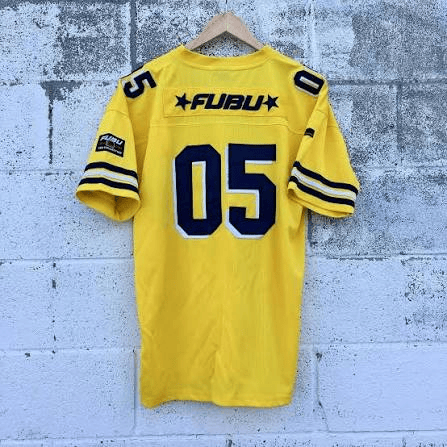
A pathetic master manipulator, I can smell the tales on you now You’re not a rap artist, you a scam artist with the hopes of being accepted Tommy Hilfiger stood out, but FUBU never had been your collection
This particular not-yet-but-soon-to-be-made mistake becomes an example of how Drake operates in general, as a “pathetic master manipulator” (a failed actor, like the Wiz), and “smell tales on your now” suggests again some sense of alcoholism – not only Drake telling stories, but also stories that liquor smell might tell the rest of us. And now Kendrick sets out what will become a major topic on the rest of the song – the deeper motivation for Drake’s behavior – his “hopes of being accepted.” Drake doesn’t just want money or power, he wants respect, welcome, belonging, but can’t seem to find it. And why is that? The following contrast between FUBU and Tommy Hilfiger gets at that. For Us By Us is a Black-owned fashion brand featured in a great Atlanta episode of the same name that my students had previously watched. Drake didn’t wear FUBU – he wore Tommy Hilfiger. Drake wanted to look white, preppy, country-club. Drake’s desire fit in with white upper-class norms, Kendrick is saying, prevented him from exploring a deeper sense of self, and this made him a life long “scam-artist.’
What Kendrick is saying here aligns with what others have noted about the temptations of white identity in general here – they invite dishonesty, inauthenticity and cultural appropriation, because they’re rooted in something that’s aspirational but ultimately empty – what I think Baldwin means (again quoted in I Am Not Your Negro) when he says “white is a metaphor for power, which is just another way of describing Chase Manhattan Bank.” Note that Baldwin’s epigram explores money and power in relation to whiteness – and says nothing about RESPECT. I know Kendrick doesn’t mention these things, but I think the larger forces he’s invoking are not “reaches” by any means.
Kendrick then draws another contrast between himself and Drake, and foreshadows another set of accusations;
I make music that electrify ’em, you make music that pacify ’em I can double down on that line, but spare you this time, that’s random acts of kindness
Kendrick sees in his own music a sense of movement and social change – “electrify ‘em” – Drake creates, like many of my white students keep pointing out when I ask why they like Drake better, “just like, more chill beats like you can just put it on and not think.” I am not making up those words or how often I have heard them. Drake makes music that “pacify’ em” – this is an ethos move on Kendrick’s part. If Drake is only a scam-artist, all he can do is fool people into enjoying themselves while they do their homework. But also, of course “pacify” is another great double-entredre, in which (at least in retrospect) many have said, here’s Kendrick hinting at the grooming accusations that swirl around Drake as well – and actually drawing a connection between his stylistic approach to his music. When Kendrick says “I can double down on the line” he’s almost directly acknowledging these two possible meanings, seeming to offer Drake an off-ramp.
At this point the music cuts out, bringing us back to where the song started “Euphoria/”everything I they say about me is true” and we get the this masterful a capella final couplet, that I’d put right up there with the best of Shakespeare’s speeches endings:
Know you a master manipulator and habitual liar too But don’t tell no lie about me and I won’t tell truths ’bout you
Kendrick deftly summarizes the song so far first line, and makes an understated threat in the second. Even internal to that second line, The syntax is intricate: “don’t”/”won’t” in parallel (though one is a command and the other is a possible result), “lie about me”/”truths about you” grabs the last line’s idea of Drake as a liar, and now contrasts lie/truths and me/you. Even “lie” singular vs “truths” plural – Drake might take one lying potshot at Kendrick (which won’t land), if he wants, but he should know Kendrick will be able to take many true shots back (that will land hard).
Part 2
Before you can process the depth of that threat, in fact, right as Kendrick says “truths about you,” the song brings us somewhere new, as we hear some horn fanfare, and Kendrick menacingly intoning “Shoo shoo shoo…” and then a grounding D-minor bell that will persist through the whole second part. And what’s cool about this is though I’m separating out “part 1” and “part 2” (as is generally done on internet lyrics), the song most definitely does not stop to let you process. It amps up the intensity, shifts away from that soulful contemplativeness without anything like a chorus or a reset.
There are so many different attacks and layered references here I don’t think I need to trace through all of them but some highlights. The rest of the song makes a lot of use of epistrophe – the repetition of a word of phrase at the end of a line. Depending on the flow, it starts to feel like rhyme sometimes, but I think it’s got more of a sense of unity and collection, especially in Kendrick’s hands.
The verse opens with 5 of 6 line-ending epistrophe ‘okay” that build a sense of just how much Kendrick has to say and how frantically he’s going to say it. In that cluster, O unpacked this one:
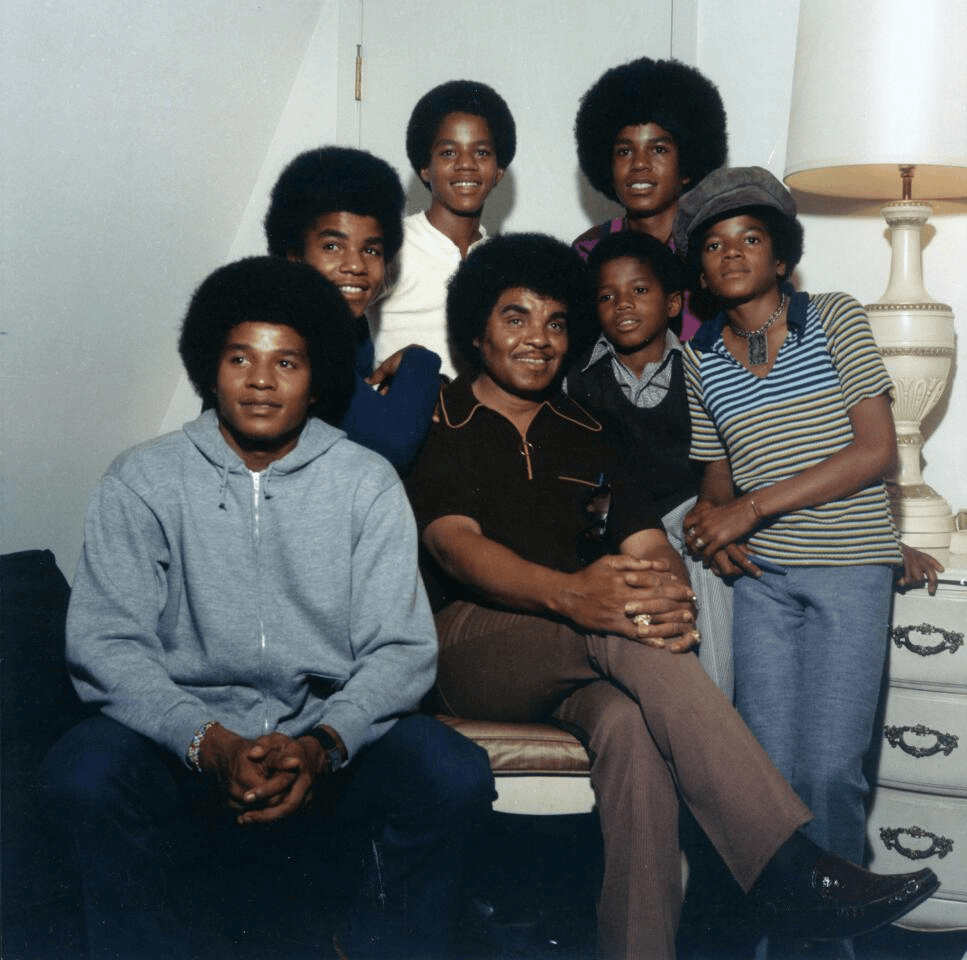
Got a Benjamin and a Jackson all in my house like I’m Joe, okay
Kendrick riffing on presidents on money, but also the Jackson family, which re-engages with Drake’s “I’m one away from Mike” back in “First Person Shooter,” as if to say, sure, you can reference Michael Jackson but I can draw on the whole family, including Joe, their father, known to have abused his children and in O’s telling, this is Kendrick saying he intends to verbally abuse Drake.
Kendrick slides away from the “okay” with a rhyme:
once a lame, always a lame Oh, you thought the money, the power or fame would make you go away?
Rhyming “Okay” with “away” lets the meaning accrue, and calls back to “Like That” – the money and the power are here but not the respect. And “would make you go away” is interesting because I think he means make “the problem you have with yourself” go away. Exploring Drake’s insecurities – the absence of self-respect as the origin of his desire for money and power.
He fakin’ for likes and digital hugs His daddy a killer, he wanna be junior, they must’ve forgot the shit that they done Dementia must run in his family, but let it get shaky I’ll park his son
Is both clever and funny – Drake paying for streams is something he’s been accused of, his mentor J Prince being accused of crimes, and his desire to be like Lil Wayne (junior), and then the joke about shakiness, dementia and Parkinson’s Disease (and also, Kendrick “parking” his – Drake’s son – as somehow prefiguring what happens on “Meet the Grahams.”
We then get a little self-reflection from Kendrick:
The very first time I shot me a Drac’, the homie had told me to aim it this way I didn’t point down enough, today, I’ll show you I learned from those mistakes
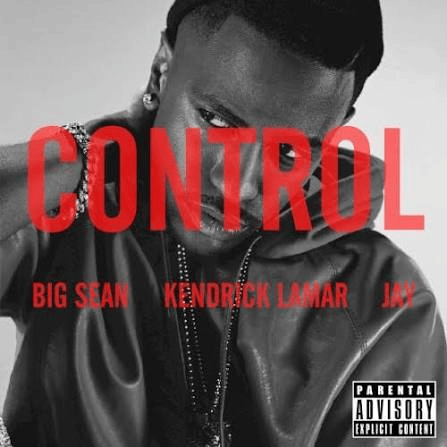
Is Kendrick playing with his image of having once been a gangster (like on the outro for “Mad City” where he asks you to contemplate the possibility), but then also references the 2014 “Control” verse on which Kendrick dissed a whole bunch of people, though Drake seems to have been the only one who took it personally. He’s saying now, he won’t aim low, he’ll go for the head, which he comes back to at the end of the verse.
Somebody had told me that you got a ring, on God, I’m ready to double the wage I’d rather do that than let a Canadian n**** make Pac turn in his grave
Brings us back to the Tupac AI, since Drake had apparently bought Tupac’s ring, and here Kendrick is saying he’ll buy it out, that the money doesn’t matter nearly as much as the disrespect implied in Drake owning it. After a string of other references that are clever but I don’t want to go through all of them, we get to a really key moment in Kendrick’s take-down:
This ain’t been about critics, not about gimmicks, not about who the greatest It’s always been about love and hate, now let me say I’m the biggest hater I hate the way that you walk, the way that you talk, I hate the way that you dress I hate the way that you sneak diss, if I catch flight, it’s gon’ be direct We hate the b****s you fuck, ’cause they confuse themself with real women And notice, I said “we,” it’s not just me, I’m what the culture feelin’ How many more fairytale stories ’bout your life ’til we had enough? How many more Black features ’til you finally feel that you’re Black enough?
Moving into the rhetoric of being a “hater,” taking Drake’s accusation and embracing it as a means of critique, Kendrick gets to what becomes a crucial point about race and identity – “notice I said ‘we it’s not just me I’m what the culture feelin’” Kendrick places himself onto a pedestal he seems reluctant to occupy – that he really is at least temporarily speaking for “the culture” – i.e., being Black in America. And that final question “how many more Black features ‘til you finally feel that you’re Black enough?” is both Kendrick chiding Drake for plastic surgery (Black features) but also his desire to work with Black artists, to let them feature on his songs, to appropriate cultural cachet from them (Black features).
This is a really important sequence but I think Drake goes on to misunderstand it. Kendirck is saying “you’re not Black, you shouldn’t rap” – I don’t think. I think he’s saying, you should stop pretending that you are Black in a very specific way – by overidentifying with racist stereotypes that (a) aren’t true of you and (b) are harmful stereotypes. The very next line helps me see this:
I like Drake with the melodies, I don’t like Drake when he act tough
Suggesting to Drake, why not just be who you really are and not this “hard” persona that’s really just there to entertain suburban white kids. And notice the return of “act” – not just “be insincerely” but perform as an actor – like the Wizard.
Section 2 ends with these lines:
Yeah, my first one like my last one, it’s a classic, you don’t have one Let your core audience stomach that, then tell ’em where you get your abs from V12, it’s a fast one, baow-baow-baow, last one Headshot for the year, you better walk around like Daft Punk
The growl in Kendrick’s voice accelerates and the puns on “Black features” continue with “core audience” and “abs from” – core and abs being both about people and body parts.
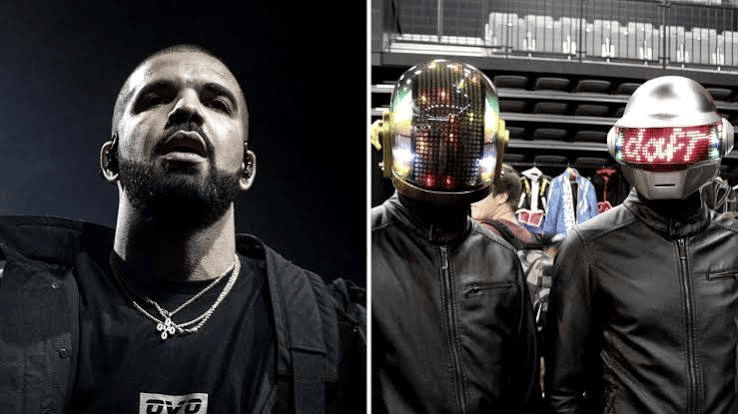
And then the final irony as the music drops out again, and we get the song’s third a capella moment- – he’s now shooting at his head, not aiming low, and Drake better walk around “like Daft Punk,” i.e., with a mask on – the irony being, what he’s just spent the whole song accusing Drake of, already, is wearing a mask.
Part 3
Just as “Daft Punk” finishes the backing track comes back on and we hear a new sound – a 16-note repeating minor key loop that runs to the end of the song, almost as though Kendrick’s made his major attacks, and he will now narrate his own victory. We move from the “head shot” to dancing on Drake’s grave.
He reiterates the earlier “I hate…” anaphora (this is one of the only times the song explicitly repeats words):
I hate the way that you walk, the way that you talk, I hate the way that you dress Surprised you wanted that feature request You know that we got some shit to address I even hate when you say the word “N****,” but that’s just me, I guess Some shit just cringeworthy, it ain’t even gotta be deep, I guess
The understatement here works to emphasize sure, maybe he just doesn’t like the sound of the N word in Drake’s mouth – it feels “cringeworthy” to him but of course that signifies so much more, about Drake’s fake identity posturing and the damage it does.
And again names what Drake could be doing instead:
Still love when you see success, everything with me is blessed Keep makin’ me dance, wavin’ my hand, and it won’t be no threat
But then takes it back with a sort mic-drop rhythmic/rhyming play:
I’m knowin’ they call you The Boy, but where is a man? ‘Cause I ain’t seen him yet Matter fact, I ain’t even bleed him yet, can I bleed him? Bet
The next part takes up some sort of line-by-line disputes growing out of “Like That,” and the splits argument Drake made on “Push-Ups” before landing a much more directly personal blow:
Why would I call around tryna get dirt on n****s? Y’all think all my life is rap? That’s ho shit, I got a son to raise, but I can see you don’t know nothin’ ’bout that Wakin’ him up, know nothin’ ’bout that And tell him to pray, know nothin’ ’bout that And givin’ him tools to walk through life like day-by-day, know nothin’ ’bout that Teachin’ him morals, integrity, discipline, listen, man, you don’t know nothin’ ’bout that Speakin’ the truth and consider what God’s considerin’, you don’t know nothin’ ’bout that
Again the epistrophe – now “know nothin’ ‘bout that” holding the lines together, to highlight the fact that Drake is a bad father – and this here is really mild compared with with “Meet the Grahams” just a few days later.
A clever sequence getting at Drake’s AI use and inverting Drake’s sense that everyone’s ganging up on him – Kendrick pointing out that if we count ghostwriters and AI, “Ain’t twenty-v-one, it’s one-v-twenty.” And Kendrick lets the ghostwriting and AI use become a species of inauthenticity that he then gives a national, ethnic and racial dimension:
Tell ’em run to America, they imitate heritage, they can’t imitate this violence
Kendrick then flips it and takes some shots at Toronto slang, again through epistrophe, now of “crodie”:
Don’t speak on the family, crodie It can get deep in the family, crodie Talk about me and my family, crodie? Someone gon’ bleed in your family, crodie I be at New Ho King eatin’ fried rice with a dip sauce and blammy, crodie Tell me you’re cheesin’, fam We can do this right now on the camera, crodie
And here I don’t think he’s so much making fun of “crodie” and “fam” pronounced as “fom” as pieces of Toronto slang as much as showing Drake and his fans how his voice sounds when he uses the n-word and other Black cultural material that doesn’t suit him.
And look how Kendrick then re-asserts his own ability to use the n-word epistrophically (and also 6 times):
Ayy, fuck y’all n****s, I don’t trust y’all n****s I wave one finger and thump y’all n*****s like mmm Field goal, punt y’all n****s, they punk y’all n****s, nobody never took my food Whoever that’s fuckin’ with him, fuck you n****s,
Kendrick reiterates the earlier threat that, in some ways he’s already made good on:
and fuck the industry too If you take it there, I’m takin’ it further Psst, that’s somethin’ you don’t wanna do
We then get a final, almost chorus-like moment drawing it all together:
Ooh We don’t wanna hear you say “n****” no more We don’t wanna hear you say n****” no more